Handmade Singing Bowl – Difference Between Antique and Machine-Made Singing Bowls
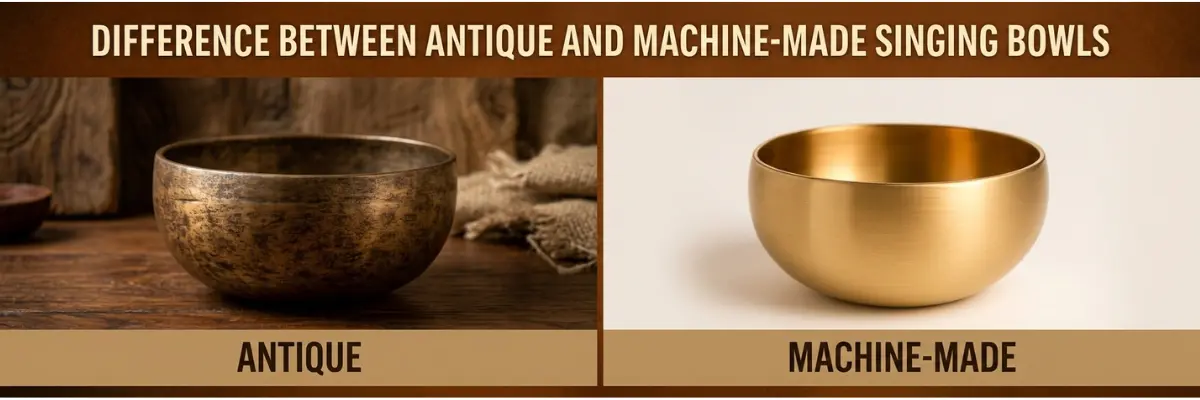
If you are investing in a Handmade Singing Bowl, understanding the difference between antique and machine-made versions is not optional. It directly impacts sound quality, authenticity, resale value, and spiritual application.
Many buyers in the United States searching for Himalayan spiritual instruments assume all singing bowls are similar. They are not. An authentic Himalayan singing bowl crafted by hand in Nepal is fundamentally different from both factory-produced bowls and so-called “antiques” circulating in the global market.
This guide breaks down the craftsmanship, sound characteristics, material composition, historical authenticity, and buying considerations so you can make a confident purchase.
What Is a Handmade Singing Bowl?
A Handmade Singing Bowl is traditionally crafted by artisans in Nepal using time-intensive hammering techniques. Often referred to as a hand hammered singing bowl, each piece is shaped manually from heated metal alloys.
Unlike machine-pressed bowls, handmade bowls:
Are individually hammered thousands of times
Have subtle shape variations
Produce complex, layered overtones
Reflect artisan craftsmanship rather than factory uniformity
Most authentic singing bowls from Nepal are made using traditional bronze alloys. Historically, some were associated with seven-metal symbolism, but modern high-quality bowls typically use a carefully balanced copper-tin composition to optimize resonance.
For buyers seeking a meditation bowl or sound healing bowl, craftsmanship directly influences tonal depth and vibration stability.
Antique Singing Bowl vs Handmade Singing Bowl – Key Differences
This is where confusion begins.
An antique singing bowl generally refers to bowls that are 80–150+ years old. However, not every old bowl qualifies as a high-value collectible. And not every antique bowl performs better than a newly crafted handmade singing bowl.
1. Age and Origin
Antique Singing Bowl: Claimed to be pre-20th century, often from Nepal or Tibet. Authentic provenance is difficult to verify without documentation.
Handmade Singing Bowl (New): Crafted today by skilled Nepalese artisans using traditional hammering techniques.
Important reality: Many “antiques” sold online are artificially aged. Patina can be chemically induced.
2. Sound Quality
Antique bowls may produce exceptional sound — but only if they were originally well crafted and well preserved.
A newly crafted Himalayan singing bowl from a reputable Nepal workshop can match or exceed antique bowls in tonal clarity, sustain, and harmonic layering.
Sound depends more on craftsmanship than age.
3. Structural Integrity
Older bowls may have:
Micro cracks
Thin walls from long-term use
Slight warping
A new handmade singing bowl offers structural durability and predictable performance for meditation and healing practice.
4. Investment vs Utility
Antique bowls attract collectors.
Handmade bowls attract practitioners.
If your goal is sound therapy, meditation, yoga studios, or spiritual practice, performance matters more than historical nostalgia.
Handmade Singing Bowl vs Machine-Made Singing Bowl
This is the more critical distinction for serious buyers.
Machine-made bowls are mass-produced using molds or pressing machines. They are often manufactured outside Nepal and exported in bulk.
Here is how they compare:
Craftsmanship
Handmade Singing Bowl
Individually hand hammered
Visible hammer marks
Slight asymmetry
Unique tonal signature
Machine-Made Bowl
Perfectly symmetrical
Uniform thickness
Smooth interior finish
Identical sound across units
Uniformity is not a sign of quality in spiritual instruments. Subtle irregularities in handmade bowls enhance overtone richness.
Sound Complexity
A true hand hammered singing bowl produces:
Multiple harmonic frequencies
Long sustain
Vibrational depth felt physically
Machine bowls typically produce:
Single dominant tone
Shorter sustain
Less complex overtones
For sound healing practitioners in the U.S., tonal layering is essential. A meditation bowl that lacks harmonic depth will not support advanced therapeutic applications.
Metal Composition
Authentic singing bowls from Nepal use traditional bronze alloys optimized for resonance.
Machine-made bowls may:
Use cheaper mixed metals
Be lighter in weight
Prioritize cost efficiency over acoustic quality
Weight matters. A properly crafted handmade singing bowl feels dense and grounded.
How to Identify an Authentic Handmade Singing Bowl
Buyers often ask how to distinguish a real Nepalese bowl from a factory product.
Here are practical indicators:
1. Hammer Marks
Look for uneven but intentional hammer impressions inside and outside the bowl.
2. Slight Shape Variation
No two handmade bowls are perfectly identical.
3. Tonal Sustain
Strike the bowl and measure how long it resonates. High-quality bowls sustain for extended periods with evolving harmonics.
4. Weight-to-Size Ratio
Authentic bowls feel heavier due to proper metal thickness.
5. Source Transparency
Reputable sellers clearly state:
Made in Nepal
Hand hammered
Artisan workshop origin
Avoid vague descriptions like “Tibetan style” without origin confirmation.
Are Antique Singing Bowls Better for Sound Healing?
Not automatically.
An antique singing bowl may carry historical appeal, but for modern sound healing practice:
Structural consistency matters
Pitch stability matters
Surface integrity matters
A professionally crafted handmade singing bowl from Nepal often performs more reliably in therapeutic environments.
If you are running a yoga studio or sound therapy practice in the United States, consistency and durability outweigh speculative antique value.
Why Singing Bowls from Nepal Are Considered the Gold Standard
Nepal remains the primary center for authentic hand hammered singing bowl production.
Reasons include:
Generational artisan knowledge
Access to traditional alloy blending
Cultural continuity of craftsmanship
Established export infrastructure
Many machine-made bowls labeled as “Tibetan” are actually produced in factories outside the Himalayan region.
For buyers seeking authenticity, origin verification is essential.
Which One Should You Buy?
Your decision depends on your purpose:
Buy an Antique Singing Bowl If:
You are a collector
Provenance is verified
You value historical artifact ownership
Buy a Handmade Singing Bowl If:
You practice meditation or yoga
You are a sound healer
You want authentic Nepal craftsmanship
You prefer structural reliability
You are purchasing for resale in the U.S. market
Avoid Machine-Made Bowls If:
Sound quality is your priority
You want long-term durability
Authentic Himalayan origin matters
Final Buying Advice for Customers
If you are importing or buying from a Nepal-based e-commerce store, verify:
Direct artisan sourcing
Clear product videos demonstrating sound
Weight, diameter, and tone specifications
Transparent shipping and customs details
Do not rely solely on visual appeal. Sound performance and origin credibility define value.
A well-crafted handmade singing bowl is not just décor. It is an acoustic instrument shaped by human precision, metallurgy knowledge, and cultural tradition.
