How Antique Singing Bowls Are Made in Nepal
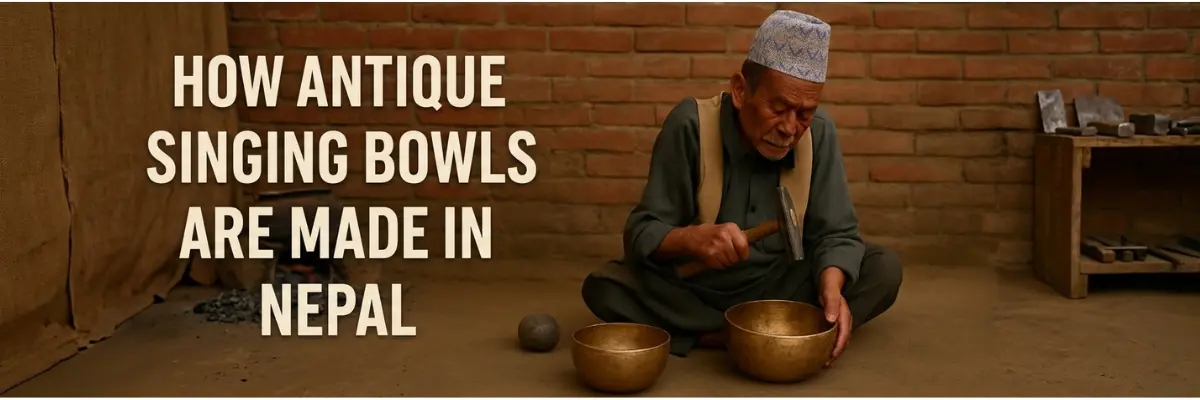
Antique singing bowls from Nepal are handcrafted sound instruments made using traditional metalworking techniques that have been practiced for centuries in the Himalayan region. These bowls are not factory-produced items. Each one is individually shaped, hammered, and tuned by skilled artisans, primarily in the Kathmandu Valley.
Understanding how antique singing bowls are made in Nepal helps buyers recognize authentic craftsmanship and appreciate the cultural value behind each piece.
The Historical Background of Singing Bowl Craftsmanship
The tradition of metal craftsmanship in Nepal dates back hundreds of years. The Kathmandu Valley, especially Patan, is known for its expert metal artisans.
These artisans have preserved ancient techniques passed down through generations. Singing bowls were historically used in monasteries, meditation practices, and spiritual ceremonies across the Himalayan region.
Today, antique-style singing bowls continue this heritage, combining traditional methods with refined sound tuning.
Step 1: Preparing the Metal Alloy
Authentic antique singing bowls are typically made from a traditional multi-metal alloy. The exact composition may vary, but the focus is on durability and sound quality.
The metal is carefully melted in high-temperature furnaces. Proper temperature control is essential to ensure consistent material strength.
Step 2: Shaping the Bowl
Once the metal cools into a solid form, artisans begin shaping it into a bowl.
There are two primary methods:
- Hand casting
- Hand hammering from metal discs
For antique-style bowls, hand hammering is the most common technique.
The artisan repeatedly heats and hammers the metal, gradually forming the curved shape of the bowl. This process requires patience and precision.
Step 3: Traditional Hand Hammering
This is the most important stage in making antique singing bowls.
The bowl is placed on a firm surface, and artisans use specialized hammers to create:
- Circular hammer marks
- Texture variations
- Structural strength
Each strike shapes both the form and the sound.
The hammering process directly influences vibration and tone. More precise hammering results in deeper and more balanced sound frequencies.
Step 4: Tuning the Bowl
After shaping, the bowl is tested for sound quality.
Artisans strike the bowl and evaluate:
- Tone depth
- Sustain duration
- Harmonic vibration
If needed, small adjustments are made through additional hammering.
This tuning process is done manually. There is no automated machine calibration in traditional production.
Step 5: Creating the Antique Finish
Antique singing bowls are known for their rustic, aged appearance.
To achieve this look:
- The surface may be darkened naturally
- Traditional polishing methods are used
- Some bowls retain visible hammer marks
This antique style gives the bowl a historical aesthetic, making it suitable for collectors and meditation spaces.
Step 6: Final Quality Inspection
Before export, each bowl undergoes inspection for:
- Structural strength
- Sound clarity
- Surface quality
- Balance and stability
Only bowls that meet quality standards are prepared for international shipment.
Why Antique Singing Bowls from Nepal Are Special
Antique singing bowls are valued for several reasons:
Authentic Craftsmanship
Each bowl is handmade, not mass-produced.
Unique Sound Profile
No two bowls produce identical vibrations.
Cultural Heritage
They reflect Nepal’s long-standing metalworking traditions.
Meditation and Sound Healing Use
Many practitioners use antique bowls for relaxation, grounding, and spiritual practices.
Where Antique Singing Bowls Are Made
Most traditional workshops are located in the Kathmandu Valley. Skilled artisans continue to practice this craft in family-owned workshops.
The cultural environment of Nepal plays a key role in maintaining authenticity and quality standards.
Using Antique Singing Bowls
Antique bowls are commonly used in:
- Meditation sessions
- Yoga studios
- Sound therapy practices
- Spiritual rituals
- Personal relaxation routines
To produce sound, the bowl can be struck gently with a mallet or played by rubbing the rim in a circular motion.
Caring for Antique Singing Bowls
To maintain quality:
- Avoid dropping the bowl
- Clean gently with a soft cloth
- Store in a dry environment
- Avoid harsh chemicals
Proper care ensures long-lasting performance and appearance.
Follow the link if you would like to buy/purchase Antique Singing Bowls from Nepal — Authentic Handcrafted Himalayan Bowls under the categories Antique Bowls — Jambati Carved, Jambati Special — Antique Bowls, Jambati — Antique Bowls, Manipuri — Antique Bowls, Thadobati — Antique Bowls, Kopre — Antique Bowls, Naga - Antique Bowls, Odd Shapes — Antique Bowls, Mani — Antique Bowls, Ultabati — Antique Bowls, Lingam — Antique Bowls, Antique Water Container
