Meaning of Mudras on Nepali Buddha Figures
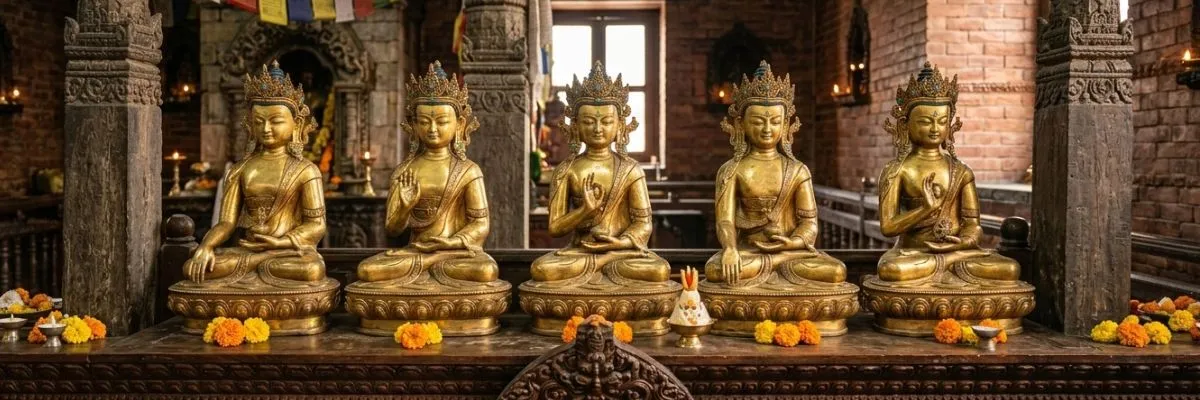
Understanding the Meaning of mudras on Nepali Buddha figures is essential if you want to appreciate authentic Himalayan Buddhist art beyond surface beauty. These sacred hand gestures are not decorative details. They are visual teachings carved in metal, encoded with philosophy, history, and spiritual symbolism.
In a handmade Buddhist statue of Nepal, the hands often speak louder than the face. A slight movement of fingers can represent enlightenment, fearlessness, generosity, or the turning of the cosmic wheel of Dharma. For collectors, practitioners, and interior designers alike, knowing the Buddha hand gestures meaning helps you choose a statue that aligns with intention, not just aesthetics.
This guide explains the symbolism of the most important mudras in Nepali Buddha statues and connects them to traditional craftsmanship, especially the centuries-old lost wax Buddhist statue technique still practiced in Nepal today.
What Are Mudras in Buddhist Art?
Mudras are symbolic hand gestures used in Buddhist iconography to communicate specific spiritual states, teachings, or moments from the life of the Buddha.
In Sanskrit, “mudra” means “seal” or “gesture.” In traditional Buddhist art Nepal, mudras function as visual shorthand for complex philosophical ideas. Instead of written scripture, the statue itself becomes a teaching tool.
Across Asia, mudras appear in paintings, thangkas, and sculptures. But in Nepali Buddha statue symbolism, the gestures are especially refined. Newar artisans from the Kathmandu Valley developed a highly sophisticated style where each finger placement carries precise meaning.
When you study mudras in Buddhist statues carefully, you begin to see that no detail is accidental.
Why Mudras Are Important in Nepali Buddha Figures
To understand the Meaning of mudras on Nepali Buddha figures, you need to see how closely symbolism and craftsmanship are connected in Nepal.
In many modern decorative statues, gestures are simplified. But in an authentic handmade Buddhist statue of Nepal, the mudra is proportionally balanced, anatomically precise, and iconographically correct.
Why this matters:
- Each mudra represents a specific moment in the Buddha’s journey.
- The gesture determines the statue’s spiritual energy.
- It influences how the statue is used in meditation or ritual.
- It reflects the artisan’s understanding of traditional Buddhist art Nepal.
When buying a Nepali Buddha statue, the mudra tells you whether the figure represents enlightenment, teaching, meditation, protection, or compassion. Without understanding this, you are only buying decoration.
Meaning of Mudras on Nepali Buddha Figures: Major Hand Gestures Explained
Below are the most important mudras found in authentic Nepali Buddhist sculptures.
Bhumisparsha Mudra (Earth-Touching Gesture)
This is one of the most iconic mudras in Buddhist statues.
Description:
The Buddha sits in meditation with the left hand in the lap. The right hand extends downward, fingers touching the earth.
Buddha hand gestures meaning:
This gesture represents the moment of enlightenment under the Bodhi tree. The Buddha calls the Earth to witness his victory over illusion and temptation.
Symbolism in Nepali Buddha statue craftsmanship:
- Represents unshakable determination.
- Symbolizes grounding and spiritual awakening.
- Often seen in statues of Shakyamuni Buddha.
In traditional lost wax Buddhist statue casting, artisans carefully elongate the fingers so they gently reach toward the base. The touch must feel natural, not stiff. This precision separates authentic handmade Buddhist statues of Nepal from mass-produced replicas.
Best for:
Meditation rooms, personal growth, spiritual practice spaces.
Dhyana Mudra (Meditation Gesture)
Description:
Both hands rest in the lap, right hand over the left, palms facing upward, thumbs touching.
Buddha hand gestures meaning:
Represents meditation, concentration, and inner balance.
This mudra is common in Amitabha Buddha statues and meditative depictions.
Nepali Buddha statue symbolism:
- Perfect equilibrium.
- Inner stillness.
- Spiritual discipline.
In traditional Buddhist art Nepal, the symmetry of the Dhyana mudra is critical. Even a slight imbalance disturbs the visual harmony. Skilled Newar artisans measure finger alignment carefully during wax modeling before casting.
Best for:
Yoga studios, meditation halls, or homes seeking calm energy.
Abhaya Mudra (Gesture of Fearlessness)
Description:
Right hand raised to shoulder height, palm facing outward.
Buddha hand gestures meaning:
Protection, reassurance, and fearlessness.
This mudra appears in standing Buddha statues and symbolizes protection from fear and danger.
In handmade Buddhist statue of Nepal production, artisans carve subtle curves in the palm to avoid a flat, lifeless look. The gesture must appear compassionate, not commanding.
Symbolizes:
- Protection
- Peace
- Courage
Best for:
Entryways, offices, or spaces where emotional stability is desired.
Varada Mudra (Gesture of Giving)
Description:
Hand extended downward, palm outward, fingers pointing down.
Meaning of mudras on Nepali Buddha figures in this case:
Generosity, compassion, and blessing.
This mudra is often seen in combination with Abhaya or in statues of bodhisattvas.
In authentic Nepali Buddha statue symbolism, the fingers are sculpted slightly open, symbolizing the continuous flow of compassion.
Artisans using the lost wax Buddhist statue method refine finger spacing in wax before casting to maintain elegance and realism.
Best for:
Living rooms, business spaces, or gift-giving symbolism.
Vitarka Mudra (Gesture of Teaching)
Description:
Thumb and index finger touch to form a circle, other fingers extended upward.
Buddha hand gestures meaning:
Intellectual discussion, transmission of wisdom, teaching.
This mudra often appears in depictions of the Buddha giving sermons.
In traditional Buddhist art Nepal, the circular finger formation must be proportionally exact. A poorly shaped circle instantly reduces authenticity.
Symbolizes:
- Wisdom
- Dialogue
- Analytical understanding
Best for:
Libraries, study areas, or academic environments.
Dharmachakra Mudra (Turning the Wheel of Dharma)
Description:
Both hands raised at chest level, forming circles with thumb and index finger.
Meaning of mudras on Nepali Buddha figures here:
The first sermon of the Buddha — setting the Wheel of Dharma in motion.
This is a highly symbolic mudra representing the teaching of the Four Noble Truths.
In a handmade Buddhist statue of Nepal, this mudra requires advanced technical skill because both hands must mirror each other in perfect proportion.
Symbolizes:
- Teaching
- Spiritual awakening
- Cosmic order
Best for:
Formal meditation rooms or temples.
How Mudras Influence the Meaning of a Handmade Buddhist Statue of Nepal
The mudra determines the statue’s narrative.
Two statues of the same Buddha figure can carry completely different meanings based solely on the hand gesture.
For example:
- Bhumisparsha = Enlightenment
- Dhyana = Meditation
- Abhaya = Protection
- Dharmachakra = Teaching
When selecting an authentic handmade Buddhist statue of Nepal, ask:
- What spiritual quality do I want to emphasize?
- Is this for meditation, decor, or ritual?
- Does the mudra align with my intention?
Understanding mudras in Buddhist statues prevents impulsive buying and encourages meaningful collecting.
Meaning of Mudras on Nepali Buddha Figures and the Lost Wax Casting Tradition
Nepal is globally respected for preserving the ancient lost wax Buddhist statue casting method, known locally as “cire perdue.”
Here’s why this matters to mudras:
- Each statue begins as a hand-sculpted wax model.
- The artisan shapes every finger manually.
- The mudra is finalized before casting.
- Once cast, changes are nearly impossible.
This means the mudra reflects the sculptor’s mastery and spiritual understanding.
In traditional Buddhist art Nepal, the accuracy of the mudra determines the statue’s authenticity. Mass-produced statues often use molds that flatten or distort finger positions. Handmade Nepali statues maintain anatomical grace and symbolic precision.
When buyers understand the Meaning of mudras on Nepali Buddha figures, they begin to appreciate why handmade pieces command higher value.
How to Choose the Right Mudra for Your Home or Meditation Space
Choosing the right mudra is about intention, not trend.
Here is a practical guide:
For meditation and mindfulness:
Choose Dhyana Mudra.
For overcoming challenges or fear:
Choose Abhaya Mudra.
For personal growth and transformation:
Choose Bhumisparsha Mudra.
For intellectual clarity or teaching spaces:
Choose Vitarka or Dharmachakra Mudra.
For generosity and abundance mindset:
Choose Varada Mudra.
Avoid selecting based only on facial expression or size. The mudra defines the statue’s symbolic purpose.
Buying Guide: Authentic Handmade Buddhist Statue of Nepal
If you are purchasing one, authenticity matters.
Here’s what to look for:
1. Handmade, Not Machine Molded
Check for subtle asymmetry. Perfect symmetry often indicates factory production.
2. Lost Wax Casting
Authentic lost wax Buddhist statue production ensures each piece is unique.
3. Correct Iconography
Finger positioning must be accurate. Poor mudra formation signals low craftsmanship.
4. Quality Gilding and Detailing
Nepali artisans often use 24k gold gilding and natural stone inlays.
5. Artisan Origin
Statues crafted in the Kathmandu Valley preserve traditional Buddhist art Nepal lineage.
Understanding the Meaning of mudras on Nepali Buddha figures helps you evaluate authenticity intelligently, not emotionally.
Frequently Asked Questions
1. What is the meaning of mudras on Nepali Buddha figures?
Mudras represent specific spiritual events, teachings, and qualities such as enlightenment, protection, meditation, and generosity.
2. Why are mudras important in Buddhist statues?
They determine the symbolic identity and purpose of the statue.
3. Are all Nepali Buddha statues handmade?
Authentic pieces are handmade using the lost wax method. Many cheaper exports are machine-molded.
4. Which mudra is best for meditation?
Dhyana Mudra is most associated with meditation and concentration.
5. How can I identify an authentic mudra?
Look for correct finger proportions and graceful alignment. Authentic Nepali statues follow strict iconographic rules.
6. What is the difference between Abhaya and Varada mudra?
Abhaya symbolizes protection; Varada represents generosity and giving.
7. Do mudras affect the spiritual energy of a statue?
In Buddhist tradition, yes. The gesture defines the symbolic energy and intention.
8. Why are handmade Buddhist statues from Nepal more expensive?
They are individually crafted using traditional lost wax casting, requiring weeks of skilled labor.
