Santa Kumar Shakya: Keeping Nepal’s Sacred Metal Art Alive
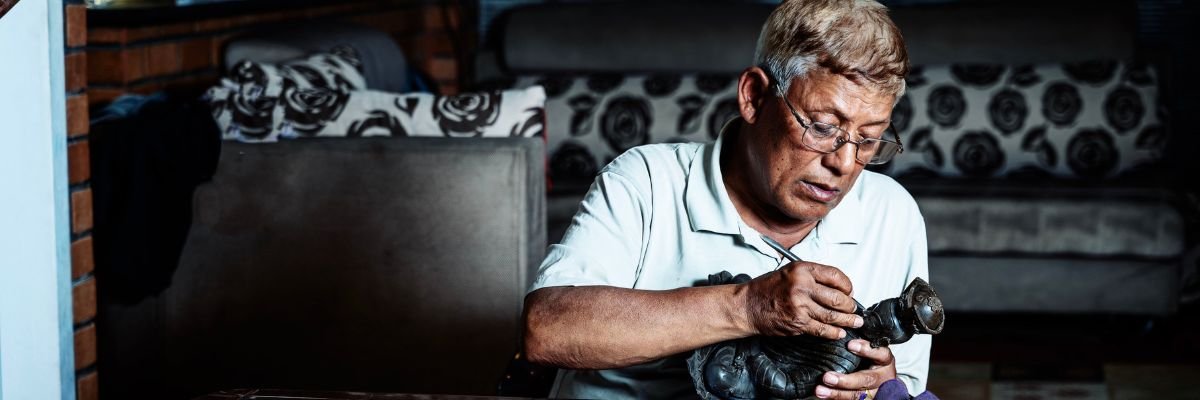
The tradition of metal sculpture in Nepal dates back to the Lichchhavi period, a time when craftsmanship, religion, and culture were deeply intertwined. Even today, this legacy continues through the hands of dedicated artisans. Among them, Santa Kumar Shakya stands as one of the most respected figures preserving this centuries-old art.
Early Life and Natural Talent
Born in Okubahal, Lalitpur — the same historic region associated with the legendary Arniko — Santa Kumar Shakya showed artistic talent from a very young age. As a child, he would shape clay into small sculptures while playing in the alleys.
Recognizing his potential, his father placed him in a sculpture workshop at just 14 years old. From that moment, his journey began — not through formal education, but through observation, repetition, and relentless practice.
Learning Without a Classroom
Shakya’s story is a direct contradiction to modern assumptions about skill-building. He did not attend art school. Instead, he learned by watching senior craftsmen, refining his technique day by day.
From metal casting to gold application and finishing, he mastered almost every stage of sculpture-making. His approach reflects the traditional Newar system, where knowledge is passed through hands-on experience rather than textbooks.
Master of Complex Sculptures
Among his many works, Shakya is especially known for crafting the thousand-armed Avalokiteshvara — one of the most complex and demanding forms in Buddhist sculpture.
This level of detail requires not just technical skill, but deep understanding of religious iconography, proportions, and symbolic accuracy. It is this combination that separates a craftsman from a true master.
A Life Dedicated to Craft
Even at the age of 78, Shakya remains actively involved in his workshop. His daily routine is built around discipline and continuous work.
He once shared that he has moved forward in life through consistent effort from morning to evening. That mindset is exactly why his work stands at a different level.
His sculptures are primarily created for Nepalese buyers, but their appeal has reached monasteries and collectors across Europe, America, and Asia.
Beyond an Artist: A Mentor
Santa Kumar Shakya’s impact goes far beyond his own creations. Over the years, he has trained and guided many young artists who are now continuing the tradition of Nepalese sculpture.
In a field where knowledge is easily lost, this role is critical. He is not just preserving art — he is ensuring its future.
Recognition and Legacy
His contribution has been recognized multiple times by the Government of Nepal and various institutions. One of the highest honors he received is the Arniko National Fine Arts Award, a fitting tribute considering his lifelong dedication to the same artistic lineage.
Why His Work Matters Today
In a world driven by machines and mass production, artists like Santa Kumar Shakya represent something rare — authenticity.
Every sculpture he creates carries:
- Cultural identity
- Religious significance
- Generational knowledge
This is not factory work. This is living heritage.
If you look at a finely crafted Buddhist statue from Nepal, you’re not just seeing metal shaped into form. You’re looking at centuries of tradition, discipline, and human effort.
And masters like Santa Kumar Shakya are the reason that tradition is still alive today.
Related Blog
