Product Categories
Metal Statues
Thangka & Wall Decor
Sound & Spirituality
Buddhist Ritual Object
![Antique Handmade Statue Of Santoshi Mata, [full Gold Plated]](https://www.handmadeexpo.com/pics/product/22393.jpg)

![Antique Handmade Statue Of Santoshi Mata, [full Gold Plated]](https://www.handmadeexpo.com/pics/product/thumb/22393.jpg)
![Antique Handmade Statue Of Santoshi Mata, [full Gold Plated]](https://www.handmadeexpo.com/pics/product/thumb/22393_0.jpg)
![Antique Handmade Statue Of Santoshi Mata, [full Gold Plated]](https://www.handmadeexpo.com/pics/product/thumb/22393_1.jpg)
![Antique Handmade Statue Of Santoshi Mata, [full Gold Plated]](https://www.handmadeexpo.com/pics/product/thumb/22393_2.jpg)
Antique Handmade Statue of Santoshi Mata, Full Gold Plated
Lhamo Durga
This Durga is finished with full gold plating. also known as mercury gold plating or fire gold plating. This traditional technique involves the application of a genuine layer of gold onto the Durga. Referred to as mercury gold plating, it is considered the correct and authentic form of gold plating in Nepal. Despite being more expensive than electroplating, this traditional mercury gold plating is gaining popularity again in Nepal. People are drawn to its authenticity, longevity, and the unmatched beauty it brings to the Durga. The resurgence of interest in this traditional form of gold plating reflects a growing appreciation for the craftsmanship and cultural heritage of Nepal Read More . . .
It is said that upon initially encountering Durga, Mahishasura underestimated her, thinking: "How can a woman kill me, Mahishasur-the one who has defeated the trinity of gods?". However, Durga roared with laughter, which caused an earthquake which made Mahishasur aware of her powers.
And the terrible Mahishasura rampaged against her, changing forms many times. First he was a buffalo demon, and she defeated him with her sword. Then he changed forms and became an elephant that tied up the goddess's lion and began to pull it towards him. The goddess cut off his trunk with her sword. The demon Mahishasur continued his terrorizing, taking the form of a lion, and then the form of a man, but both of them were gracefully slain by Durga.
Then Mahishasur began attacking once more, starting to take the form of a buffalo again. The patient goddess became very angry, and proclaimed to Mahishasur in a colorful tone-"Roar with delight while you still can, illiterate demon, because when I will kill you, the gods themselves will roar with delight". When Mahishasur had half emerged into his buffalo form, he was paralyzed by the extreme light emitting from the goddess's body. The goddess then resounded with laughter before cutting Mahishasur's head down with her sword.
Thus Durga sley Mahishasur, thus is the power of the fierce compassion of Durga. Hence, Mata Durga is also known as Mahishasurmardhini-the slayer of Mahishasur. According to one legend, the goddess Durga created an army to fight against the forces of the demonm king Mahishasur, who was terrorizing Heaven and Earth. After ten days of fighting, Durga and her army defeated Mahishasur and killed him. As a reward for their service, Durga bestowed upon her army the knowledge of jewelry-making. Ever since, the Sonara community has been involved in the jewelry profession.
You may also want to read the related articles :
At Handicraft Seller, we believe in providing a seamless and user-friendly experience to our valued customers. While our website is not an online shopping platform, we have incorporated a shopping cart system to simplify the process of sending us your inquiries. Please follow the steps below to place your order:
Step 1: Browsing the Selection
Explore our website to discover a delightful array of authentic Nepali handicraft products.
Click on the products you are interested in to view detailed descriptions and images.
Step 2: Adding Items to Your Inquiry Cart
To express your interest in a particular product, click the "Add to Inquiry Cart" button associated with that item.
The shopping cart will accumulate your selected products, providing a convenient way to organize your choices.
Step 3: Reviewing Your Inquiry Cart
Once you have finished selecting the items you wish to inquire about, review your "Inquiry Cart" to ensure accuracy.
Step 4: Sending Your Inquiries
Proceed to submit your inquiries by clicking the "Submit Inquiry" button.
A form will prompt you to provide your contact details, the selected products, and any specific queries you may have.
Step 5: Communicating through Email
As we do not have an automated payment system, we will conduct the business process through email.
Our team will review your inquiries and respond via email, offering further assistance and guidance.
Step 6: Clarifying Details and Finalizing Your Order
Engage in direct communication with our team to clarify any additional information or customization requests.
Once you are satisfied with the details, we will provide you with payment instructions and confirm the order.
Step 7: Completing the Transaction
Make the payment through the designated method as provided in the email.
After receiving the payment, we will process your order and prepare it for shipment.
Step 8: Shipping and Delivery
We offer worldwide shipping for all our products.
Once your order is dispatched, we will provide you with shipping details and tracking information.
Step 9: Receiving and Enjoying Your Handicrafts
Wait for your exquisite handicrafts to arrive at your doorstep.
Unpack and revel in the beauty and craftsmanship of your chosen Nepali treasures.
Contacting Us
If you encounter any complications while submitting your inquiries or need further assistance, please feel free to contact us.
Preferably, reach out to us through WhatsApp or email for prompt responses and support.
We hope this straightforward ordering process ensures a delightful and satisfying experience with Handicraft Seller. Thank you for choosing us to connect you with the rich heritage of Nepali handicrafts.
Return Policy
We have a 7 days money back policy but buyer have to pay the return shipping charges.
Shipping
- Shipping cost is calculated, based on the shipping weight of the products ordered. THe normal Shipping cost is US$25 for upto 0.5 kgs weight
- We ship Worldwide, Except Russia and India.
- The deliver duration varies for international Shipping location. We normally dispatch the product in 2 -3 business days. Else Buyer will be infromed Personally about the shipping.
Related Products
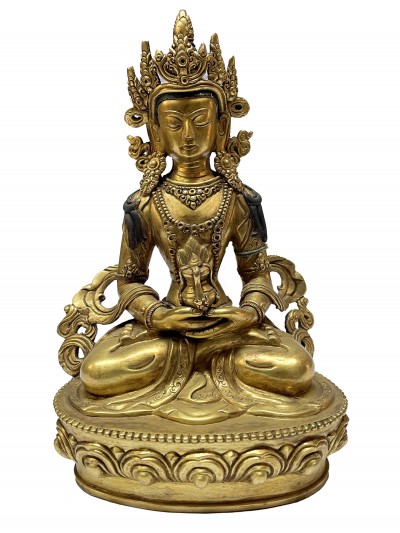
22cm Old Stock Nepali Statue Of Aparimita Amitayus Full Gold Plated Chepame Amitayus
Weight : 1.32kg | [22253]
USD 252
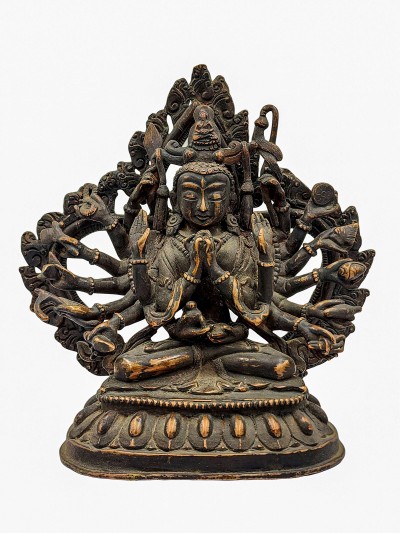
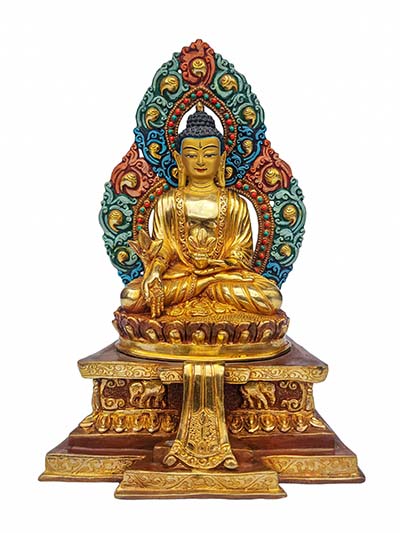
26cm Medicine Buddha On Throne Buddhist Handmade Statue Face Painted Gold Plated Rare Find Old Stock
Weight : 2.27kg | [29809]
USD 525
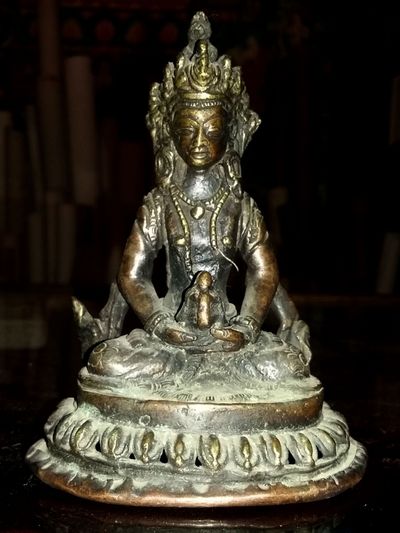
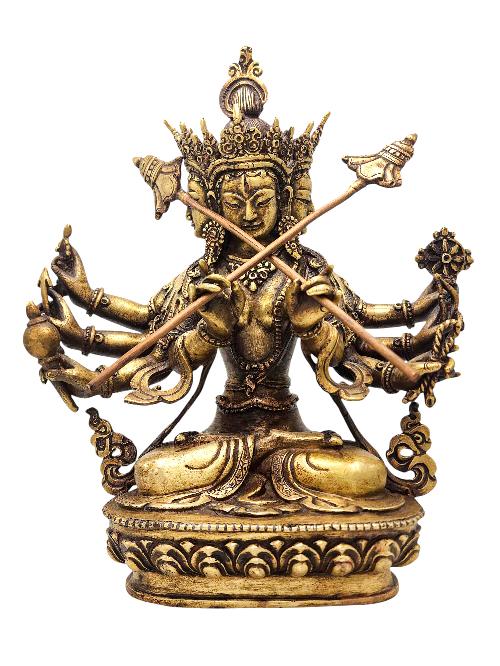
27cm Buddhist Statue Of Sitatapatra - Umbrella Goddess - Dugar -white Umbrella Goddess Bronze Finishing
Weight : 2.47kg | [36755]
USD 525
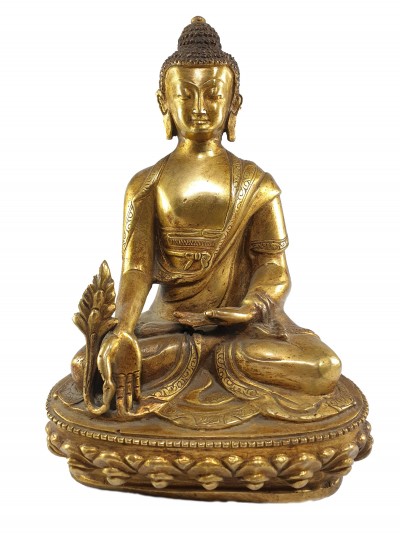
22cm Old Stock Buddhist Statue Of Medicine Buddha Full Gold Plated Without Offering Bowl
Weight : 1.5kg | [23534]
USD 375
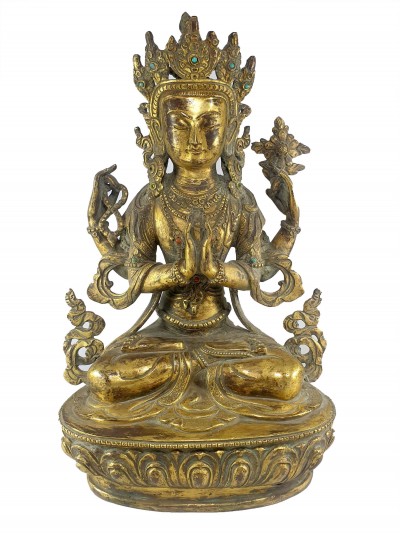
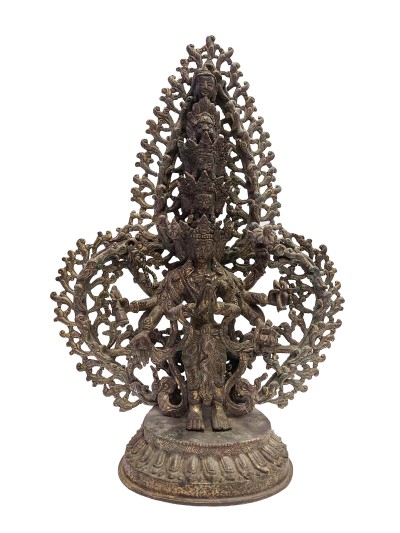
43cm Old Buddhist Handmade Statue Of Sahasrabhuja Avalokitesvara Gold Plated Antique
Weight : 4.93kg | [26830]
USD 2030