Product Categories
Metal Statues
Thangka & Wall Decor
Sound & Spirituality
Buddhist Ritual Object
![Buddhist Hand Painting Thangka Of Jambhala: Namtose, With Shakyamuni Buddha, Aparimita And Ratnasambhava Buddha, [hand Painted, Real Gold], Lamas Art](https://www.handmadeexpo.com/pics/product/26030.jpg)

![Buddhist Hand Painting Thangka Of Jambhala: Namtose, With Shakyamuni Buddha, Aparimita And Ratnasambhava Buddha, [hand Painted, Real Gold], Lamas Art](https://www.handmadeexpo.com/pics/product/thumb/26030.jpg)
![Buddhist Hand Painting Thangka Of Jambhala: Namtose, With Shakyamuni Buddha, Aparimita And Ratnasambhava Buddha, [hand Painted, Real Gold], Lamas Art](https://www.handmadeexpo.com/pics/product/thumb/26030_0.jpg)
![Buddhist Hand Painting Thangka Of Jambhala: Namtose, With Shakyamuni Buddha, Aparimita And Ratnasambhava Buddha, [hand Painted, Real Gold], Lamas Art](https://www.handmadeexpo.com/pics/product/thumb/26030_1.jpg)
![Buddhist Hand Painting Thangka Of Jambhala: Namtose, With Shakyamuni Buddha, Aparimita And Ratnasambhava Buddha, [hand Painted, Real Gold], Lamas Art](https://www.handmadeexpo.com/pics/product/thumb/26030_2.jpg)
![Buddhist Hand Painting Thangka Of Jambhala: Namtose, With Shakyamuni Buddha, Aparimita And Ratnasambhava Buddha, [hand Painted, Real Gold], Lamas Art](https://www.handmadeexpo.com/pics/product/thumb/26030_3.jpg)
![Buddhist Hand Painting Thangka Of Jambhala: Namtose, With Shakyamuni Buddha, Aparimita And Ratnasambhava Buddha, [hand Painted, Real Gold], Lamas Art](https://www.handmadeexpo.com/pics/product/thumb/26030_4.jpg)
Buddhist Hand Painting Thangka of Jambhala: Namtose, with Shakyamuni Buddha, Aparimita and Ratnasambhava Buddha, Hand Painted, Real Gold, Lamas Art
He is one of five Tathagatas symbolizing the wisdom of equality (skt. Samatajnana). According to the commentary of Namasangiti, the author Ravisri says;
?All the phenomena are devoid of essence, lacks true inherent existence and hence is dreamlike or illusion or is empty?.
Thus the knowledge of senselessness of persons and the phenomena is the wisdom of equality: Buddha Ratnasambhava is the personification of this wisdom in Vajrayana Buddhism.
In the extant literature, he has rarely described his vows, aspirations, and activity. He is usually called the Buddha born from a jewel. a Sambhava Buddha?s body, one?s desire would be fulfilled. Read More . . .
Buddha Aparimita is very popular in bestowing long life upon the devotees. It is red in color. His two hands are in dhyana mudra and holds an ambrosia vase. He usually wears all the ornaments of different kinds peculiar to a Sambhogakaya Buddha. He is never depicted with any consort. He wears a crown and has Ushnisha and Urnakosh on his body. Read More . . .
The ancient Sanskrit term 'Buddha' translates to 'awakened' or 'supreme awareness', closely linked with 'Bodhi' denoting enlightenment. Gautama Shakyamuni, born around 563 BCE in Lumbini (now Nepal), epitomizes compassionate understanding and enlightened consciousness. His teachings centered on understanding desire's role in perpetuating suffering, a theme resonating across Hinduism, Jainism, and related faiths. He emphasized how greed, selfishness, and possessiveness obscure higher awareness, perpetuating suffering among the sick, hungry, elderly, and impoverished. Gautama's serene image stands in contrast to Western ideals of materialism and outward pride, advocating for inner enlightenment as the path to alleviating worldly suffering. Read More . . .
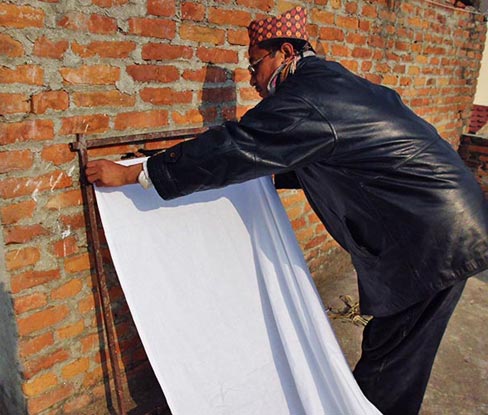
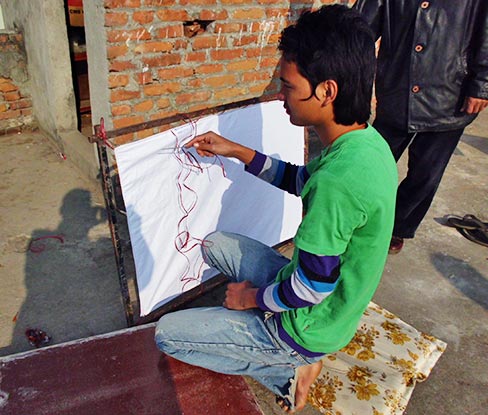
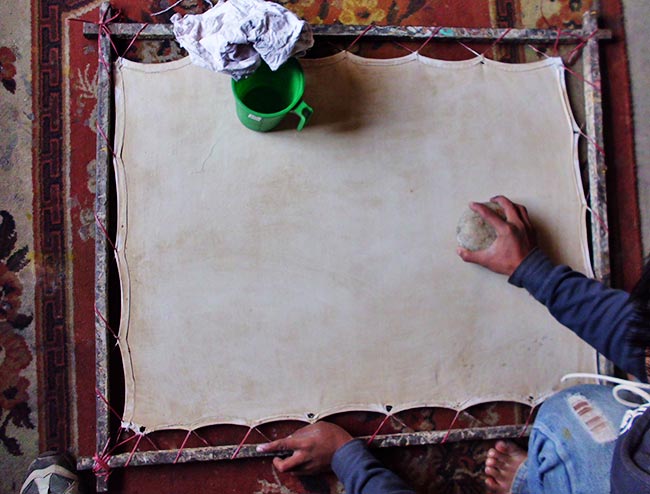
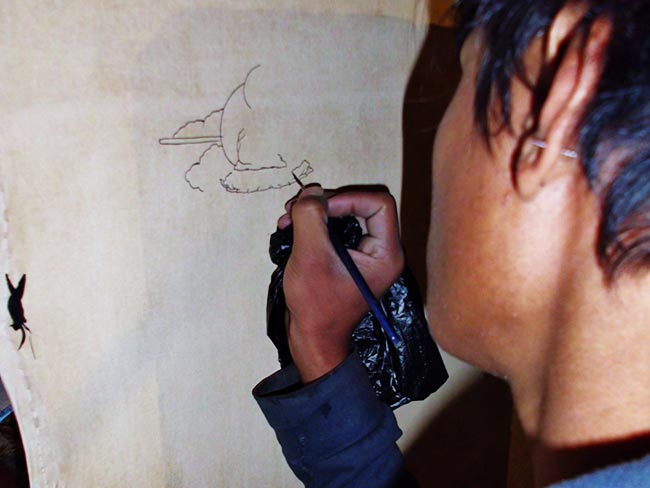
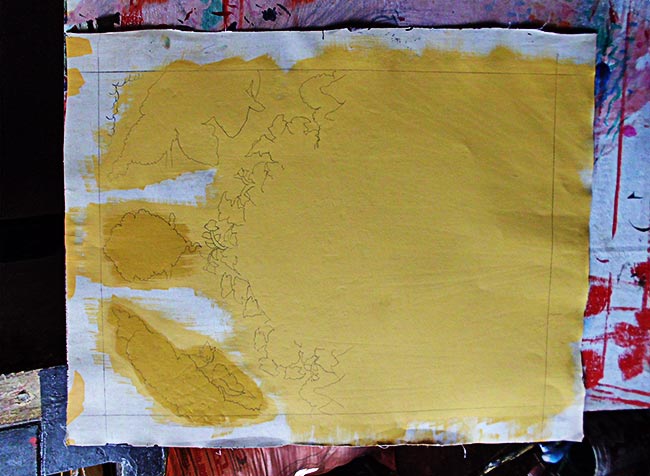
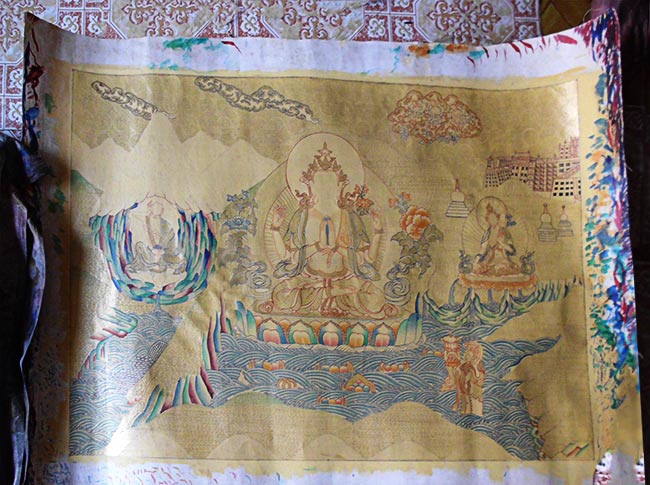
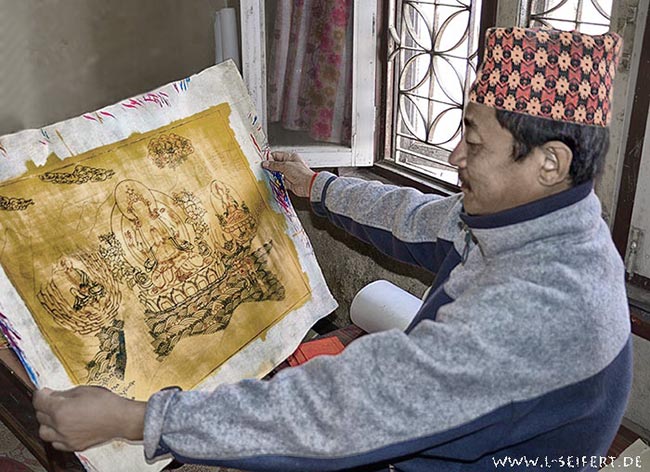
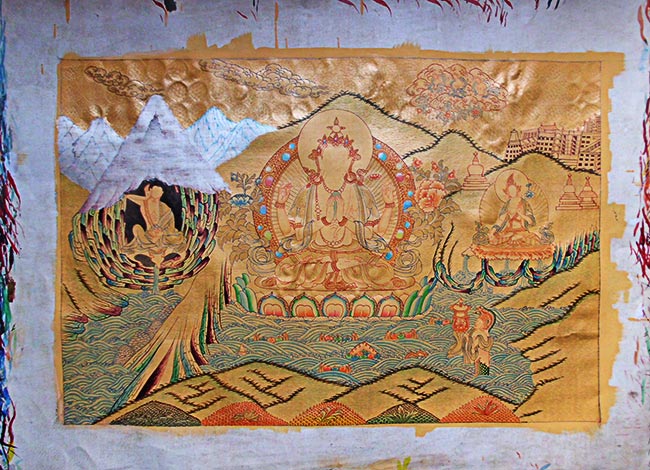
This thangka of Jambhala: namtose has real gold painted on its surface along with other paints. This is an ancient process of decorating the thangka in Tibetan Buddhism, Here gold is ground into gold dust, which is then mixed with other undisclosed material to make it paintable on the canvas. this mixture is then mixed with transparent glue and painted on the thangka. Read More . . .
A thangka, also known as tangka, thanka, or tanka, is a vibrant and intricate Tibetan Buddhist painting that serves as a visual representation of spiritual teachings. Crafted with meticulous detail on cotton or silk appliqu?, thangkas depict a wide range of subjects including Buddhist deities, sacred scenes, mandalas, and narrative stories. These sacred artworks are traditionally kept unframed and rolled up for storage, resembling ancient scrolls. To protect their delicate nature, thangkas are mounted on textile backings and often adorned with a silk cover on the front. Proper preservation in dry environments is crucial to maintain the integrity and longevity of the silk. Read More . . .
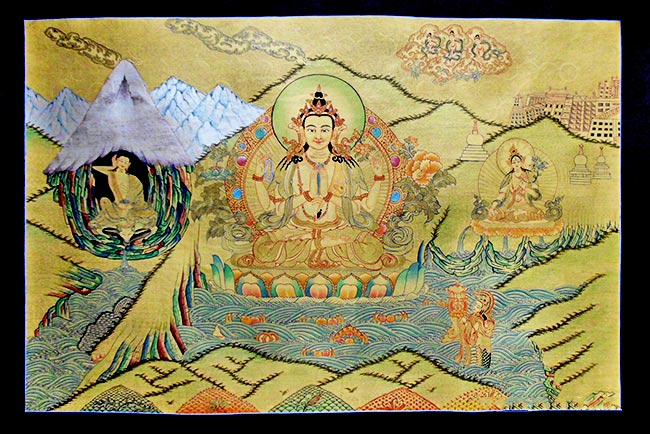
The character of Vaiśravaṇa is founded upon the Hindu deity Kubera, but although the Buddhist and Hindu deities share some characteristics and epithets, each of them has different functions and associated myths. Although brought into East Asia as a Buddhist deity, Vaiśravaṇa has become a character in folk religion and has acquired an identity that is partially independent of the Buddhist tradition (cf. the similar treatment of Guanyin and Yama).

Statue of Vaiśravaṇa as the guardian at the royal crematorium of King Bhumibol Adulyadej of Thailand, 2017.

Vaiśravaṇa as the Seal of Udon Thani Province, Thailand

Tamonten statue at Tōdai-ji, Nara

Partly gilded Tibetan bronze statue of Vaisravana (Jambhala) sitting on a snow lion and holding a mongoose in his left hand. 18th century
Vaiśravaṇa is the guardian of the northern direction, and his home is in the northern quadrant of the topmost tier of the lower half of Sumeru. He is the leader of all the yakṣas who dwell on the Sumeru's slopes.
He is often portrayed with a yellow face. He carries an umbrella or parasol (chakra) as a symbol of his sovereignty. He is also sometimes displayed with a mongoose, often shown ejecting jewels from its mouth. The mongoose is the enemy of the snake, a symbol of greed or hatred; the ejection of jewels represents generosity.
Vessavaṇa's wife is named Bhu?jatī, and he has five daughters, Latā, Sajjā, Pavarā, Acchimatī, and Sutā. He has a nephew called Puṇṇaka, a yakkha, husband of the nāga woman Irandatī. He has a chariot called Nārīvāhana. He is called gadāvudha (Sanskrit: gadāyudha) "armed with a club", but he only used it before he became a follower of the Buddha.
Vessavaṇa has the name "Kuvera" from a name he had from a past life as a rich Brahmin mill-owner from Sri Lanka, who gave all the produce of one of his seven mills to charity and provided alms to the needy for 20,000 years. He was reborn in the Cātummahārājikā heaven as a result of this good karma.
As with all the Buddhist deities, Vessavaṇa is properly the name of an office (filled for life) rather than a permanent individual. Each Vessavaṇa is mortal, and when he dies, he will be replaced by a new Vessavaṇa. Like other beings of the Cātummahārājika world, his lifespan is 90,000 years (other sources say nine million years). Vessavaṇa has the authority to grant the yakshas particular areas (e.g., a lake) to protect, and these are usually assigned at the beginning of a Vessavaṇa's reign.
When Gautama Buddha was born, Vessavaṇa became his follower, and eventually attained the stage of sotāpanna, one who has only seven more lives before enlightenment. He often brought the Buddha and his follower's messages from the gods and other humans and protected them. He presented to the Buddha the Āṭānāṭā verses, which Buddhists meditating in the forest could use to ward off the attacks of wild yak has or other supernatural beings who do not have faith in the Buddha. These verses are an early form of partita chanting.
Bimbisāra, King of Magadha, after his death was reborn as a yakkha called Janavasabha in the retinue of Vessavaṇa.
In the early years of Buddhism, Vessavaṇa was worshipped at trees dedicated to him as shrines. Some people appealed to him to grant them, children.
You may also want to read the related articles :
What is a Thangka | Making Process Of Tibetan Thangka | Videos of Thangka Making Process | Thangka Brocading OptionAt Handicraft Seller, we believe in providing a seamless and user-friendly experience to our valued customers. While our website is not an online shopping platform, we have incorporated a shopping cart system to simplify the process of sending us your inquiries. Please follow the steps below to place your order:
Step 1: Browsing the Selection
Explore our website to discover a delightful array of authentic Nepali handicraft products.
Click on the products you are interested in to view detailed descriptions and images.
Step 2: Adding Items to Your Inquiry Cart
To express your interest in a particular product, click the "Add to Inquiry Cart" button associated with that item.
The shopping cart will accumulate your selected products, providing a convenient way to organize your choices.
Step 3: Reviewing Your Inquiry Cart
Once you have finished selecting the items you wish to inquire about, review your "Inquiry Cart" to ensure accuracy.
Step 4: Sending Your Inquiries
Proceed to submit your inquiries by clicking the "Submit Inquiry" button.
A form will prompt you to provide your contact details, the selected products, and any specific queries you may have.
Step 5: Communicating through Email
As we do not have an automated payment system, we will conduct the business process through email.
Our team will review your inquiries and respond via email, offering further assistance and guidance.
Step 6: Clarifying Details and Finalizing Your Order
Engage in direct communication with our team to clarify any additional information or customization requests.
Once you are satisfied with the details, we will provide you with payment instructions and confirm the order.
Step 7: Completing the Transaction
Make the payment through the designated method as provided in the email.
After receiving the payment, we will process your order and prepare it for shipment.
Step 8: Shipping and Delivery
We offer worldwide shipping for all our products.
Once your order is dispatched, we will provide you with shipping details and tracking information.
Step 9: Receiving and Enjoying Your Handicrafts
Wait for your exquisite handicrafts to arrive at your doorstep.
Unpack and revel in the beauty and craftsmanship of your chosen Nepali treasures.
Contacting Us
If you encounter any complications while submitting your inquiries or need further assistance, please feel free to contact us.
Preferably, reach out to us through WhatsApp or email for prompt responses and support.
We hope this straightforward ordering process ensures a delightful and satisfying experience with Handicraft Seller. Thank you for choosing us to connect you with the rich heritage of Nepali handicrafts.
Return Policy
We have a 7 days money back policy but buyer have to pay the return shipping charges.
Shipping
- Shipping cost is calculated, based on the shipping weight of the products ordered. THe normal Shipping cost is US$25 for upto 0.5 kgs weight
- We ship Worldwide, Except Russia and India.
- The deliver duration varies for international Shipping location. We normally dispatch the product in 2 -3 business days. Else Buyer will be infromed Personally about the shipping.
Related Products
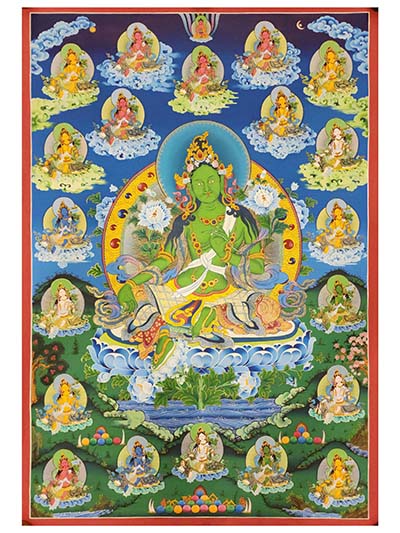
122cm 21 Tara Thangka Buddhist Traditional Painting Real Gold Tibetan Style
Weight : 0.5kg | [29491]
USD 1200
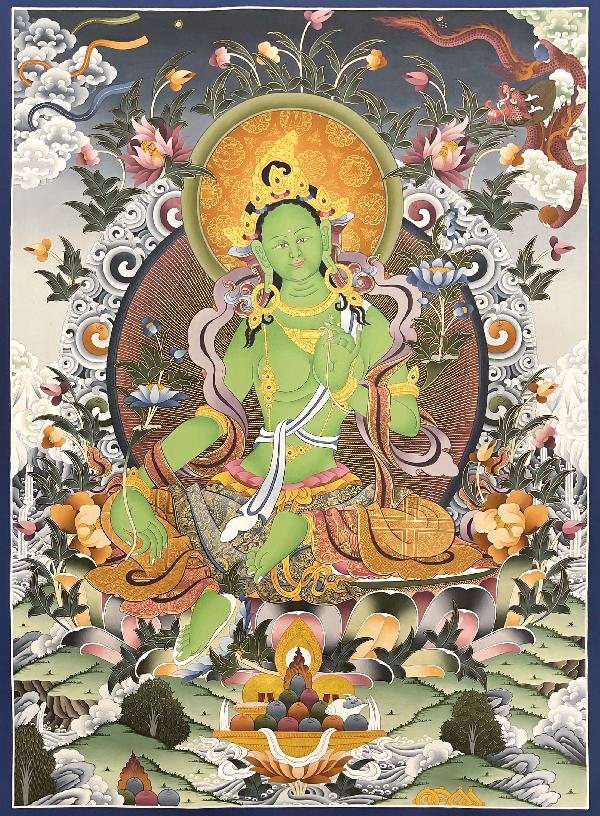
67.5cm Thangka Painting Of Green Tara Lamas Art 24 Carat Gold Tradition Color
Weight : 0.1kg | [23633]
USD 395
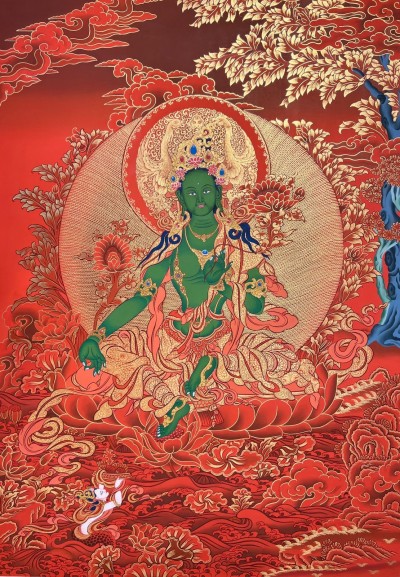
75cm Tibetan Buddhist Thangka Of Green Tara Real 24k Gold Hand Painted
Weight : 0.1kg | [25249]
USD 248
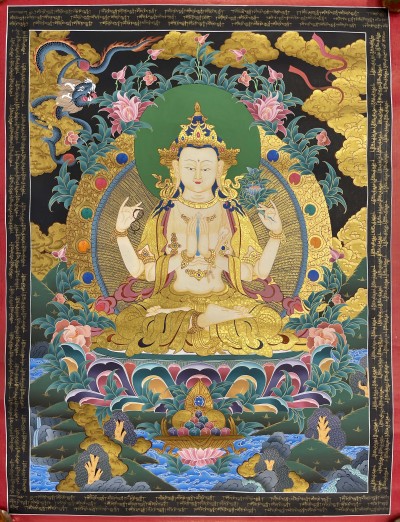
81cm Buddhist Hand Painted Thangka Of Chenrezig Real Gold Lamas Art
Weight : 0.1kg | [23747]
USD 366
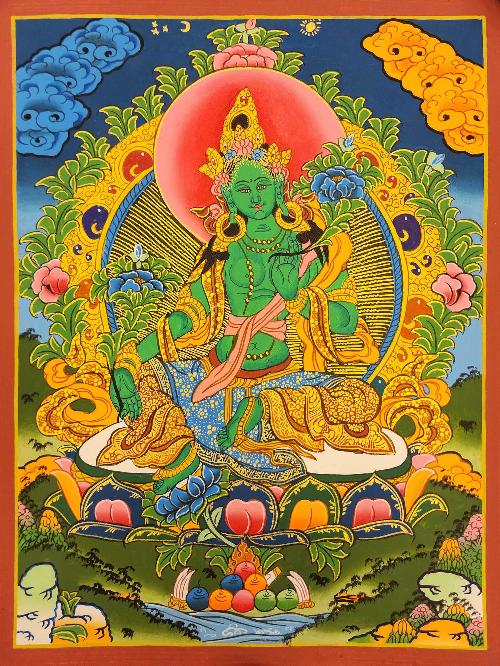
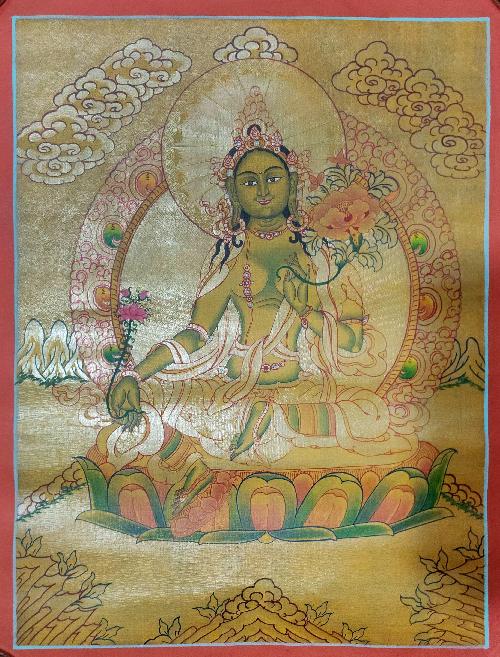
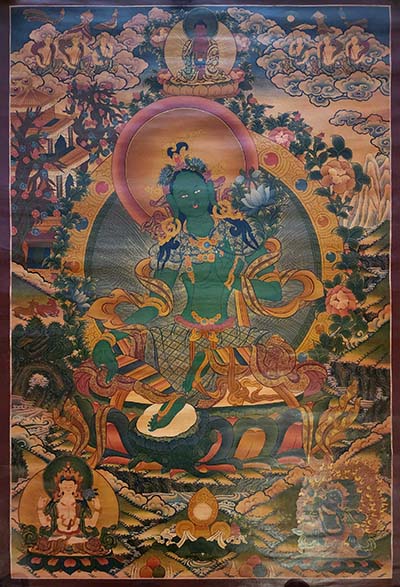
102cm Green Tara Thangka Buddhist Traditional Painting Tibetan Style Goddess Of Divine Grace Real Gold Oiled Thangka Old Stock
Weight : 0.5kg | [29719]
USD 1275
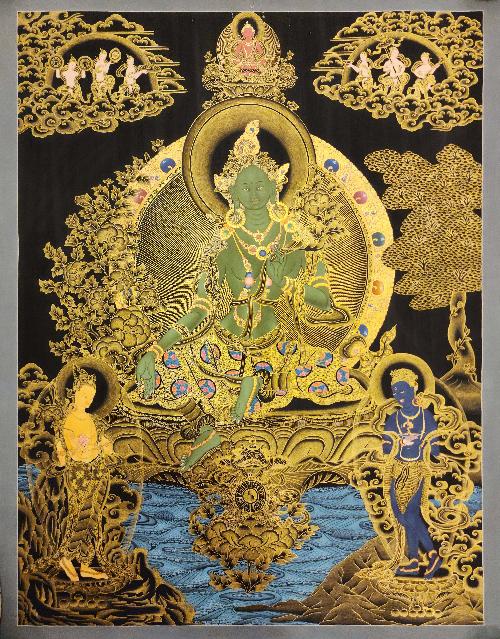
61cm Green Tara Buddhist Handmade Thangka Painting Tibetan Style Real Gold
Weight : 0.35kg | [30081]
USD 1350