Product Categories
Metal Statues
Thangka & Wall Decor
Sound & Spirituality
Buddhist Ritual Object
![Buddhist Handmade Wooden Stupa, With [shakyamuni Buddha], [traditional Color]](https://www.handmadeexpo.com/pics/product/33873.jpg)

![Buddhist Handmade Wooden Stupa, With [shakyamuni Buddha], [traditional Color]](https://www.handmadeexpo.com/pics/product/thumb/33873.jpg)
![Buddhist Handmade Wooden Stupa, With [shakyamuni Buddha], [traditional Color]](https://www.handmadeexpo.com/pics/product/thumb/33873_0.jpg)
![Buddhist Handmade Wooden Stupa, With [shakyamuni Buddha], [traditional Color]](https://www.handmadeexpo.com/pics/product/thumb/33873_1.jpg)
![Buddhist Handmade Wooden Stupa, With [shakyamuni Buddha], [traditional Color]](https://www.handmadeexpo.com/pics/product/thumb/33873_2.jpg)
![Buddhist Handmade Wooden Stupa, With [shakyamuni Buddha], [traditional Color]](https://www.handmadeexpo.com/pics/product/thumb/33873_3.jpg)
![Buddhist Handmade Wooden Stupa, With [shakyamuni Buddha], [traditional Color]](https://www.handmadeexpo.com/pics/product/thumb/33873_4.jpg)
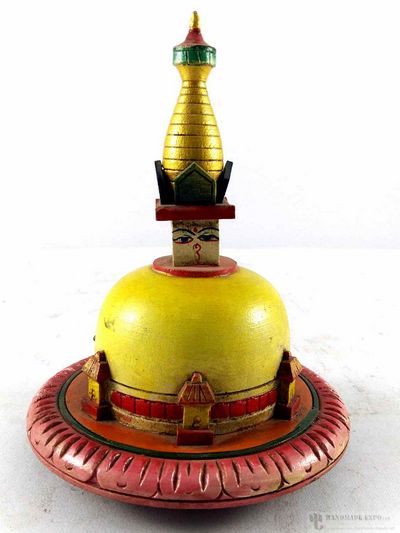
Buddhist Handmade Wooden Stupa, with Shakyamuni Buddha, Traditional Color
The shape of the stupa represents the Buddha, crowned, and sitting in meditation posture on a lion throne. His crown is the top of the spire; his head is the square at the spire's base; his body is the vase shape; his legs are the four steps of the lower terrace, and the base is his throne.
The shape of the stupa represents the Buddha, crowned, and sitting in meditation posture on a lion throne. His crown is the top of the spire; his head is the square at the spire's base; his body is the vase shape; his legs are the four steps of the lower terrace, and the base is his throne.
The ancient Sanskrit term 'Buddha' translates to 'awakened' or 'supreme awareness', closely linked with 'Bodhi' denoting enlightenment. Gautama Shakyamuni, born around 563 BCE in Lumbini (now Nepal), epitomizes compassionate understanding and enlightened consciousness. His teachings centered on understanding desire's role in perpetuating suffering, a theme resonating across Hinduism, Jainism, and related faiths. He emphasized how greed, selfishness, and possessiveness obscure higher awareness, perpetuating suffering among the sick, hungry, elderly, and impoverished. Gautama's serene image stands in contrast to Western ideals of materialism and outward pride, advocating for inner enlightenment as the path to alleviating worldly suffering. Read More . . .
The Stupa is adorned with traditional colors, creating a captivating aesthetic through a combination of gold and various hues. This painting technique follows a time-honored process that aims to faithfully represent the Stupa in accordance with traditional color descriptions. In the context of Buddhist statues, this approach holds great significance. Each statue has its own primary color, and it is crucial to depict the statue in its authentic shade. Read More . . .
Lotus Blossom Stupa
Also known as Stupa of Heaped Lotuses or Birth of the Sugata Stupa, this stupa refers to the birth of the Buddha. "At birth Buddha took seven steps in each of the four directions" (East, South, West and North). In each direction lotuses sprang, symbolizing the Four Immeasurables: love, compassion, joy and equanimity. The four steps of the basis of this stupa is circular, and it is decorated with lotus-petal designs. Occasionally, seven heaped lotus steps are constructed. These refer to the seven first steps of the Buddha.
Enlightenment Stupa
Also known as the Stupa of the Conquest of Mara. This stupa symbolizes the 35-year-old Buddha's attainment of enlightenment under the bodhi tree in Bodh Gaya, where he conquered worldly temptations and attacks manifesting in the form of Mara.
Stupa of Many Doors
Also known as the Stupa of Many Gates. After reaching enlightenment, the Buddha taught his first students in a deer-park near Sarnath. The series of doors on each side of the steps represent the first teachings: the Four Noble Truths, the Six Perfections, the Noble Eightfold Path and the Twelve Links in the Chain of Dependent Origination.
Stupa of Descent from the God Realm
At 42 years old, Buddha spent a summer retreat in Tushita Heaven, where his mother had taken rebirth. In order to repay her kindness he taught the dharma to her reincarnation. Local inhabitants built a stupa like this in Sankasya in order to commemorate this event. This stupa is characterized by having a central projection at each side containing a triple ladder or steps.
Stupa of Great Miracles
Also known as Stupa of Conquest of the Tirthikas. This stupa refers to various miracles performed by the Buddha when he was 50 years old. Legend claims that he overpowered maras and heretics by engaging them in intellectual arguments and also by performing miracles. This stupa was raised by the Lichavi kingdom to commemorate the event.
Stupa of Reconciliation
This stupa commemorates the Buddha's resolution of a dispute among the sangha. A stupa in this design was built in the kingdom of Magadha, where the reconciliation occurred. It has four octagonal steps with equal sides.
Stupa of Complete Victory
This stupa commemorates Buddha's successful prolonging of his life by three months. It has only three steps, which are circular and unadorned.
Stupa of Nirvana
This stupa refers to the death of the Buddha, when he was 80 years old. It symbolizes the Buddha's complete absorption into the highest state of mind. It is bell-shaped and usually not ornamented.
The number of Tsa-Tsas are dependent on the size of both the treasury and Tsa-Tsa, since it should be completely filled. For example, the Kalachakra stupa in southern Spain has approximately 14 000 Tsa-Tsas within.
Jewellery and other "precious" objects are also placed in the treasury. It is not necessary that the jewellery be expensive, since it is the symbolic value that is important, not the market price. It is believed that the more objects placed into the stupa, the stronger the energy of the Stupa will be
You may also want to read the related articles :
At Handicraft Seller, we believe in providing a seamless and user-friendly experience to our valued customers. While our website is not an online shopping platform, we have incorporated a shopping cart system to simplify the process of sending us your inquiries. Please follow the steps below to place your order:
Step 1: Browsing the Selection
Explore our website to discover a delightful array of authentic Nepali handicraft products.
Click on the products you are interested in to view detailed descriptions and images.
Step 2: Adding Items to Your Inquiry Cart
To express your interest in a particular product, click the "Add to Inquiry Cart" button associated with that item.
The shopping cart will accumulate your selected products, providing a convenient way to organize your choices.
Step 3: Reviewing Your Inquiry Cart
Once you have finished selecting the items you wish to inquire about, review your "Inquiry Cart" to ensure accuracy.
Step 4: Sending Your Inquiries
Proceed to submit your inquiries by clicking the "Submit Inquiry" button.
A form will prompt you to provide your contact details, the selected products, and any specific queries you may have.
Step 5: Communicating through Email
As we do not have an automated payment system, we will conduct the business process through email.
Our team will review your inquiries and respond via email, offering further assistance and guidance.
Step 6: Clarifying Details and Finalizing Your Order
Engage in direct communication with our team to clarify any additional information or customization requests.
Once you are satisfied with the details, we will provide you with payment instructions and confirm the order.
Step 7: Completing the Transaction
Make the payment through the designated method as provided in the email.
After receiving the payment, we will process your order and prepare it for shipment.
Step 8: Shipping and Delivery
We offer worldwide shipping for all our products.
Once your order is dispatched, we will provide you with shipping details and tracking information.
Step 9: Receiving and Enjoying Your Handicrafts
Wait for your exquisite handicrafts to arrive at your doorstep.
Unpack and revel in the beauty and craftsmanship of your chosen Nepali treasures.
Contacting Us
If you encounter any complications while submitting your inquiries or need further assistance, please feel free to contact us.
Preferably, reach out to us through WhatsApp or email for prompt responses and support.
We hope this straightforward ordering process ensures a delightful and satisfying experience with Handicraft Seller. Thank you for choosing us to connect you with the rich heritage of Nepali handicrafts.
Return Policy
We have a 7 days money back policy but buyer have to pay the return shipping charges.
Shipping
- Shipping cost is calculated, based on the shipping weight of the products ordered. THe normal Shipping cost is US$25 for upto 0.5 kgs weight
- We ship Worldwide, Except Russia and India.
- The deliver duration varies for international Shipping location. We normally dispatch the product in 2 -3 business days. Else Buyer will be infromed Personally about the shipping.
Related Products
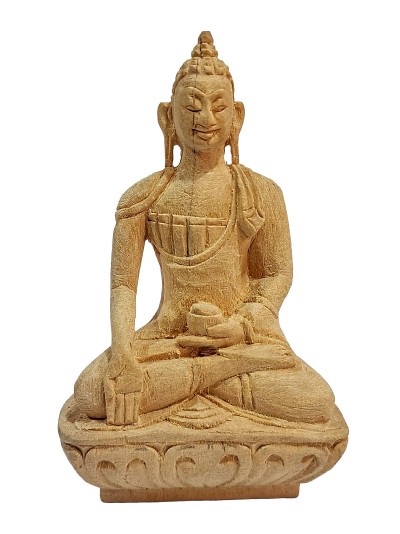
9cm Buddhist Handmade Wooden Statue Of Ratnasambhava Buddha Karma Wood
Weight : 0.04kg | [28745]
USD 23
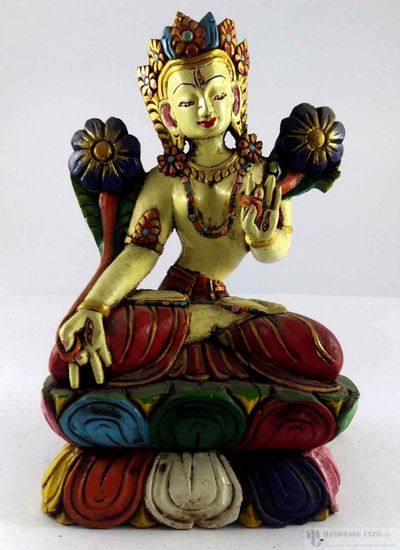
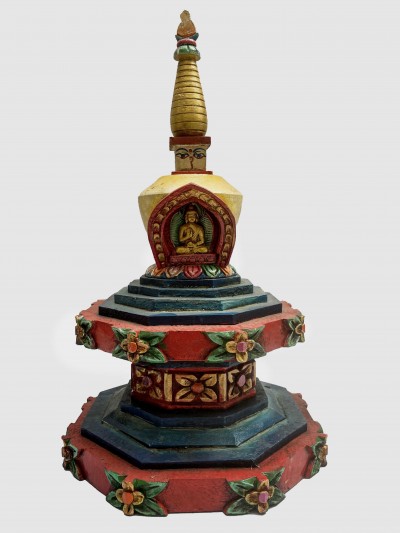
37cm Buddhist Wooden Statue Of Stupa With Blessing Buddha Traditional Color Finishing
Weight : 1.44kg | [24580]
USD 68
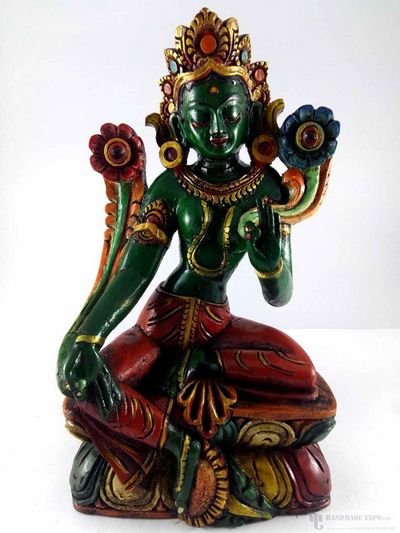
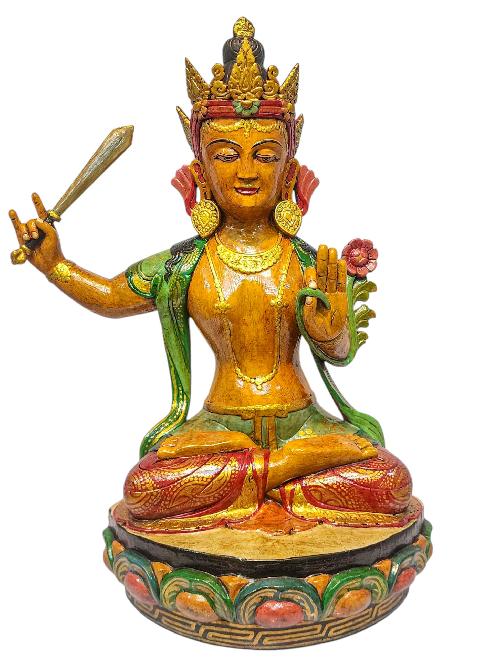
49cm Manjushree Buddhist Handmade Wooden Statue Natural Colour Finishing
Weight : 3.14kg | [33755]
USD 210