Product Categories
Metal Statues
Thangka & Wall Decor
Sound & Spirituality
Buddhist Ritual Object
![Chakrasamvara With Consort, [shakti], Yab-yum Wooden Wall Hanging With [siku Design]](https://www.handmadeexpo.com/pics/product/16191.jpg)

![Chakrasamvara With Consort, [shakti], Yab-yum Wooden Wall Hanging With [siku Design]](https://www.handmadeexpo.com/pics/product/thumb/16191.jpg)
![Chakrasamvara With Consort, [shakti], Yab-yum Wooden Wall Hanging With [siku Design]](https://www.handmadeexpo.com/pics/product/thumb/16191_0.jpg)
Chakrasamvara with Consort, Shakti, Yab-yum Wooden Wall Hanging with Siku Design
Chakrasamvara is a leading tantric deity who embodies great bliss [Skt. Mahasukha] realisable through a combination of wisdom and method. The idea of duality, the merging & union of two opposite forms or ideas originated thousands of years ago. Through a union of our self & the universe we become part of the Sambhogakaya realm within which great happiness which includes love, friendship, peace and joy. Chakra Sambhava is a tutelary deity seeking to guide people to great happiness. Read More . . .
Shakti Yab-yum is a common symbol in Nepalese and Tibetan art. It represents the primordial union of wisdom and compassion, depicted as a male deity in union with his female consort via the similar concept of interpenetration or "coalescence," as illustrated by the concept of Indra's net. The male figure represents compassion and dexterity, while the female figure represents insight. The female is seated on the male's lap in yab-yum. A rare rendition of a similar figure, but reversed, with the male sitting on the female's lap, is known as yum-yab. Read More . . .
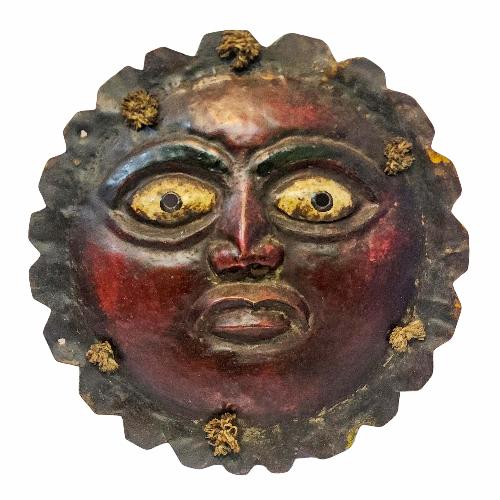
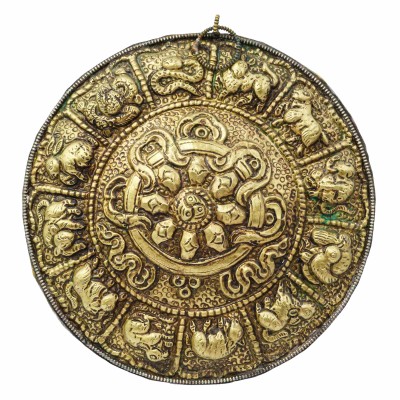
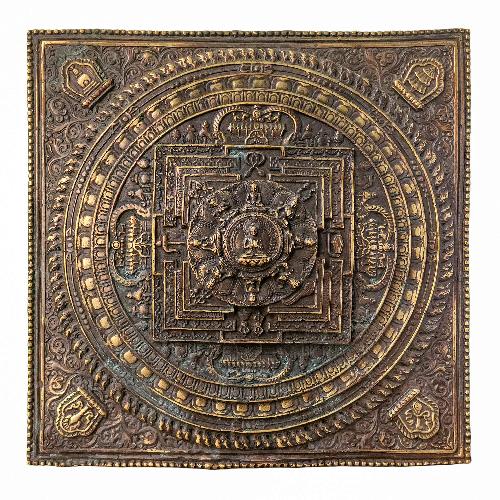
One of the most common themes depicted in Tibetan wall hangings is the mandala, a geometric representation of the universe. Mandalas are often intricate, symmetrical designs that are meant to represent the balance and harmony of the universe. They can also depict important Buddhist teachings and spiritual stories, and they serve as a focus for meditation and spiritual contemplation. Other popular themes in Tibetan wall hangings include Buddhist deities such as the Buddha, bodhisattvas, and protectors, as well as important Buddhist symbols like the lotus flower, the wheel of life, and the eight auspicious symbols.
The use of color in Tibetan wall hangings is also significant, as each color is associated with a specific emotion, quality, or spiritual aspect. For example, gold is associated with wisdom and compassion, red symbolizes passion and power, and blue represents serenity and peace. The use of semi-precious stones in these wall hangings is also significant, as each stone is believed to have spiritual properties and can bring positive energy to the environment.
In conclusion, Tibetan metal or wooden wall hangings are a rich and important part of Tibetan Buddhist culture. They serve as sacred objects for meditation, worship, and offerings, and their intricate designs, vibrant colors, and semi-precious stone settings make them both beautiful and significant. These wall hangings are a testament to the beauty and significance of Tibetan Buddhist culture and continue to be valued and revered to this day.
You may also want to read the related articles :
At Handicraft Seller, we believe in providing a seamless and user-friendly experience to our valued customers. While our website is not an online shopping platform, we have incorporated a shopping cart system to simplify the process of sending us your inquiries. Please follow the steps below to place your order:
Step 1: Browsing the Selection
Explore our website to discover a delightful array of authentic Nepali handicraft products.
Click on the products you are interested in to view detailed descriptions and images.
Step 2: Adding Items to Your Inquiry Cart
To express your interest in a particular product, click the "Add to Inquiry Cart" button associated with that item.
The shopping cart will accumulate your selected products, providing a convenient way to organize your choices.
Step 3: Reviewing Your Inquiry Cart
Once you have finished selecting the items you wish to inquire about, review your "Inquiry Cart" to ensure accuracy.
Step 4: Sending Your Inquiries
Proceed to submit your inquiries by clicking the "Submit Inquiry" button.
A form will prompt you to provide your contact details, the selected products, and any specific queries you may have.
Step 5: Communicating through Email
As we do not have an automated payment system, we will conduct the business process through email.
Our team will review your inquiries and respond via email, offering further assistance and guidance.
Step 6: Clarifying Details and Finalizing Your Order
Engage in direct communication with our team to clarify any additional information or customization requests.
Once you are satisfied with the details, we will provide you with payment instructions and confirm the order.
Step 7: Completing the Transaction
Make the payment through the designated method as provided in the email.
After receiving the payment, we will process your order and prepare it for shipment.
Step 8: Shipping and Delivery
We offer worldwide shipping for all our products.
Once your order is dispatched, we will provide you with shipping details and tracking information.
Step 9: Receiving and Enjoying Your Handicrafts
Wait for your exquisite handicrafts to arrive at your doorstep.
Unpack and revel in the beauty and craftsmanship of your chosen Nepali treasures.
Contacting Us
If you encounter any complications while submitting your inquiries or need further assistance, please feel free to contact us.
Preferably, reach out to us through WhatsApp or email for prompt responses and support.
We hope this straightforward ordering process ensures a delightful and satisfying experience with Handicraft Seller. Thank you for choosing us to connect you with the rich heritage of Nepali handicrafts.
Return Policy
We have a 7 days money back policy but buyer have to pay the return shipping charges.
Shipping
- Shipping cost is calculated, based on the shipping weight of the products ordered. THe normal Shipping cost is US$25 for upto 0.5 kgs weight
- We ship Worldwide, Except Russia and India.
- The deliver duration varies for international Shipping location. We normally dispatch the product in 2 -3 business days. Else Buyer will be infromed Personally about the shipping.
Related Products
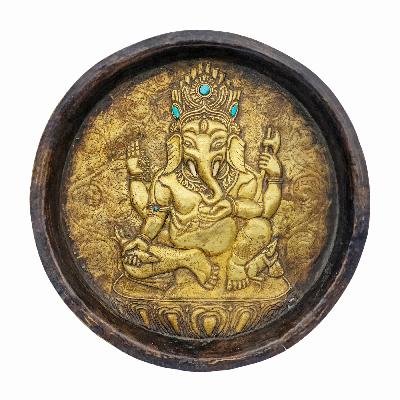
34cm Ganesh Buddhist Handmade Wall Hanging Stone Setting Rare Find
Weight : 0.55kg | [29805]
USD 450
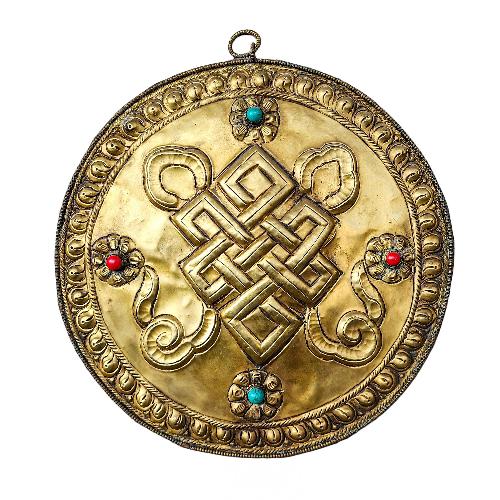
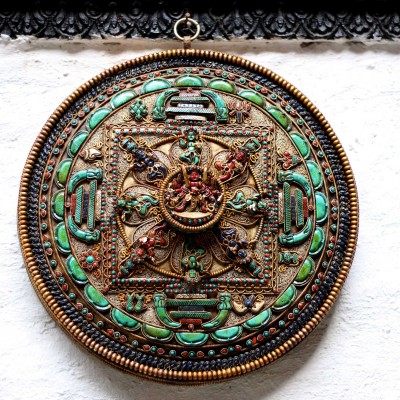
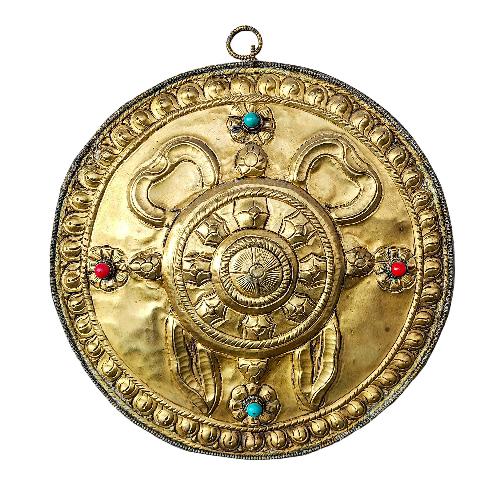
39cm Chakrasamvara Jogini Mandala With Real Stone Metal Setting And Gold Plated
Weight : 3.24kg | [16217]
USD 1225
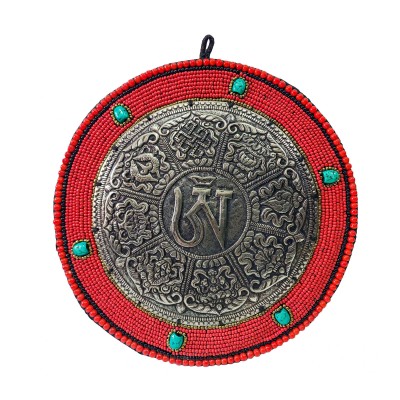
30cm Traditional Tibetan Ritual Wall Hanging Of Ashtamangala Mandala With Om Round Shape Stone Setting
Weight : 0.9kg | [28527]
USD 27