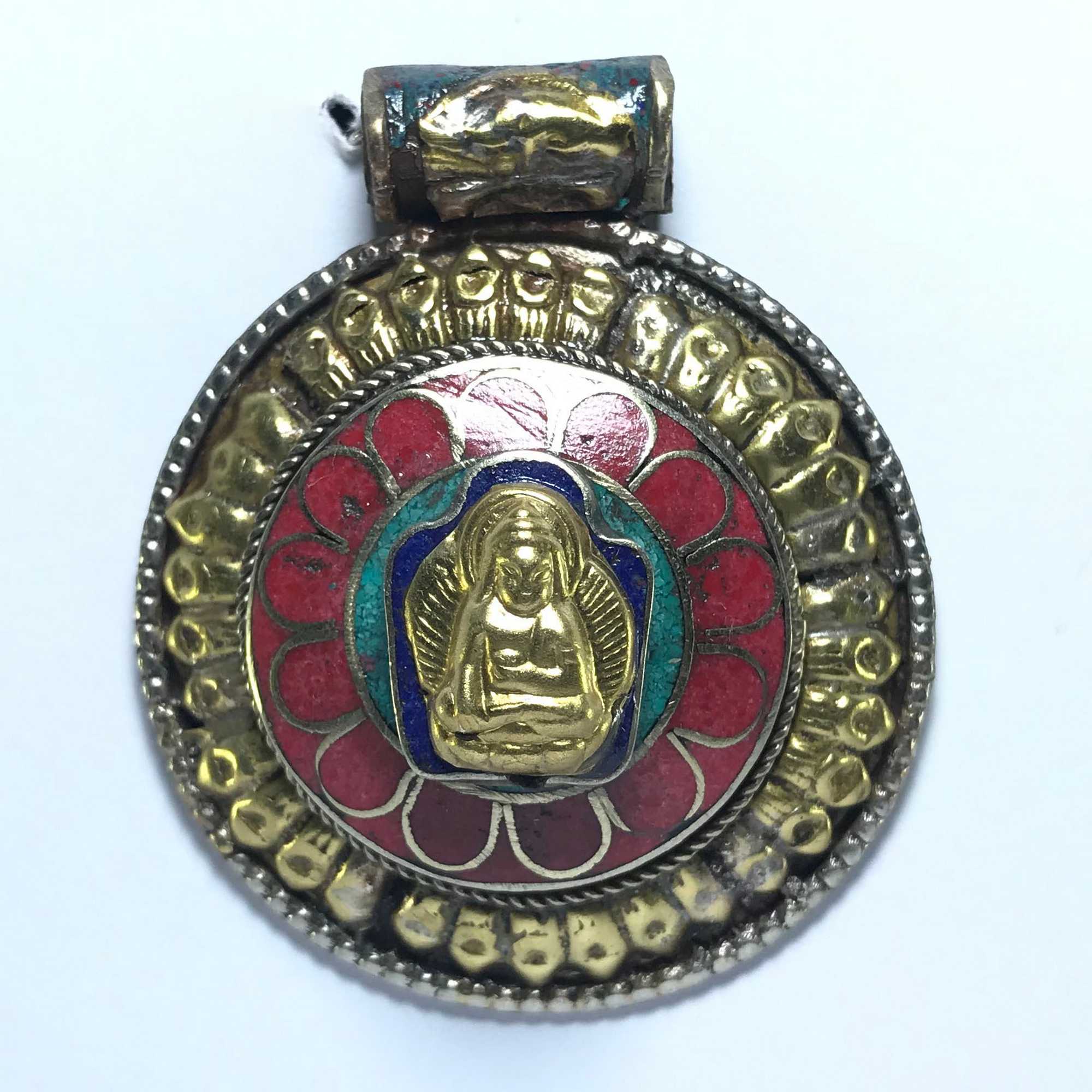
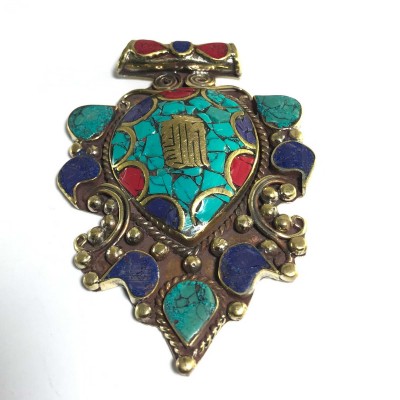
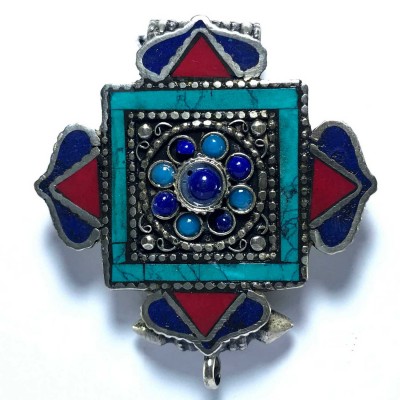
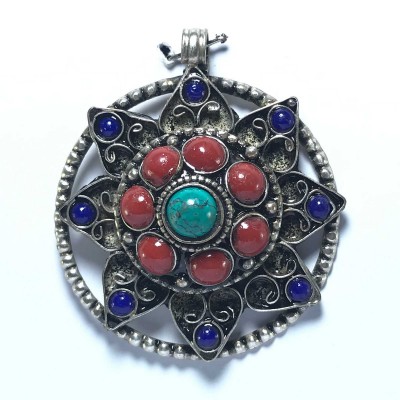
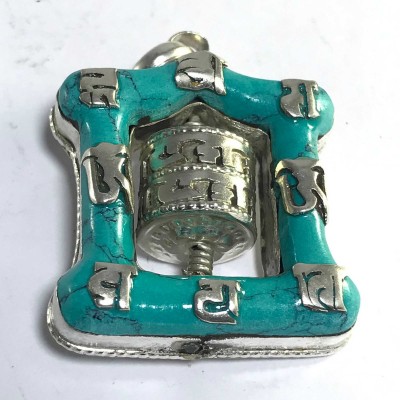
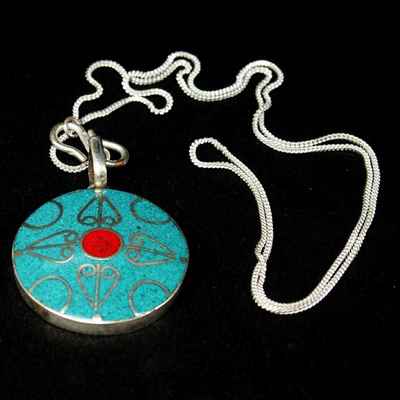
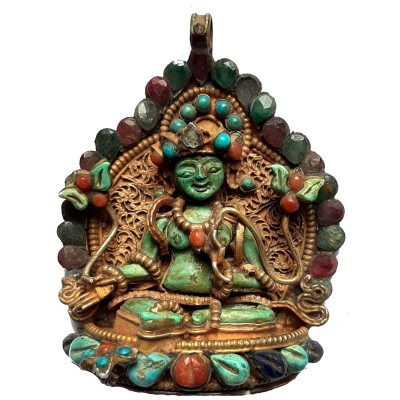
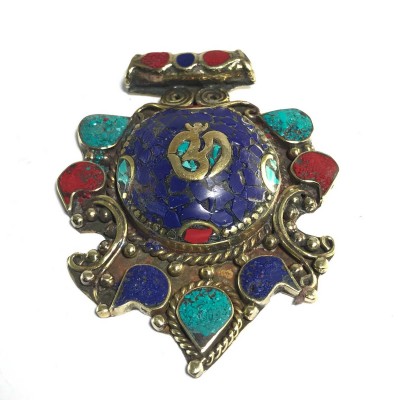
A Nepali metal pendant is a traditional piece of jewelry that is crafted in Nepal using traditional techniques and materials. The pendant is typically made of metal, such as brass or silver, and is intricately designed and embellished with cultural motifs and symbols.
The design of the pendant may be inspired by Nepali culture and symbolism, with patterns and motifs that represent different aspects of Nepali life, such as nature, religion, or social customs. These designs may be created using traditional techniques, such as etching, stamping, or engraving, and may be further embellished with beads, gems, or other decorative elements.
Shipping Calculation
The shipping weight for 1 piece of the product is 0.50 kg, and shipping cost is USD31.00.
Note: Shipping Charge for this product will be calculated based on volumetric(dimensional) weight.
Country
Shipping Mode
We normally dispatch orders within 2 to 5 business days. If there are any delays, we will personally inform the buyer about the dispatch date.
We accept Paypal | Credit/Debit Card | Bank Transfer | Money Transfer / Remit Click Here for more Information.
We offer a simple 7-day money-back policy, with the buyer responsible for return shipping. Click Here for more Information.
Metal Pendant :
A Nepali metal pendant is a traditional piece of jewelry that is crafted in Nepal using traditional techniques and materials. The pendant is typically made of metal, such as brass or silver, and is intricately designed and embellished with cultural motifs and symbols.
The design of the pendant may be inspired by Nepali culture and symbolism, with patterns and motifs that represent different aspects of Nepali life, such as nature, religion, or social customs. These designs may be created using traditional techniques, such as etching, stamping, or engraving, and may be further embellished with beads, gems, or other decorative elements.
Shakyamuni Buddha : Brief Introduction
The ancient Sanskrit term 'Buddha' translates to 'awakened' or 'supreme awareness', closely linked with 'Bodhi' denoting enlightenment. Gautama Shakyamuni, born around 563 BCE in Lumbini (now Nepal), epitomizes compassionate understanding and enlightened consciousness. His teachings centered on understanding desire's role in perpetuating suffering, a theme resonating across Hinduism, Jainism, and related faiths. He emphasized how greed, selfishness, and possessiveness obscure higher awareness, perpetuating suffering among the sick, hungry, elderly, and impoverished. Gautama's serene image stands in contrast to Western ideals of materialism and outward pride, advocating for inner enlightenment as the path to alleviating worldly suffering.
Iconography The idea of freeing the self (ourselves) from material world & the realisation of the supreme self is a theme common to Indian Philosophy. This is why word associated with the liberation such as Moksha, Samsara ( cycles of suffering), Karma & Nirvana are common to Hinduism , Jainism & Sikhism. The difference between these three schools of thought is twofold, 1. How this freeing of the self is attained & 2. What the nature of this freedom 'is'. That is what state of being freed or partly freed actually feels like or how it can be described.
Gautama is painted with golden skin sitting in a lotus seat [Skt. Padmasana] also called the meditative seat [Skt. Dhyanasana] & upon a white moon disc which represents the male principle of method which itself is upon a lotus throne. His left hand touches the ground in what is called bhumisparse mudra which symbolises his own recognition of enlightened mind in one of the most iconic images in all Buddhism. The palm always faces inwards. His feet are deliberately drawn level with one another & enlarged, being specific marks of a Buddha. His right hand supports an alms bowl [Skt. Patra], containing the liquid elixir of eternal life. Somehow the simple image of the bowl reflects his overwhelming humility & kindness. He wears the traditionally maroon gold monk's patched robe [Skt. Samghati] made of twenty five pieces of cloth which the first Buddhist monks sewed together. The Buddha has a green nimbus and blue aureole around his body signifying the highest level of understanding. Siddhartha is surrounded by Pink Lotuses [Skt. Padma]. This kind of lotus is connected with loving kindness & a flowering of pure consciousness. The closed bud to his right side represents the past or originating mind, the blooming flower represents the present & the buds represents the future Buddha Maitreya and forthcoming realisations. His elongated earlobes depict his royal connection; his knotted black hair & topknot symbolise his abandonment of worldly possessions; the dot [Skt. Urna] on his brow on the command chakra [Skt. Ajna] represents his transcendent wisdom, the 31st mark of a Buddha.
Life Story Gautama was born c.563 BCE Lumbini, today in Nepal Died c.483 BCE Kushinagar in India. within the Sakya kingdom in Nepal. He family names were variously called Gautama [Skt. 'Best Cow'] & surname Shakyamuni [Skt. meaning 'Sage of the Shakyas'] The name Gautama is linked with a person called Maharshi [Eng. victorious on earth] Gautama who was an ancient seer. Maharshi Gouthama descendents adopted his surname. During his life he was as often called Gautama Tathagata, as Gautama Siddhi-hatha as Gautama Buddha. It was in recognition of his spiritual accomplishments he was called Siddhartha & relates to why Gautama is a Hindu avatar. The lineage of 23 Buddhas were for the majority drawn from Janapada Kings & high ranking Brahmins.
He studied Buddhist Ideas in several locations in Kashmir & Northern India which to may seem a contradiction in terms, this is because to many Gautama Buddha is what Buddhism is. There are in fact two basic schools of thought. 1. That Gautama is recognised for his enlightened reasoning who according to Theravada Buddhism was the 28th Buddha. 2. That he is the Supreme Buddha [Skt. Sammasambuddha] of our age & that he is the be all & end all of Buddhist Doctrine, & closely follow his progress or 'life story' & to how he in how became full awoken. In Hinduism he is considered to be the ninth avatar of God Vishnu.
At the age of 29 Siddhartha left his palace in order to meet his people. Despite his father's effort to remove the sick, aged & impoverished, Siddhartha encountered an old man. Disturbed by this, when told that all people would eventually grow old by his charioteer Channa, variously, a diseased man, a decaying corpse, and an ascetic. Deeply depressed by these sights, he sought to overcome old age, illness, and death by living the life of an ascetic. He left his palace leaving behind this royal life to become a mendicant. Siddhartha left Rajagaha and practised under two hermit teachers. After mastering the teachings of Alara Kalama Siddhartha was asked by Kalama to succeed him, but moved on.
He then became a student of Uddaka Ramaputta, but although he achieved high levels of meditative consciousness and was asked to succeed Ramaputta, he was still not satisfied with his path, and moved on. He initially became as ascetic but then After asceticism and concentrating on meditation and Anapana-sati (awareness of breathing in and out), Siddhartha is said to have discovered what Buddhists call the Middle Way- a path of moderation away from the extremes of self-indulgence and self-mortification.
Gautama thus journeyed to Deer Park near Varanasi (Benares) in northern India, he set in motion the Wheel of Dharma by delivering his first sermon to the group of five companions with whom he had previously sought enlightenment. They, together with the Buddha, formed the first sangha, the company of Buddhist monks. For the remaining 45 years of his life, the Buddha is said to have traveled in the Gangetic Plain, in what is now Uttar Pradesh, Bihar & southern Nepal, teaching to an extremely diverse range of people, from nobles to outcaste street sweepers, mass murderers such as Angulimala & cannibals such as Alavaka. The sangha travelled from place to place in India, expounding the dharma.
2nd Commentary Gautama's entire Teachings revolve around: The Principle of the Three marks of existence; 1. Dukkha (Sanskrit: du?kha): That all beings suffer from all situations due to unclear mind. 2. Anicca (Sanskrit: anitya): That all things are impermanent. 3. Anatta (Sanskrit: anatman): That the perception of a constant "self" is an illusion. Gautama considers the arising of this suffering, & explains that this is caused by a misunderstanding of phenomena (the world around us) which is impermanent [Anicca] which he then related to the illusion of the ego, which is actually nothing but an illusion. [Anatta]. He shows that by understanding the nature of the suffering, & specifically its arising, we can alleviate this or extinguish it altogether.
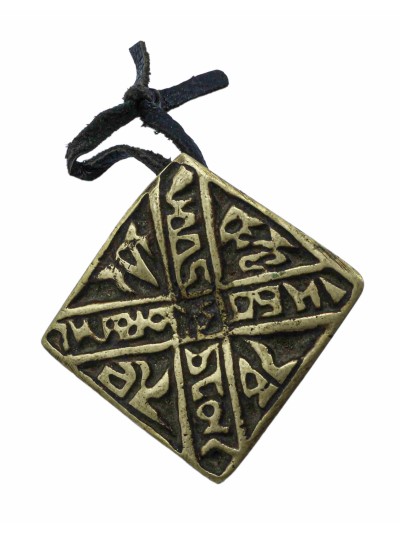
Mantra of Shakyamuni buddha
Om Muni Muni Maha Muniye Soha
Read More . . .
The pendant may be worn on a chain or cord around the neck, and is often used as a statement piece or as a talisman to protect the wearer from negative energies or evil spirits. It is also commonly given as a gift to family members or friends, particularly on special occasions, such as weddings or religious ceremonies.
Overall, a Nepali metal pendant is a beautiful and unique piece of jewelry that represents the rich cultural heritage of Nepal and the skill and artistry of its craftsmen. It is a treasured possession that carries deep meaning and significance for those who wear it or receive it as a gift.
You may also want to read the related articles :
At Handicraft Seller, we believe in providing a seamless and user-friendly experience to our valued customers. While our website is not an online shopping platform, we have incorporated a shopping cart system to simplify the process of sending us your inquiries. Please follow the steps below to place your order:
Step 1: Browsing the Selection Explore our website to discover a delightful array of authentic Nepali handicraft products. Click on the products you are interested in to view detailed descriptions and images.
Step 2: Adding Items to Your Inquiry Cart To express your interest in a particular product, click the "Add to Inquiry Cart" button associated with that item. The shopping cart will accumulate your selected products, providing a convenient way to organize your choices.
Step 3: Reviewing Your Inquiry Cart Once you have finished selecting the items you wish to inquire about, review your "Inquiry Cart" to ensure accuracy.
Step 4: Sending Your Inquiries Proceed to submit your inquiries by clicking the "Submit Inquiry" button. A form will prompt you to provide your contact details, the selected products, and any specific queries you may have.
Step 5: Communicating through Email As we do not have an automated payment system, we will conduct the business process through email. Our team will review your inquiries and respond via email, offering further assistance and guidance.
Step 6: Clarifying Details and Finalizing Your Order Engage in direct communication with our team to clarify any additional information or customization requests. Once you are satisfied with the details, we will provide you with payment instructions and confirm the order.
Step 7: Completing the Transaction Make the payment through the designated method as provided in the email. After receiving the payment, we will process your order and prepare it for shipment.
Step 8: Shipping and Delivery We offer worldwide shipping for all our products. Once your order is dispatched, we will provide you with shipping details and tracking information.
Step 9: Receiving and Enjoying Your Handicrafts Wait for your exquisite handicrafts to arrive at your doorstep. Unpack and revel in the beauty and craftsmanship of your chosen Nepali treasures.
Contacting Us If you encounter any complications while submitting your inquiries or need further assistance, please feel free to contact us. Preferably, reach out to us through WhatsApp or email for prompt responses and support.
We hope this straightforward ordering process ensures a delightful and satisfying experience with Handicraft Seller. Thank you for choosing us to connect you with the rich heritage of Nepali handicrafts.
Return Policy
We have a 7 days money back policy but buyer have to pay the return shipping charges.
Shipping
Shipping cost is calculated, based on the shipping weight of the products ordered. THe normal Shipping cost is US$25 for upto 0.5 kgs weight
We ship Worldwide, Except Russia and India.
The deliver duration varies for international Shipping location. We normally dispatch the product in 2 -3 business days. Else Buyer will be infromed Personally about the shipping.
This is not a direct shopping website. So no payments are needed for placing an order. Please feel free to send us an order for the product you are interested in, mentioning the approximate quantity. Based on which we will send you a wholesale price quotation.