Product Categories
Metal Statues
Thangka & Wall Decor
Sound & Spirituality
Buddhist Ritual Object
![Milarepa Thangka, Buddhist Traditional Painting, Tibetan Style, [real Gold]](https://www.handmadeexpo.com/pics/product/29962.jpg)

![Milarepa Thangka, Buddhist Traditional Painting, Tibetan Style, [real Gold]](https://www.handmadeexpo.com/pics/product/thumb/29962.jpg)
![Milarepa Thangka, Buddhist Traditional Painting, Tibetan Style, [real Gold]](https://www.handmadeexpo.com/pics/product/thumb/29962_0.jpg)
![Milarepa Thangka, Buddhist Traditional Painting, Tibetan Style, [real Gold]](https://www.handmadeexpo.com/pics/product/thumb/29962_1.jpg)
![Milarepa Thangka, Buddhist Traditional Painting, Tibetan Style, [real Gold]](https://www.handmadeexpo.com/pics/product/thumb/29962_2.jpg)
![Milarepa Thangka, Buddhist Traditional Painting, Tibetan Style, [real Gold]](https://www.handmadeexpo.com/pics/product/thumb/29962_3.jpg)
![Milarepa Thangka, Buddhist Traditional Painting, Tibetan Style, [real Gold]](https://www.handmadeexpo.com/pics/product/thumb/29962_4.jpg)
![Milarepa Thangka, Buddhist Traditional Painting, Tibetan Style, [real Gold]](https://www.handmadeexpo.com/pics/product/thumb/29962_5.jpg)
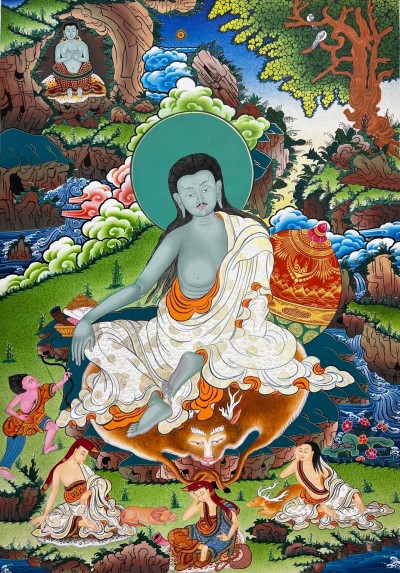
Milarepa Thangka, Buddhist Traditional Painting, Tibetan Style, Real Gold
This thangka of Milarepa has real gold painted on its surface along with other paints. This is an ancient process of decorating the thangka in Tibetan Buddhism, Here gold is ground into gold dust, which is then mixed with other undisclosed material to make it paintable on the canvas. this mixture is then mixed with transparent glue and painted on the thangka. Read More . . .
A thangka, also known as tangka, thanka, or tanka, is a vibrant and intricate Tibetan Buddhist painting that serves as a visual representation of spiritual teachings. Crafted with meticulous detail on cotton or silk appliqué, thangkas depict a wide range of subjects including Buddhist deities, sacred scenes, mandalas, and narrative stories. These sacred artworks are traditionally kept unframed and rolled up for storage, resembling ancient scrolls. To protect their delicate nature, thangkas are mounted on textile backings and often adorned with a silk cover on the front. Proper preservation in dry environments is crucial to maintain the integrity and longevity of the silk. Read More . . .
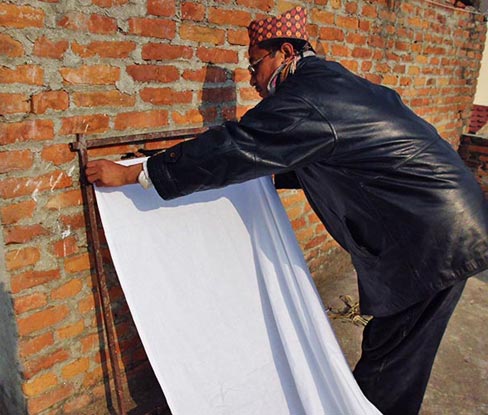
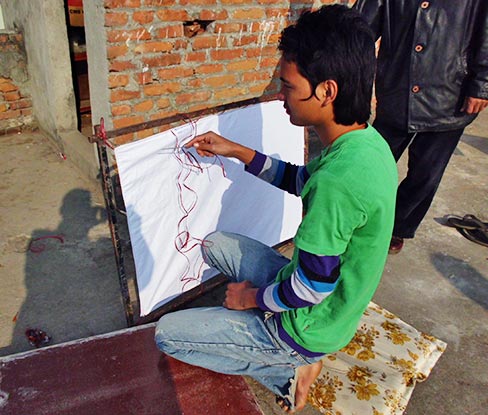
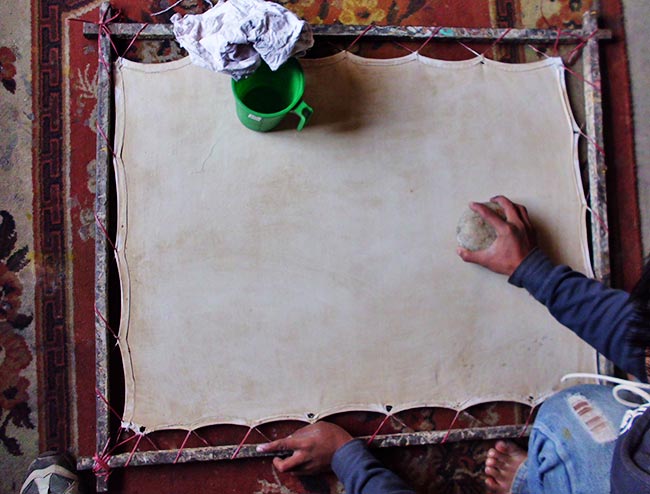
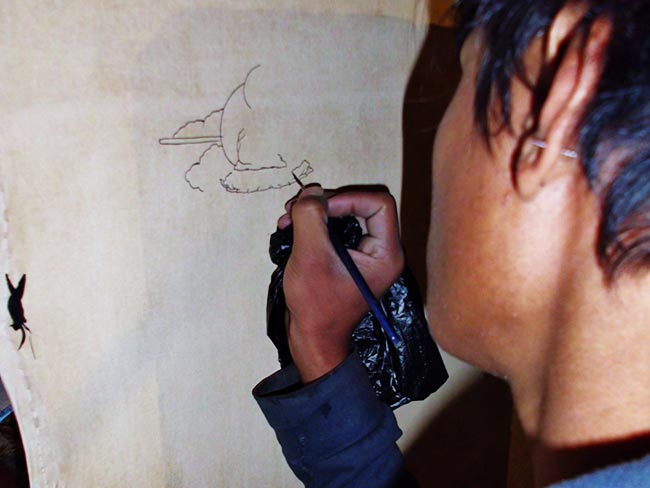
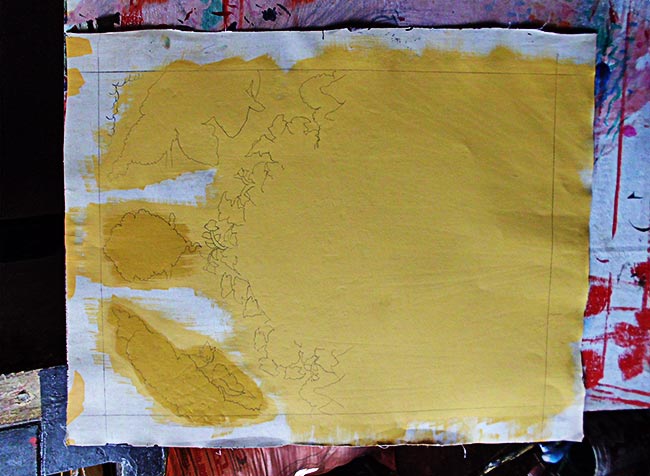
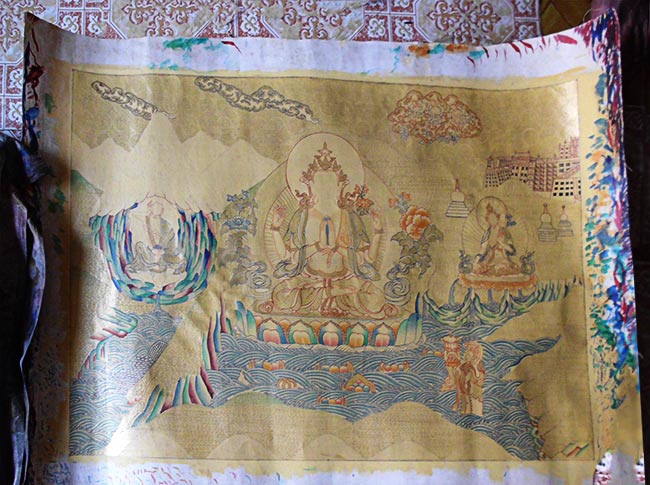
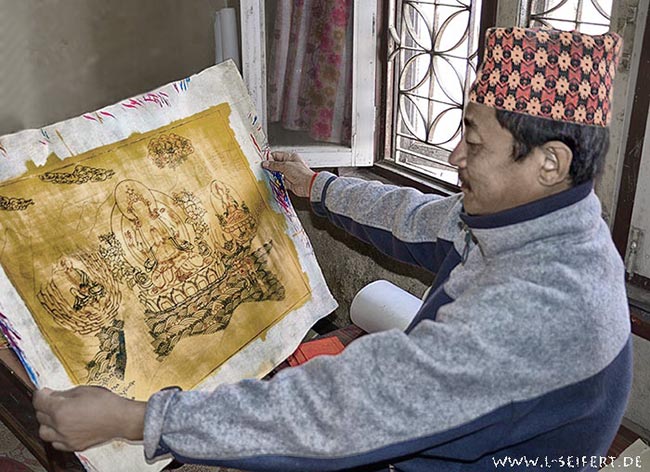
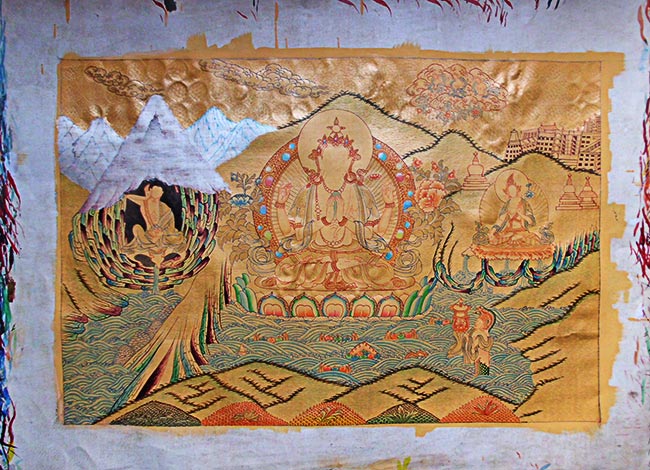
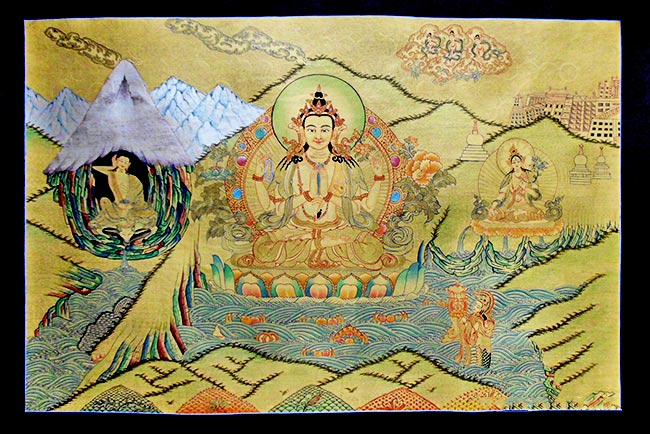
Many of Milarepa's deeds took place in Chokyi Dronma's homeland and his life and songs were compiled by Tsangnyon Heruka, sponsored by Chokyi Dronma's brother, the Gungthang king Thri Namgyal De.
Milarepa later lamented his evil ways in his older years: "In my youth I committed black deeds. In maturity I practiced innocence. Now, released from both good and evil, I have destroyed the root of karmic action and shall have no reason for action in the future. To say more than this would only cause weeping and laughter. What good would it do to tell you? I am an old man. Leave me in peace."
Mantra of Milarespa
You may also want to read the related articles :
Videos of Thangka Making Process | Making Process Of Tibetan Thangka | What is a Thangka | Thangka Brocading OptionAt Handicraft Seller, we believe in providing a seamless and user-friendly experience to our valued customers. While our website is not an online shopping platform, we have incorporated a shopping cart system to simplify the process of sending us your inquiries. Please follow the steps below to place your order:
Step 1: Browsing the Selection
Explore our website to discover a delightful array of authentic Nepali handicraft products.
Click on the products you are interested in to view detailed descriptions and images.
Step 2: Adding Items to Your Inquiry Cart
To express your interest in a particular product, click the "Add to Inquiry Cart" button associated with that item.
The shopping cart will accumulate your selected products, providing a convenient way to organize your choices.
Step 3: Reviewing Your Inquiry Cart
Once you have finished selecting the items you wish to inquire about, review your "Inquiry Cart" to ensure accuracy.
Step 4: Sending Your Inquiries
Proceed to submit your inquiries by clicking the "Submit Inquiry" button.
A form will prompt you to provide your contact details, the selected products, and any specific queries you may have.
Step 5: Communicating through Email
As we do not have an automated payment system, we will conduct the business process through email.
Our team will review your inquiries and respond via email, offering further assistance and guidance.
Step 6: Clarifying Details and Finalizing Your Order
Engage in direct communication with our team to clarify any additional information or customization requests.
Once you are satisfied with the details, we will provide you with payment instructions and confirm the order.
Step 7: Completing the Transaction
Make the payment through the designated method as provided in the email.
After receiving the payment, we will process your order and prepare it for shipment.
Step 8: Shipping and Delivery
We offer worldwide shipping for all our products.
Once your order is dispatched, we will provide you with shipping details and tracking information.
Step 9: Receiving and Enjoying Your Handicrafts
Wait for your exquisite handicrafts to arrive at your doorstep.
Unpack and revel in the beauty and craftsmanship of your chosen Nepali treasures.
Contacting Us
If you encounter any complications while submitting your inquiries or need further assistance, please feel free to contact us.
Preferably, reach out to us through WhatsApp or email for prompt responses and support.
We hope this straightforward ordering process ensures a delightful and satisfying experience with Handicraft Seller. Thank you for choosing us to connect you with the rich heritage of Nepali handicrafts.
Return Policy
We have a 7 days money back policy but buyer have to pay the return shipping charges.
Shipping
- Shipping cost is calculated, based on the shipping weight of the products ordered. THe normal Shipping cost is US$25 for upto 0.5 kgs weight
- We ship Worldwide, Except Russia and India.
- The deliver duration varies for international Shipping location. We normally dispatch the product in 2 -3 business days. Else Buyer will be infromed Personally about the shipping.
Related Products
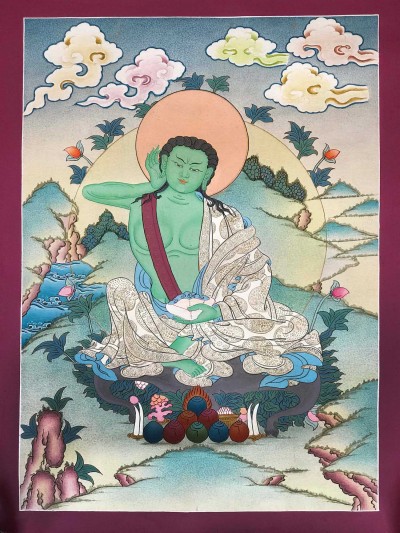
35cm Tibetan Thangka Of Milarepa Light Color
Weight : 0.1kg | [18882]
US$56
US$44.8
You Save
US$11.2
(20%)
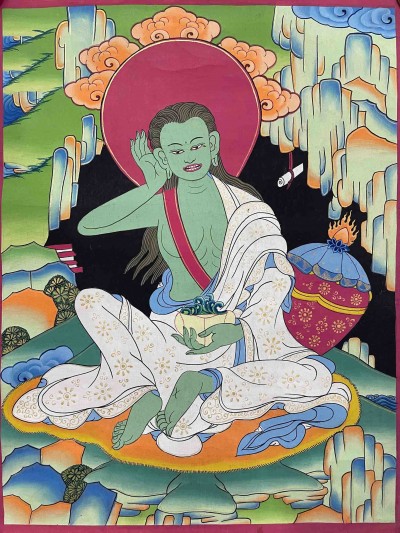
36cm Buddhist Handmade Thangka Painting Of Milarepa, Hand Painted
Weight : 0.1kg | [25735]
US$20
US$16
You Save
US$4
(20%)
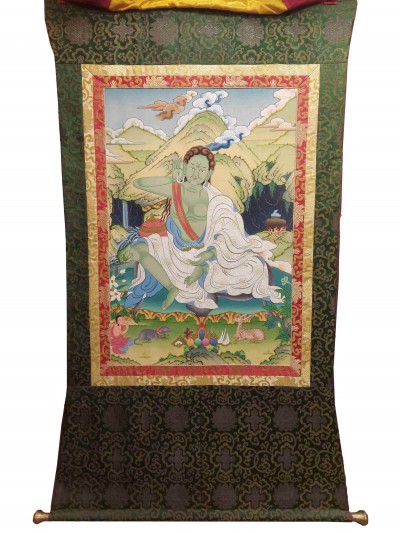
147cm Buddhist Hand Painting Thangka Of Milarepa, With Brocade, Hand Painted
Weight : 0.5kg | [25972]
US$1840
US$1472
You Save
US$368
(20%)
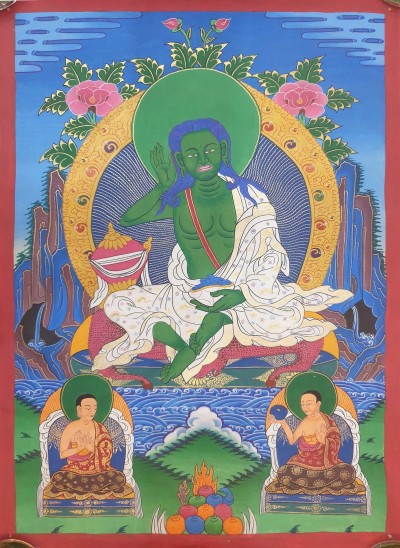
46cm Thangka Painting Of Milarepa
Weight : 0.1kg | [23439]
US$40
US$32
You Save
US$8
(20%)
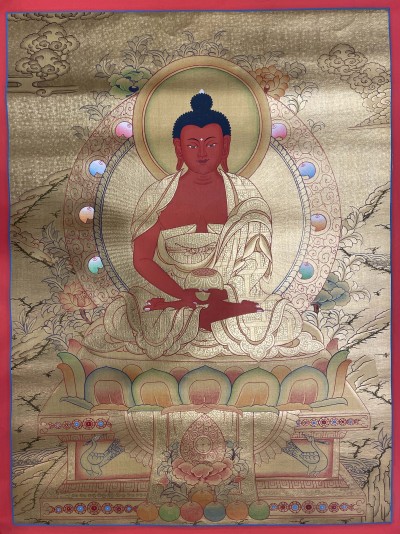
60cm Buddhist Hand Painted Thangka Of Amitabha Buddha, Real Gold, Lama`s Art
Weight : 0.1kg | [23884]
US$360.75
US$288.6
You Save
US$72.15
(20%)
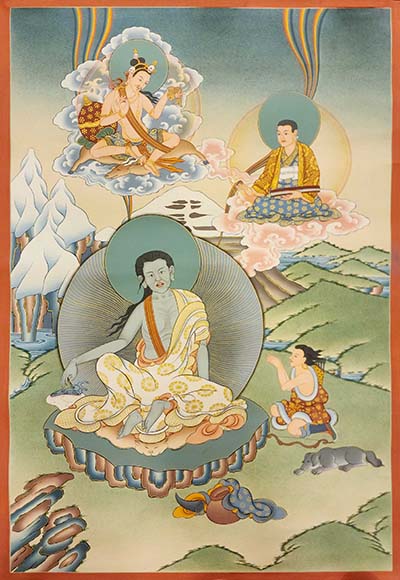
59cm Milarepa Thangka, Master Quality, Buddhist Traditional Painting, Tibetan Style, Real Gold, Rare Find, Smoked Antique
Weight : 0.2kg | [29645]
US$600
US$480
You Save
US$120
(20%)
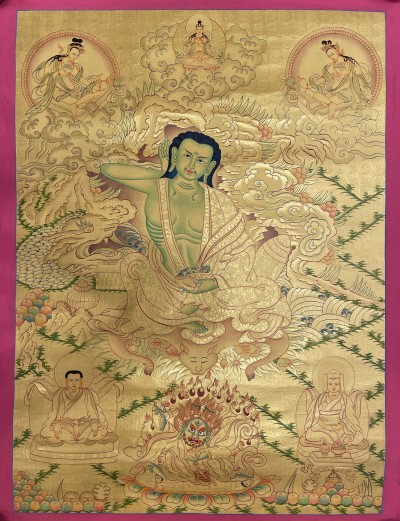
60cm Buddhist Hand Painted Thangka Of Milarepa, Real Gold, Lama`s Art With Marpha, Gamepapa And Mahakala
Weight : 0.1kg | [23883]
US$360.75
US$288.6
You Save
US$72.15
(20%)
77cm Buddhist Handmade Thangka Of Milarepa, Hand Painted
Weight : 0.1kg | [25356]
US$620
US$496
You Save
US$124
(20%)