Product Categories
Metal Statues
Thangka & Wall Decor
Sound & Spirituality
Buddhist Ritual Object
![Statue Of Chenrezig, [antique Finishing]](https://www.handmadeexpo.com/pics/product/24008.jpg)

![Statue Of Chenrezig, [antique Finishing]](https://www.handmadeexpo.com/pics/product/thumb/24008.jpg)
![Statue Of Chenrezig, [antique Finishing]](https://www.handmadeexpo.com/pics/product/thumb/24008_0.jpg)
![Statue Of Chenrezig, [antique Finishing]](https://www.handmadeexpo.com/pics/product/thumb/24008_1.jpg)
![Statue Of Chenrezig, [antique Finishing]](https://www.handmadeexpo.com/pics/product/thumb/24008_2.jpg)
Statue of Chenrezig, Antique Finishing
Chenrezig
Antique Finishing
This is an antique patina-finished Chenrezig. This is not an antique statue. It is just an antique patina finish. This Chenrezig is a testament to the artisan's mastery of the art of aging. Its antique patina has been meticulously crafted to give the appearance of an aged statue, showcasing the artist's unique techniques and skills. Through undisclosed processes and careful aging treatments, the Chenrezig undergoes a transformation that captures the essence of time and history. Read More . . .Ceramic Molding System
The Chenrezig has been crafted using the Ceramic mold casting process, a modern approach that provides an alternative to traditional methods such as the lost-wax system or rubber molding. Also referred to as ceramic molding, this technique involves the creation of a ceramic mold to cast the statue. The process begins by making a precise and detailed wax model of the desired sculpture. The wax model is then coated with layers of ceramic material, creating a sturdy mold. Once the mold is complete, it is fired in a kiln, causing the wax to melt and escape, leaving behind a cavity that perfectly replicates the original sculpture. Molten metal is then poured into the mold, allowing it to fill the cavity and take on the desired form. Once cooled and solidified, the ceramic mold is carefully broken away, revealing the final metal statue. Read More . . .Who Is Chenrezig? :
Chenrezig is a bodhisattva â an enlightened being who chooses to remain engaged with the world rather than pass into final liberation, out of compassion for all suffering beings. In Tibetan Buddhism, Chenrezig represents the compassionate activity of all buddhas combined into a single form, making him one of the central figures of devotional practice across the Vajrayana tradition.
The name Chenrezig is Tibetan, and its meaning is built directly into the word itself: chen means eye, re conveys the sense of continuity, and zig means to look. Together, the name describes "the one who continually looks upon all beings with the eye of compassion." His Sanskrit name, Avalokiteshvara, carries a closely related meaning, generally translated as "the Lord who looks down [upon the world with compassion]" or "the one who perceives the sounds and cries of the world."
Origin and Religious Significance
According to traditional accounts, countless ages ago, a thousand princes made a vow to attain buddhahood. One resolved to become the historical Buddha, Shakyamuni. Avalokiteshvara, however, made a different vow: he pledged not to enter final enlightenment himself until every one of the other thousand princes had become buddhas â an expression of compassion so vast it extended his commitment indefinitely, on behalf of all beings.
A related and widely told story explains the origin of Chenrezig's most elaborate form. As he worked tirelessly to help suffering beings, he became so overwhelmed by the scale of the task that his body shattered into a thousand pieces. The Buddha Amitabha appeared and restored him, giving him a thousand arms â each with an eye in the palm to see suffering wherever it occurs â and multiple heads to hear the cries of beings in every direction. This form, known as Mahakarunika ("the Great Compassionate One"), represents Chenrezig's power to perceive and respond to suffering everywhere at once.
Chenrezig holds particular significance in Tibet, where he is considered the country's patron bodhisattva. The Dalai Lamas are traditionally regarded as living emanations of Chenrezig, as are the Karmapas, the heads of the Karma Kagyu lineage. According to tradition, the seventh-century Tibetan king Songtsen Gampo, credited with helping establish Buddhism in Tibet, is likewise considered an emanation of this bodhisattva.
Forms and Iconography
Because of his central importance, Chenrezig appears in more distinct forms than almost any other figure in Buddhist art. The most commonly seen forms include:
Four-Armed Chenrezig
This is the most widely produced form in statues and thangka painting. He is typically shown:
- Seated in a meditative cross-legged posture, often on a lotus and moon-disc throne
- White in color, symbolizing purity and the pacifying nature of compassion
- With his first two hands joined together at the heart, holding a wish-fulfilling jewel (cintamani), representing the precious nature of compassion itself
- Holding a crystal mala (prayer beads) in his lower right hand, symbolizing the continuous recitation of his mantra on behalf of all beings
- Holding a white lotus in his lower left hand, symbolizing purity untouched by suffering
- Often draped in an antelope skin across one shoulder, a traditional symbol of gentleness and non-violence
Eleven-Headed, Thousand-Armed Chenrezig
This more elaborate form, also called Mahakarunika, depicts Chenrezig with eleven heads â often arranged in tiers, sometimes topped by a peaceful head of Amitabha Buddha â and a thousand arms fanned out around his body, each palm marked with an eye. The eleven heads are generally understood to represent eleven enlightened qualities used to overcome obstacles on the path, while the thousand arms and eyes together symbolize complete, all-seeing compassion extended to every being without exception.
Other Forms
Avalokiteshvara also appears in numerous other forms across Buddhist Asia, including Padmapani ("Lotus Bearer," an early Indian form), Guanyin in China, and Kannon in Japan â traditions in which the figure is often depicted in a feminine form, though this differs from the masculine depiction found in the original Indian and Tibetan textual tradition. Wrathful emanations associated with Chenrezig, such as Hayagriva, also exist, representing the same underlying compassion expressed through fierce, obstacle-clearing activity rather than a peaceful appearance.
The Mantra Om Mani Padme Hum
Chenrezig is inseparably connected to the mantra Om Mani Padme Hum, widely regarded as the most recited mantra in all of Buddhism. Its six syllables are understood to encode a complete path toward enlightenment, and the mantra is inscribed on prayer wheels, carved into mani stones along mountain paths, and recited continuously by practitioners across Tibet, Nepal, and Bhutan. Reciting this mantra is considered one of the most direct ways to connect with Chenrezig's compassionate activity and to purify negative patterns of body, speech, and mind.
Chenrezig in Nepal: Karunamaya and the Machindranath Tradition :
Nepal holds a distinctive place in the Chenrezig tradition through the Newar Buddhist community of the Kathmandu Valley, where Avalokiteshvara is worshipped under the name Karunamaya, meaning "the Compassionate One." Rather than a single fixed image, Karunamaya takes several locally rooted forms, most notably:
- Rato Machindranath ("Red Machindranath"), whose main temples are in Bungamati and Patan, and whose chariot festival, the Rato Machindranath Jatra, is one of the oldest continuously celebrated religious festivals in Nepal, running for up to two months and centered on a massive wooden chariot built without nails
- Seto Machindranath ("White Machindranath"), enshrined at Jana Bahal in central Kathmandu, honored with his own annual chariot festival
These deities represent a distinctive feature of Kathmandu Valley religious life: Rato Machindranath is worshipped by Buddhists as a form of Avalokiteshvara and simultaneously honored by Hindus as an identification with Matsyendranath, a revered yogic saint â a striking example of the religious syncretism found throughout Newar culture, where Hindu and Buddhist devotion often exist side by side around the same sacred figure.
Why Chenrezig Matters in Himalayan Buddhist Art :
Chenrezig is among the most frequently commissioned subjects in Himalayan Buddhist art, and for good reason: his form encodes compassion into every visual detail, making a well-crafted statue or thangka both a devotional object and a teaching in itself. The city of Patan, in the Kathmandu Valley, has been a historic center for casting and carving Chenrezig statues for centuries, home to generations of Newar artisan families trained in the precise iconometric proportions required to depict this bodhisattva correctly.
Producing an accurate Chenrezig statue or painting demands close attention to detail â correct hand positions, correctly rendered implements, and accurate proportion â since each element carries specific religious meaning rather than serving a purely decorative purpose. This is part of why hand-carved, hand-cast, and hand-painted Chenrezig artwork, made by artisans trained in traditional technique, carries a depth of meaning that mass-produced reproductions cannot replicate.
Bringing Chenrezig Into Your Space
Whether as a four-armed statue for a home altar, a detailed thousand-armed thangka, or a smaller devotional piece, Chenrezig artwork is valued both for its spiritual significance and its artistic craftsmanship. At HandicraftSeller.com, our collection of handmade Buddhist statues, thangkas, and Himalayan ritual art is created by traditional Nepali artisans working within this same living lineage of skill, connecting each piece to centuries of devotional and artistic tradition rather than a purely decorative reproduction.
What People Want to Know About Chenrezig/Avalokitesvara :
What does Chenrezig mean?
Is Chenrezig the same as Avalokiteshvara?
Why does Chenrezig have a thousand arms in some depictions?
What is the connection between Chenrezig and the Dalai Lama?
What does the mantra Om Mani Padme Hum mean?
How is Chenrezig connected to Nepal specifically?
What objects does Chenrezig typically hold in statues and paintings?
Is Chenrezig worshipped only in Tibetan Buddhism?
Mantra of Avalokitesvara
You may also want to read the related articles :
Service of Filling and blessing in Statue | Altering Finishing in StatueAt Handicraft Seller, we believe in providing a seamless and user-friendly experience to our valued customers. While our website is not an online shopping platform, we have incorporated a shopping cart system to simplify the process of sending us your inquiries. Please follow the steps below to place your order:
Step 1: Browsing the Selection
Explore our website to discover a delightful array of authentic Nepali handicraft products.
Click on the products you are interested in to view detailed descriptions and images.
Step 2: Adding Items to Your Inquiry Cart
To express your interest in a particular product, click the "Add to Inquiry Cart" button associated with that item.
The shopping cart will accumulate your selected products, providing a convenient way to organize your choices.
Step 3: Reviewing Your Inquiry Cart
Once you have finished selecting the items you wish to inquire about, review your "Inquiry Cart" to ensure accuracy.
Step 4: Sending Your Inquiries
Proceed to submit your inquiries by clicking the "Submit Inquiry" button.
A form will prompt you to provide your contact details, the selected products, and any specific queries you may have.
Step 5: Communicating through Email
As we do not have an automated payment system, we will conduct the business process through email.
Our team will review your inquiries and respond via email, offering further assistance and guidance.
Step 6: Clarifying Details and Finalizing Your Order
Engage in direct communication with our team to clarify any additional information or customization requests.
Once you are satisfied with the details, we will provide you with payment instructions and confirm the order.
Step 7: Completing the Transaction
Make the payment through the designated method as provided in the email.
After receiving the payment, we will process your order and prepare it for shipment.
Step 8: Shipping and Delivery
We offer worldwide shipping for all our products.
Once your order is dispatched, we will provide you with shipping details and tracking information.
Step 9: Receiving and Enjoying Your Handicrafts
Wait for your exquisite handicrafts to arrive at your doorstep.
Unpack and revel in the beauty and craftsmanship of your chosen Nepali treasures.
Contacting Us
If you encounter any complications while submitting your inquiries or need further assistance, please feel free to contact us.
Preferably, reach out to us through WhatsApp or email for prompt responses and support.
We hope this straightforward ordering process ensures a delightful and satisfying experience with Handicraft Seller. Thank you for choosing us to connect you with the rich heritage of Nepali handicrafts.
Return Policy
We have a 7 days money back policy but buyer have to pay the return shipping charges.
Shipping
- Shipping cost is calculated, based on the shipping weight of the products ordered. THe normal Shipping cost is US$25 for upto 0.5 kgs weight
- We ship Worldwide, Except Russia and India.
- The deliver duration varies for international Shipping location. We normally dispatch the product in 2 -3 business days. Else Buyer will be infromed Personally about the shipping.
Related Products
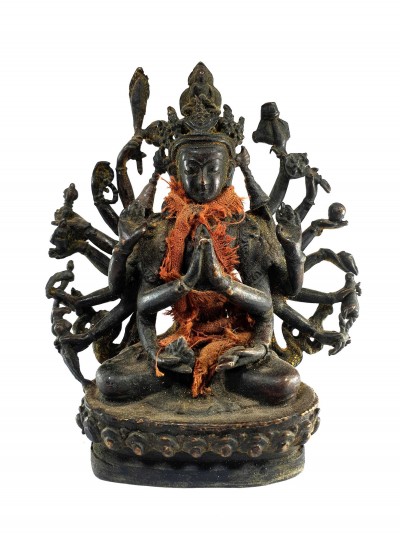
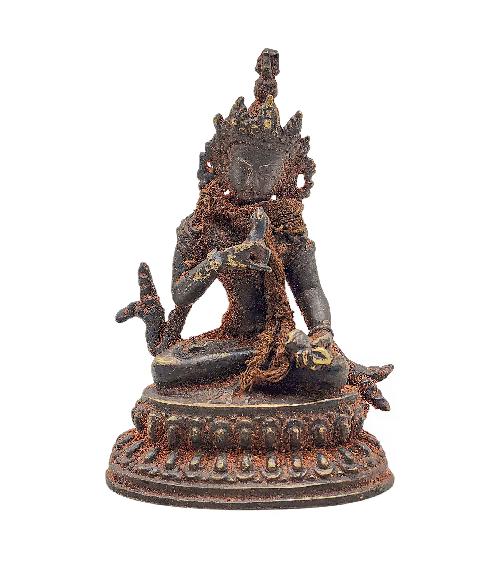
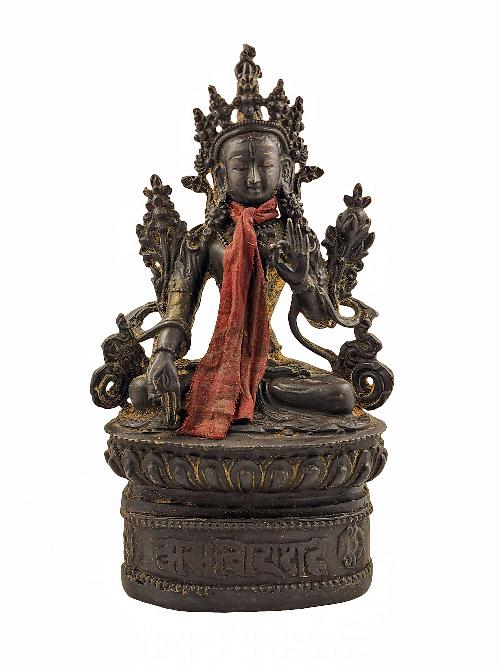
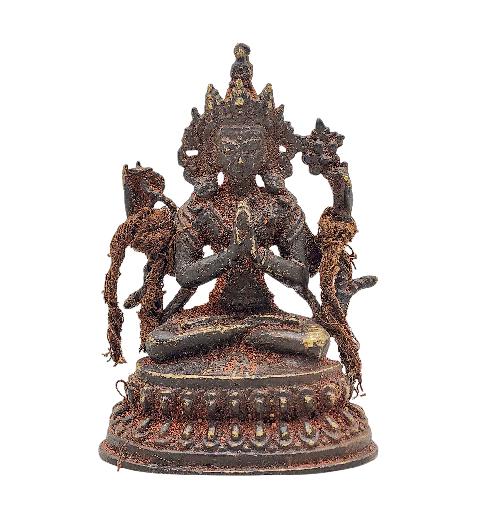
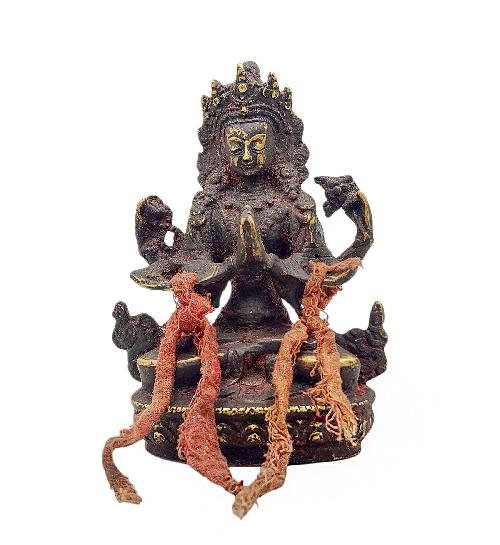
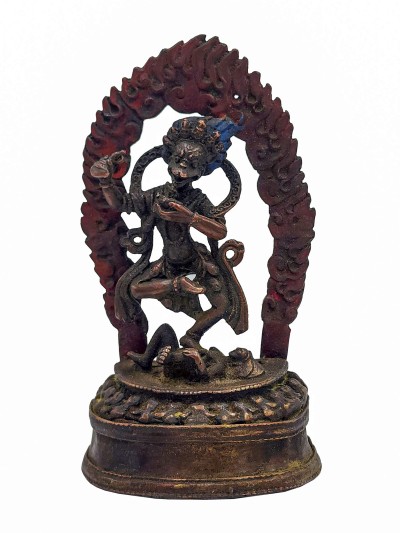
12cm Buddhist Handmade Statue Of Simhamukha Yogini Antique Chocolate Oxidized
Weight : 0.19kg | [28798]
USD 60