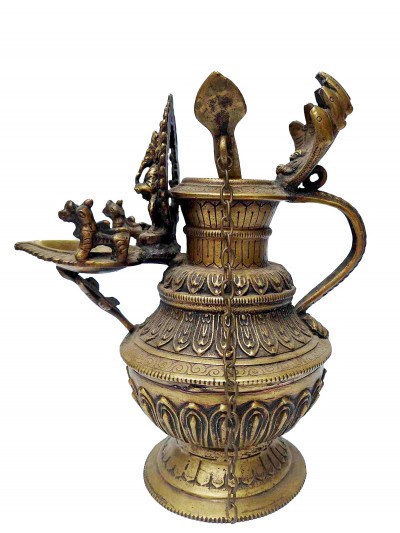
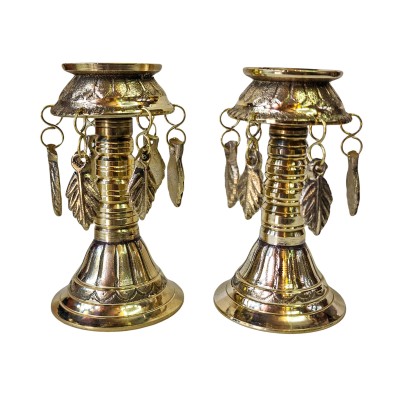
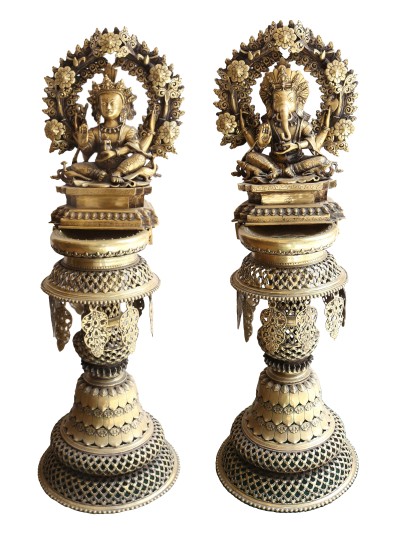
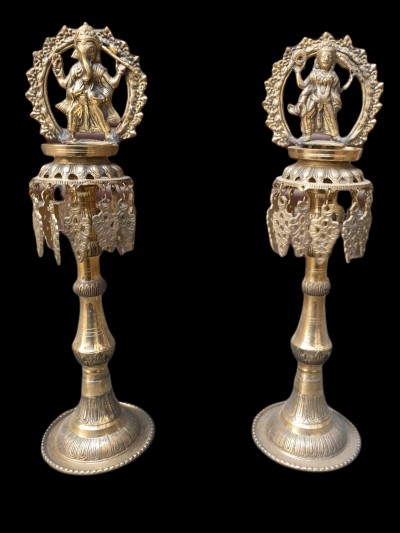
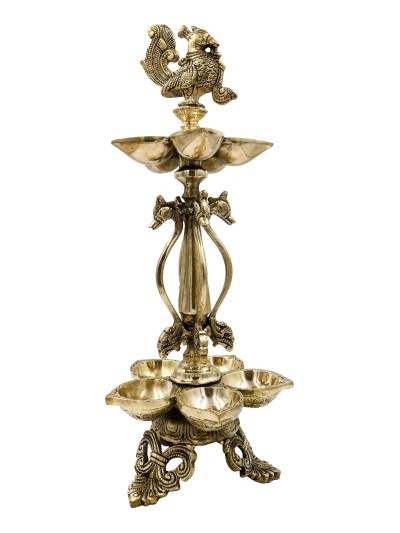
Nepal has a rich history of art and handicrafts, and these unique and creative crafts have become popular all around the world. Metal crafting is one of the most famous arts in Nepal, especially in the Newari community of the Kathmandu Valley. This art form has been passed down from generation to generation and the metal crafting skills of the Nepalese artisans are highly revered. One such example of Nepalese metal craft is the product "Panas."
Ganesh : Brief Introduction
Ganesha is one of the deities best-known and most widely worshiped in the Hindu pantheon. His image is found throughout India and Nepal. Hindu sects worship him regardless of affiliations. Devotion to Ganesha is widely diffused and extends to Jains, Buddhists, and beyond India.
Although he is known for many other attributes, Ganesha's elephant head makes him particularly easy to identify. Ganesha is widely revered as the Remover of Obstacles and more generally as Lord of Beginnings and Lord of Obstacles, patron of arts and sciences, and the deva of intellect and wisdom. He is honored at the beginning of rituals and ceremonies and invoked as Patron of Letters during writing sessions. Several texts relate mythological anecdotes associated with his birth and exploits and explain his distinct iconography.
Iconography Representations of Ganesha show wide variations and distinct patterns changing over time. He may be portrayed standing, dancing, heroically taking action against demons, playing with his family as a boy, sitting down or on an elevated seat, or engaging in a range of contemporary situations.
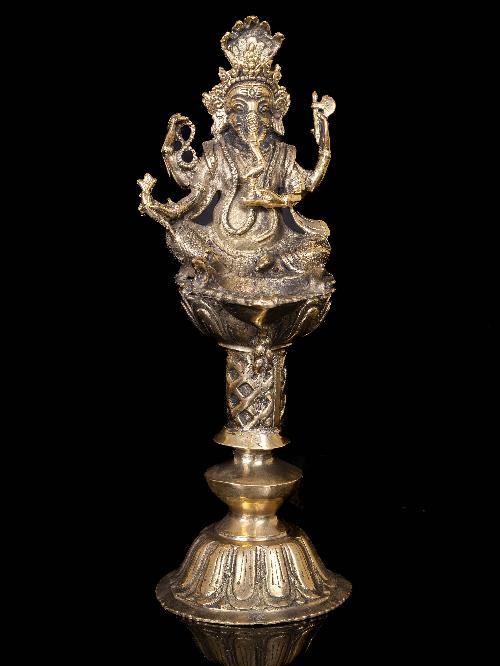
Ganesha has the head of an elephant and a big belly. This statue has four arms, which is common in depictions of Ganesha. He holds his own broken tusk in his lower-right hand and holds a delicacy, which he samples with his trunk, in his lower-left hand. The motif of Ganesha turning his trunk sharply to his left to taste a sweet in his lower-left hand is a particularly archaic feature. A more primitive statue in one of the Ellora Caves with this general form has been dated to the 7th century.[38] Details of the other hands are difficult to make out on the statue shown. In the standard configuration, Ganesha typically holds an axe or a goad in one upper arm and a noose in the other upper arm.
Associations Obstacles
Ganesha is Vighneshvara or Vighnaraja, the Lord of Obstacles, both of a material and spiritual order. He is popularly worshipped as a remover of obstacles, though traditionally he also places obstacles in the path of those who need to be checked. Paul Courtright says that "his task in the divine scheme of things, his dharma, is to place and remove obstacles. It is his particular territory, the reason for his creation."
Krishan notes that some of Ganesha's names reflect shadings of multiple roles that have evolved over time. Dhavalikar ascribes the quick ascension of Ganesha in the Hindu pantheon, and the emergence of the Ganapatyas, to this shift in emphasis from vighnakart? (obstacle-creator) to vighnahart? (obstacle-averter). However, both functions continue to be vital to his character, as Robert Brown explains, "even after the Pur??ic Ga?e?a is well-defined, in art Ga?e?a remained predominantly important for his dual role as creator and remover of obstacles, thus having both a negative and a positive aspect
Buddhi (Knowledge)
Ganesha is considered to be the Lord of letters and learning. In Sanskrit, the word buddhi is a feminine noun that is variously translated as intelligence, wisdom, or intellect. The concept of buddhi is closely associated with the personality of Ganesha, especially in the Puranic period, when many stories stress his cleverness and love of intelligence. One of Ganesha's names in the Ganesha Purana and the Ganesha Sahasranama is Buddhipriya. This name also appears in a list of 21 names at the end of the Ganesha Sahasranama that Ganesha says are especially important. The word Priya can mean "fond of", and in a marital context it can mean "lover" or "husband", so the name may mean either "Fond of Intelligence" or "Buddhi's Husband"
Frist Chakra
According to Kundalini yoga, Ganesha resides in the first chakra, called Muladhara (m?l?dh?ra). Mula means "original, main " adhara means "base, foundation". The Muladhara chakra is the principle on which the manifestation or outward expansion of primordial Divine Force rests.[95] This association is also attested to in the Ganapati Atharvashirsa. You continually dwell in the sacral plexus at the base of the spine. Thus, Ganesha has a permanent abode in every being at the Muladhara. Ganesha holds, supports and guides all other chakras, thereby "governing the forces that propel the wheel of life"
Youtube Mantra Link
Read More . . .
Lakshmi : Brief Introduction
Lakshmi is the Hindu goddess of wealth, prosperity (both material and spiritual), light, wisdom, fortune, fertility, generosity and courage; and the embodiment of beauty, grace and charm. Representations of Lakshmi are also found in Jain monuments. Also called Mahalakshmi, she is said to bring good luck, and is believed to protect her devotees from all kinds of misery and money-related sorrows.
Lakshmi in Sanskrit is derived from its elemental form lakS, meaning "to perceive or observe". This is synonymous with lakṣya, meaning "aim" or "objective". The Hindu sacred texts, the Vedas call Mahalakshmi as Lakshyayidhi Lakshmihi which means she is the one who has the object and aim of uplifting mankind.
Iconography Lakshmi is described as bestowing coins of prosperity and flanked by elephants signifying her royal power. However, in some texts, she has an owl as her vahana. Her expression is always calm and loving. The lotus also symbolizes the fertile growth of organic life, as the world is continually reborn on a lotus growing out of Vishnu's navel.
Lakshmi is worshipped daily, but special focus is given in the month of October. Her worship ceremonies include people offering food and sweets, chanting her 108 names, prayers repeated, and devotional songs being sung.
Read More . . .
Bhadrakali : Brief Introduction
Bhadrakālī is a Hindu goddess popular in Southern India. She is one of the fierce forms of the Great Goddess Shakti or Adi Parashakti (also called Durga, Devi, Mahadevi, or Mahamaya) mentioned in the Devi Mahatmyam. Bhadrakali is a popular form of the Great Goddess, worshipped in Kerala as Bhadrakali, Mahakali, Chamunda and Kariam Kali Murti. In Kerala she is seen as the auspicious and fortunate form of Mahakali who protects the good.
This goddess is represented with three eyes, and four, sixteen, or eighteen hands. She carries a number of weapons, with flames flowing from her head, and a small tusk protruding from her mouth. Her worship is also associated with the Tantric tradition of the Matrikas as well as the tradition of the ten Mahavidyas and falls under the broader umbrella of Shaktism. Sarkara, Kodungalloor, Parumala Sree Valiya Panayannarkavu Temple, Attukal, Chettikulangara, Thirumandhamkunnu and Chottanikkara are famous Bhadrakali temples in Kerala. Mandaikadu, Kollencode are famous temples in Tamil Nadu. Bhadrakali temple in Warangal is famous.
Bhadrakali is primarily worshipped in 4 forms:
1. Darukajit (as the killer of the demon Darika)
2. Dakshajit (as the killer of Daksha,
3. Rurujit (as the slayer of the demon Ruru)
4. Mahishajit (as She who killed Mahishasura).
Few Bhadrakali Bhajan on youtube
Bhadrakali (Nepali)
Read More . . .
Antique Finishing
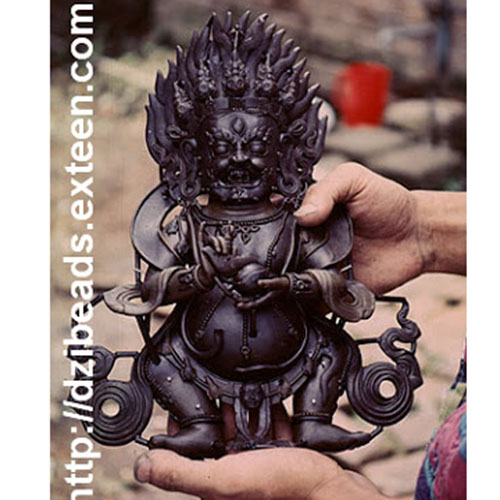
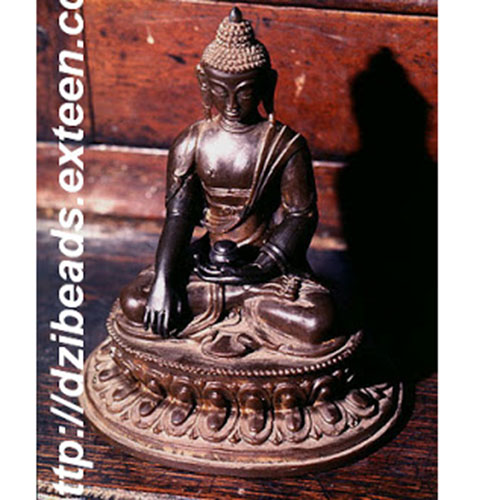
This is an antique patina-finished Panas. This is not an antique statue. It is just an antique patina finish. This Panas is a testament to the artisan's mastery of the art of aging. Its antique patina has been meticulously crafted to give the appearance of an aged statue, showcasing the artist's unique techniques and skills. Through undisclosed processes and careful aging treatments, the Panas undergoes a transformation that captures the essence of time and history.
This art form is shrouded in secrecy, as each artisan holds their own closely guarded formulas and methods. With deep knowledge of materials and an artistic sensibility, they skillfully replicate the natural aging process, infusing the Panas with a sense of authenticity and character. The result is a captivating piece that tells a visual story, evoking a bygone era and adding a touch of allure to any space.
The artist's dedication to creating an aged aesthetic goes beyond mere appearance. It is a deliberate and intentional effort to give the Panas a unique identity, imbued with the charm and beauty of time. With every carefully applied treatment and artistic touch, the Panas becomes a work of art that not only stands as a testament to the artisan's skill but also carries a sense of history and narrative, making it truly exceptional.
Read More . . .
Lost-Wax System
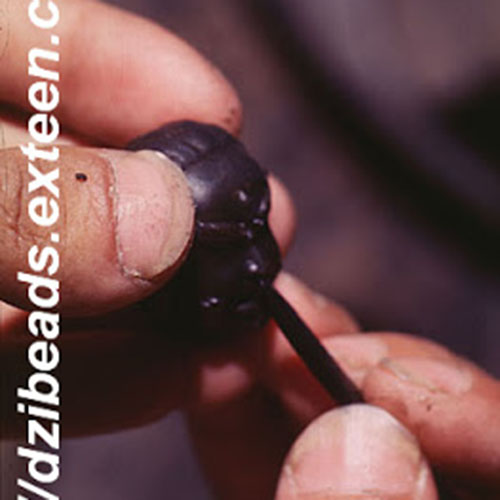
This Panas And Sukunda of Panas is made by the process of the Lost Wax system. This is a very complicated, time consuming and historic process of making metal sculptures.Which is why it is sometimes called Precision Casting as well. Hence the sculptures made by this process are comparatively expensive. There are many new, advanced and less time consuming methods of casting metal sculptures available as well. But due to the benefits provided by the traditional lost wax system in quality control and customization, we prefer the Loss wax system over Ceramic molding, or sand casting to make our Panas And Sukunda.
Below we have tried to illustrate the process of making a loss wax system statue:
The method of metal casting in which a molten metal is poured into a mold that has been created by means of a wax model. Once the mold is made, the wax model is melted and drained away. Bronze statues come to life differently than marble statues. Instead of carving a block or marble, the bronze artist uses the lost-wax technique to make a series of molds, and then pours melted bronze into the final mold to create the sculpture. This method has been around since 4500 BCE.
There are few important steps in lost wax casting process :
Step 1: Sculpting ( It all starts in the studio with an idea, Then figuring out how to realize the vision in clay.)
Step 2: Mold Making.
Step 3: Wax Pouring.
Step 5: Wax Spruing.
Step 6: Shell Dipping.
Step 7: Bronze Pouring.
Interestingly enough Loss wax process is also called Investment casting because after layers have been formed and dried, the wax is melted out of the ceramic tree by using steam (120°C) in an autoclave. This is why it is called "lost wax casting". The majority of the molten wax which can then be regenerated and is reusable.
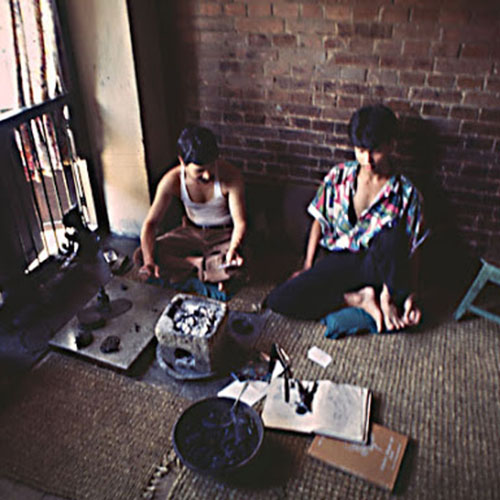
Before Making statue :At work room making the wax models.
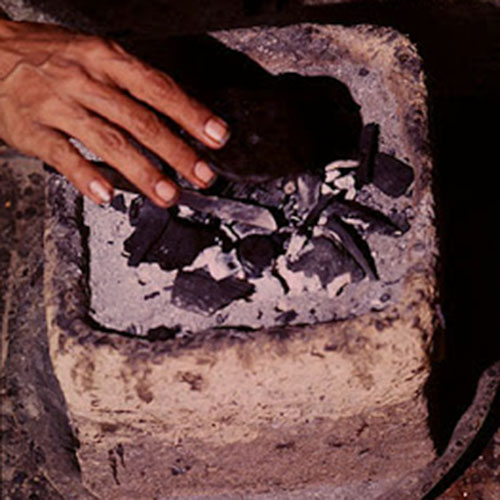
Softening a piece of wax over a brazier.
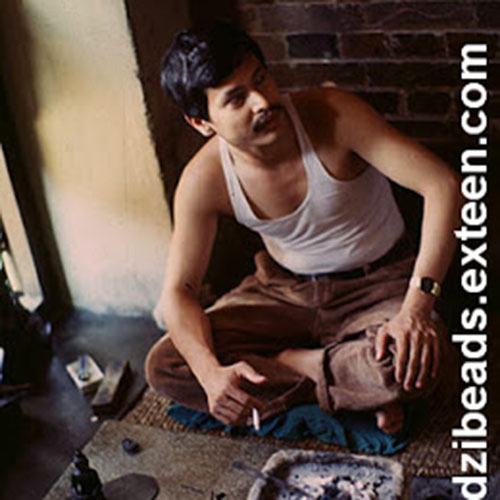
Relaxing after softening the wax The working environment with works in progress.
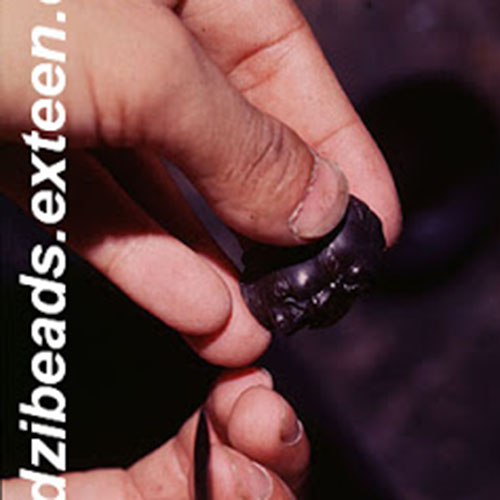
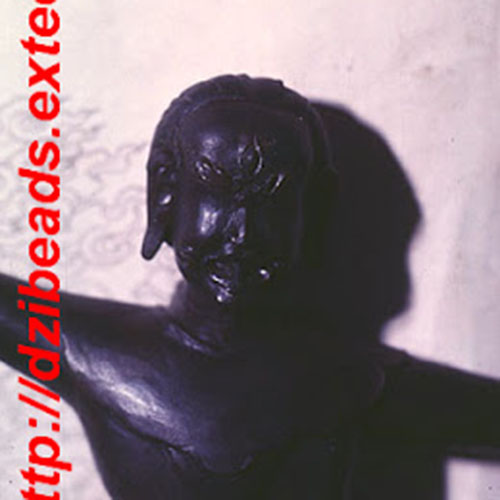
Working the face of an Ekajata wax model.
Working the face of wax model.Using a modeling tool to form the face of Ekajata.
Deatail of wax model
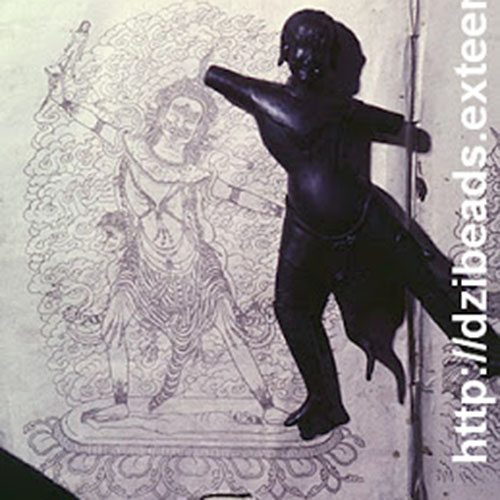
The design for Ekajata compared to the Tibetan book on which it was based.Statues Maker Are master in buddhism .
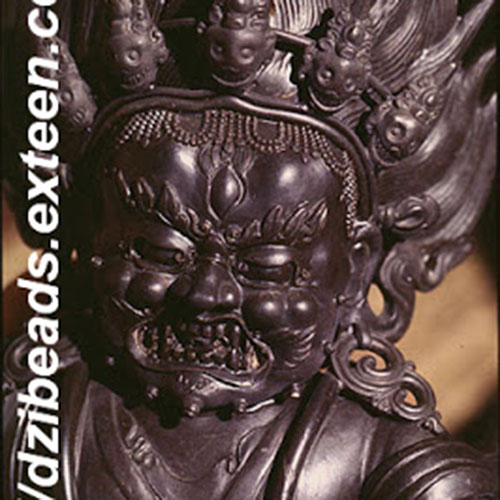
Detail of A partially finished Candamaharoshana (Acala) wax figure made in the Tibetan style.
A finished wax image of Mahakala.
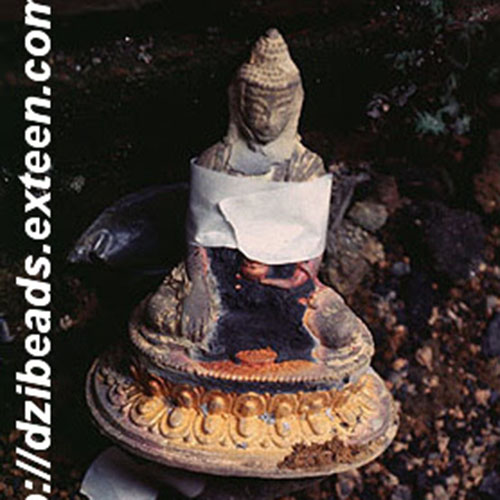
Anthor Finished Wax Model of Shakyamuni Buddha
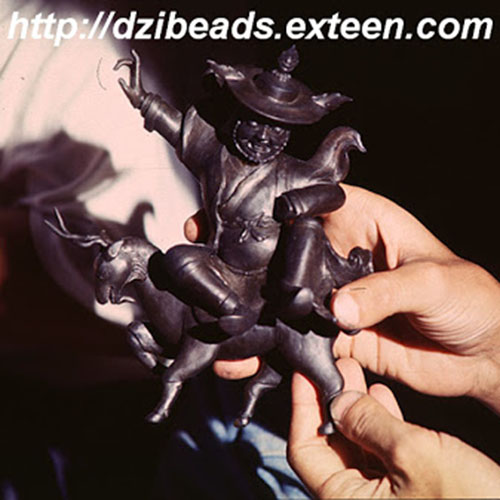
One of the modelers working in the room shows the Pehar image on which he is working.
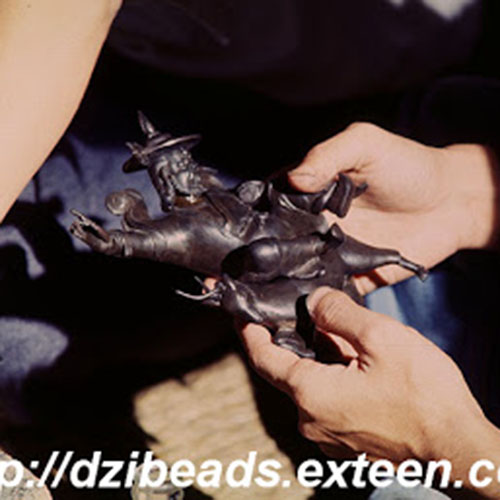
The artist showed how the goat , which had been completed earlier, fits under the image. ,
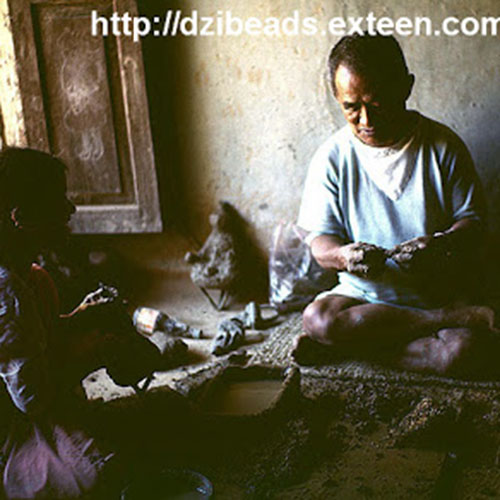
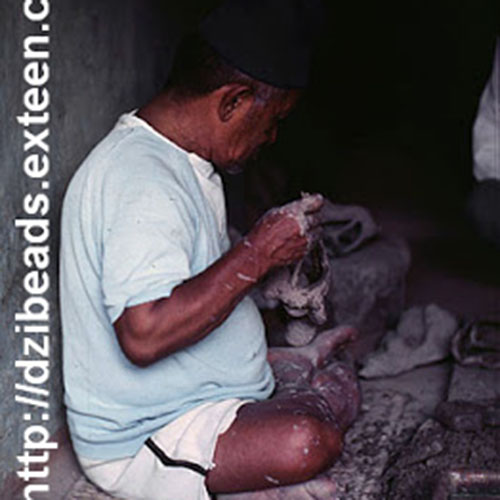
Tej Jyoti Shakya and his wife, Nani Maya Shakya Covering the wax model in a mixture of clay and dung
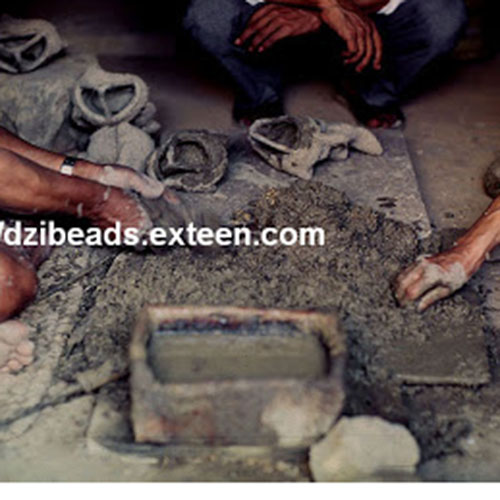
Pressing the mixture of clay and dung around the wax image.
The board with the clay and dung mixture ready for use.
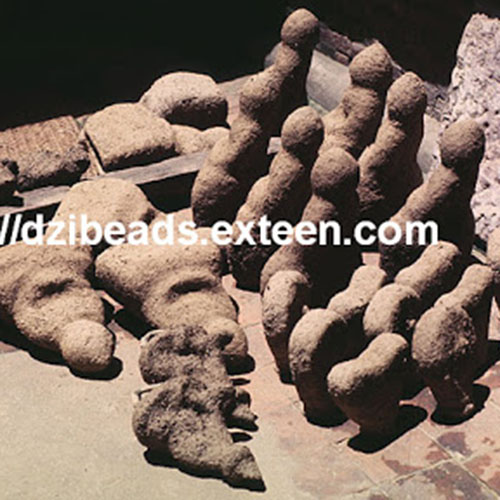
Model Pieces drying after the initial (dipped) thin layer of fine clay.
Clay-covered model pieces drying in the sun.
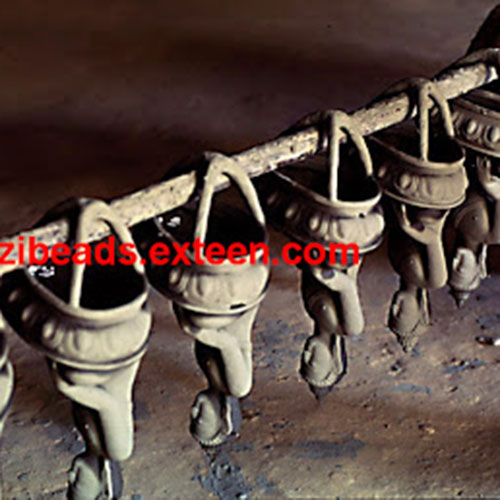
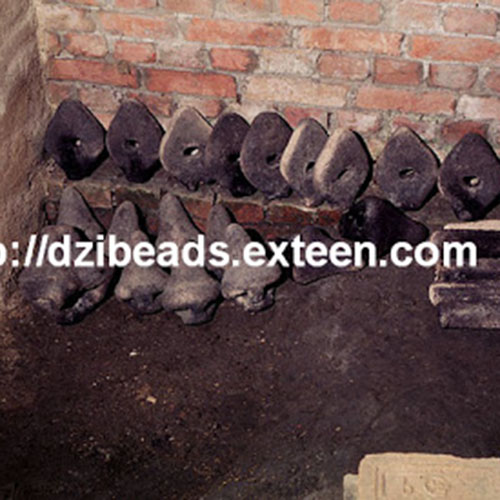
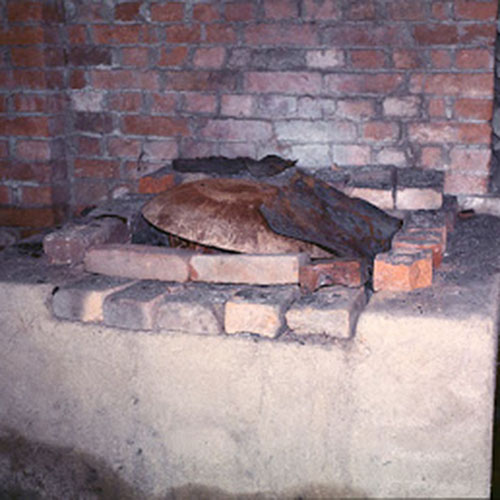
Molds waiting to be put into the burnout furnace
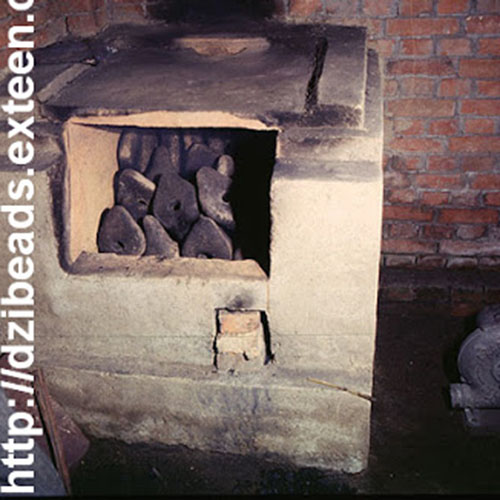
The same molds, seen in the previous image, in the burnout furnace
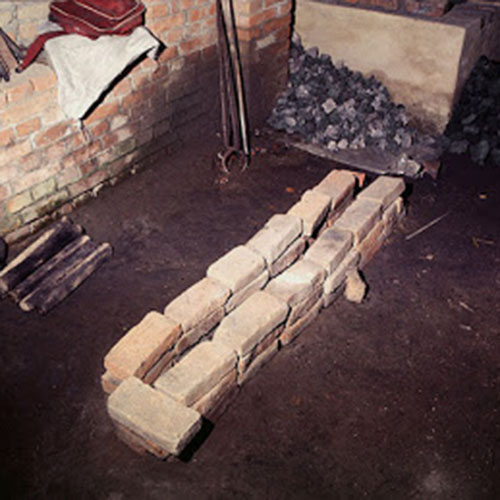
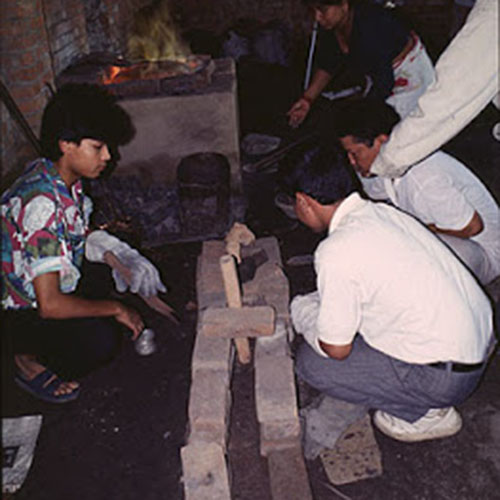
The double row of refractory bricks used to support the heated molds during casting.
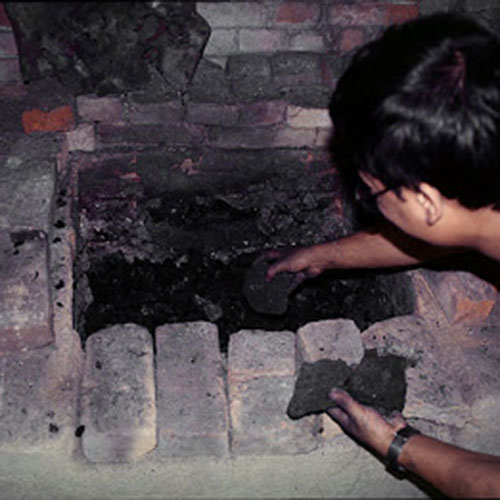
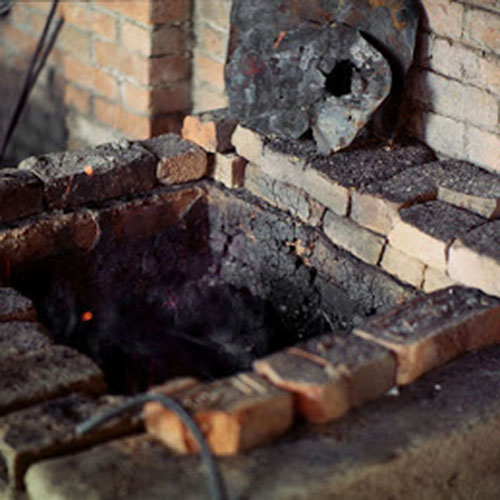
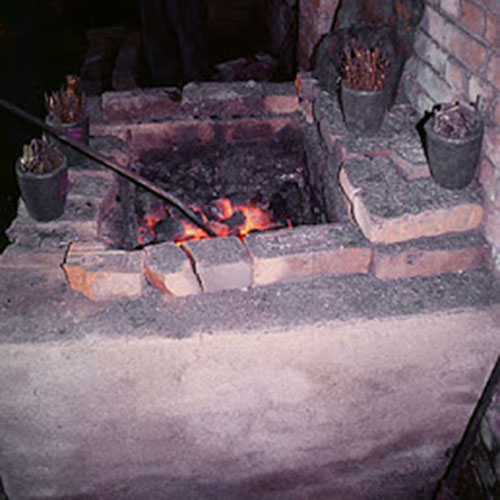
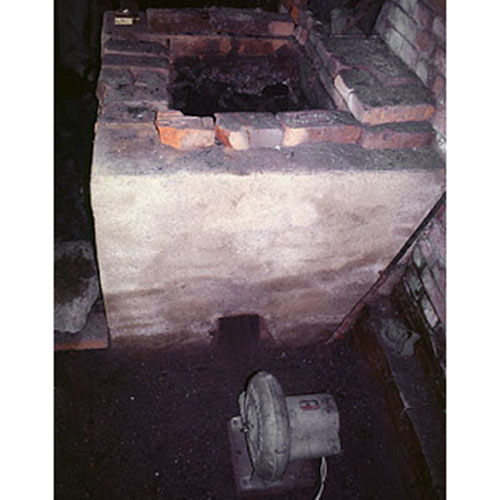
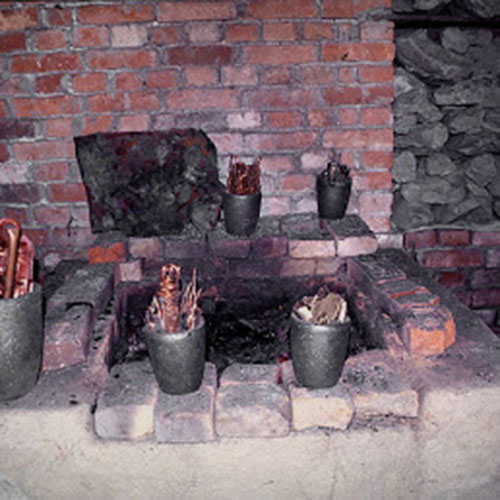
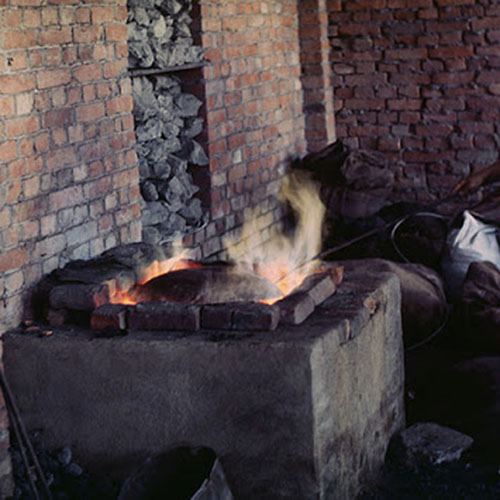
The melting furnace and a pile of coke used for melting the metals. Laying the bed of coke in the melting furnace.
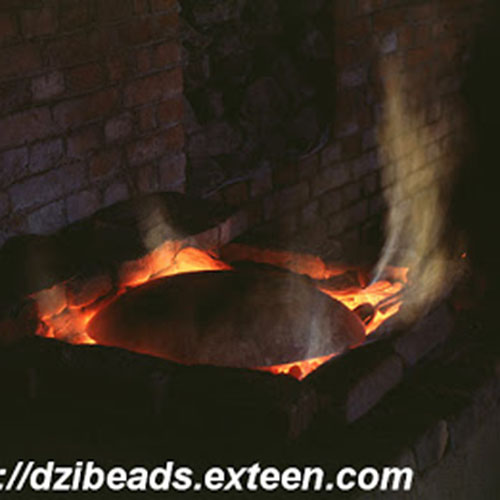
The first ignition of the coke.
Checking the coke bed.
The electric blower used to force air into the melting furnace
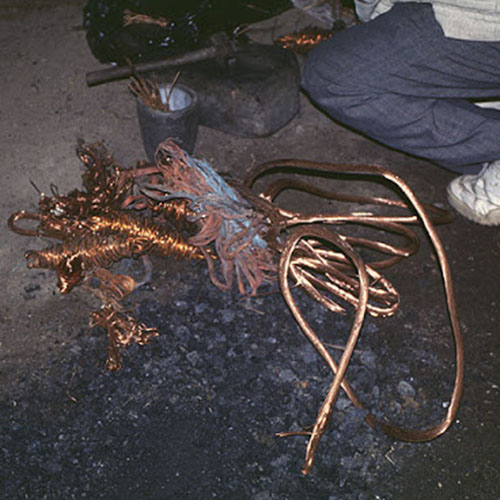
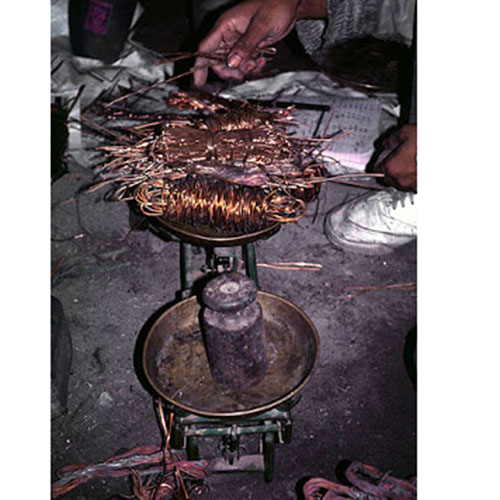
Beginning to fill the crucibles with scrap copper.
Preparing the bed of burning coke to receive the crucibles
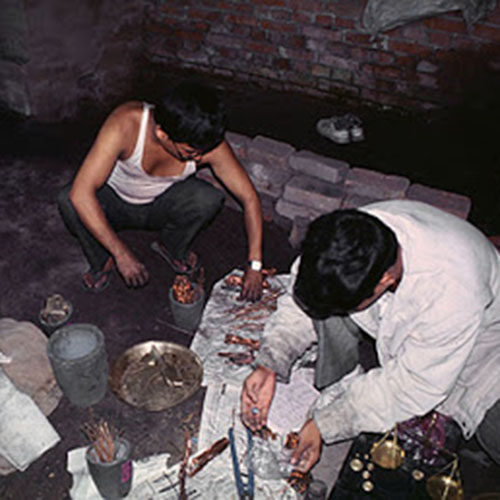
Sorting various metals used in the alloys.
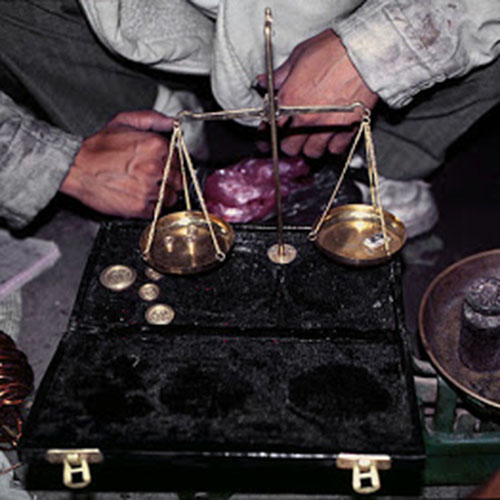
Weighing precious metals that are used in the alloys
Weighing copper from Singapore to achieve a correct alloy.
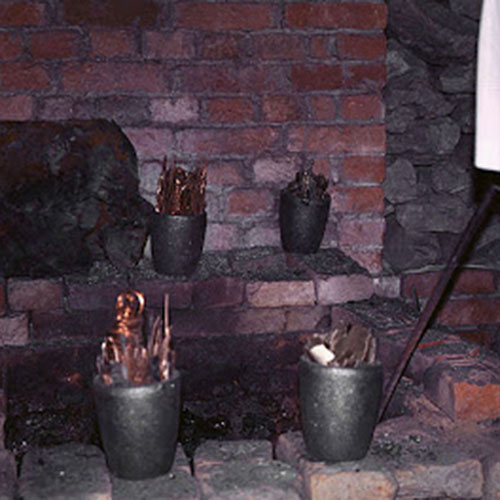
Different sizes of crucibles and various types of metals to be cast in this melt.
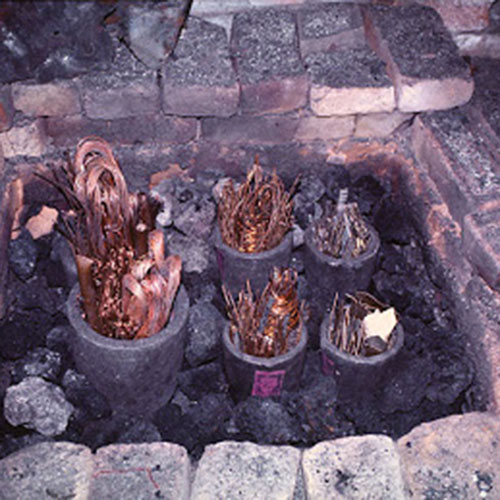
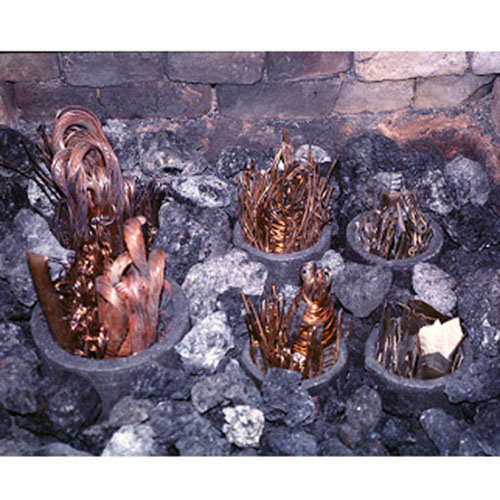
Placing the crucibles in the bed of coke filled with metal are in place.
After the crucibles are in place, more coke is piled around them.
The crucibles are covered with scrap metal to hold in the heat.
The electric fan is then connected.Soon a very hot flame is produced.
The entire furnace temperature goes up to about 1800 -1900 degrees.
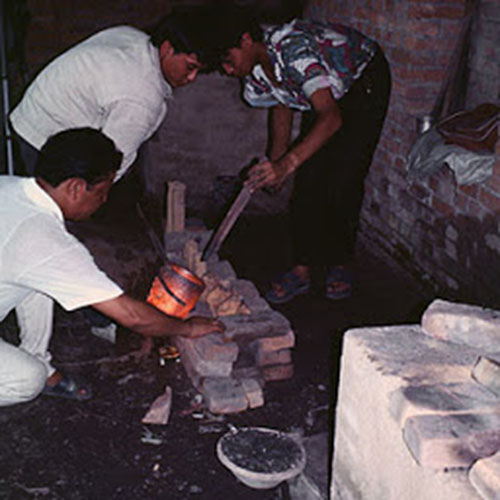
Setting up molds in between the refractory bricks to receive the molten metal. Handling the molds with asbestos gloves and bracing them with fragments of bricks.
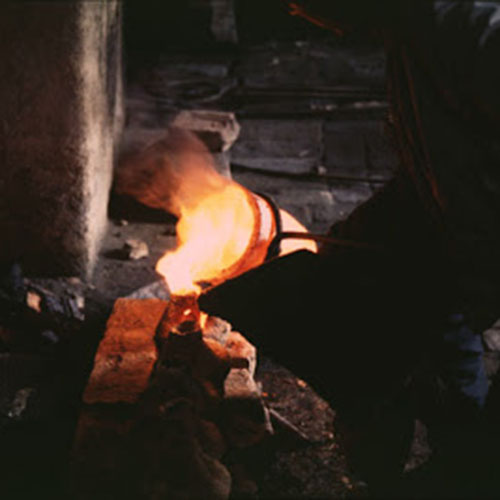
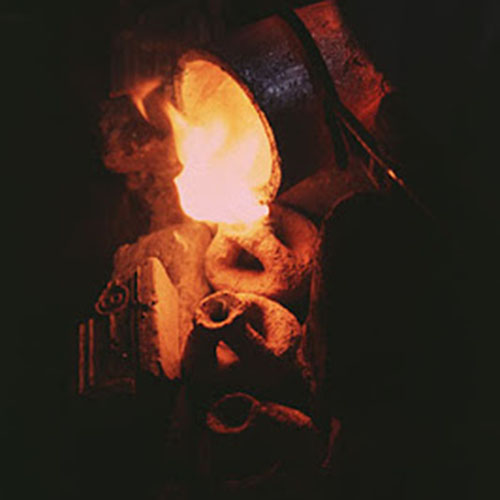
Pouring the molten metal into the base of a mold
Another view of the artists pouring the molten metal.Detailed view showing the molten metal being poured into the sprues.
Preparing to lift and pour molten metal from one of the larger crucibles.
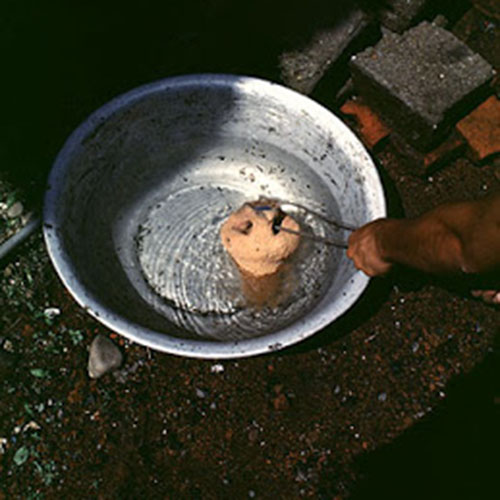
Cooling a mold containing the recently poured metal.
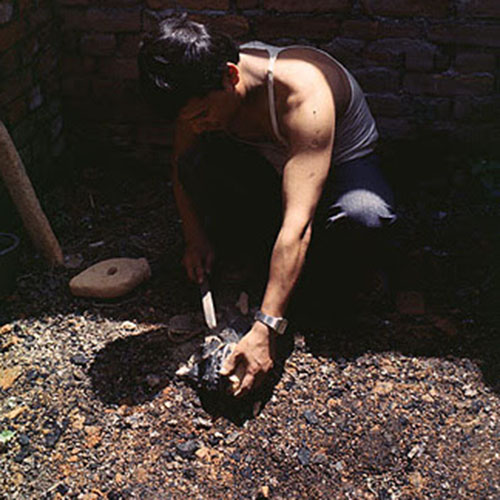
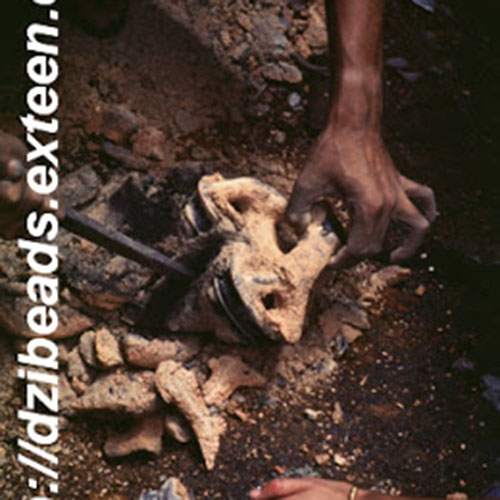
Beginning to break away the clay mold from the metal casting. The mold breaks away revealing the metal image inside
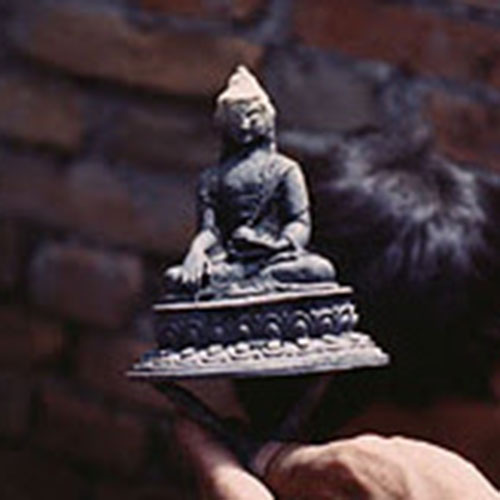
The first metal image from the day's work.
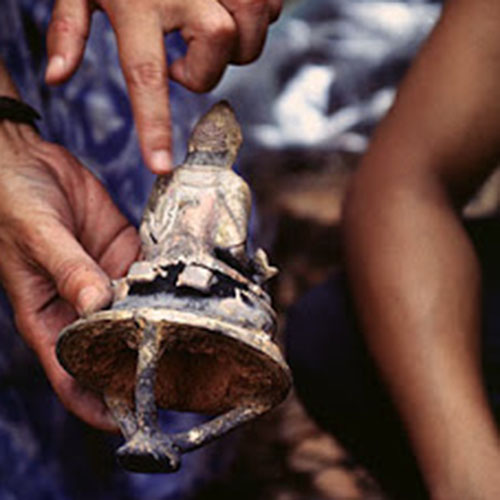
Examining the image for flaws
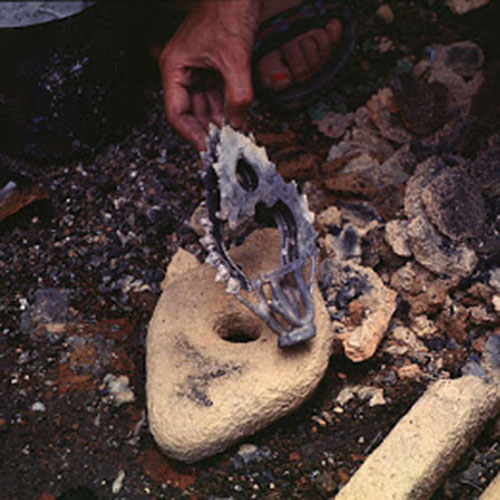
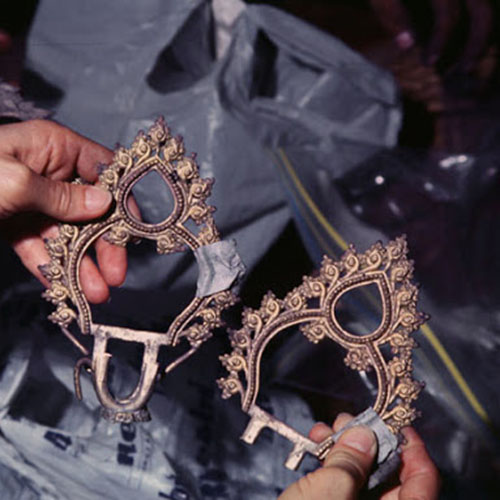
Two auras (prabhamandalas), one that cast perfectly and one (in front) that only partially filled.
Opening more molds
Researchers mark specific metal images for future identification.
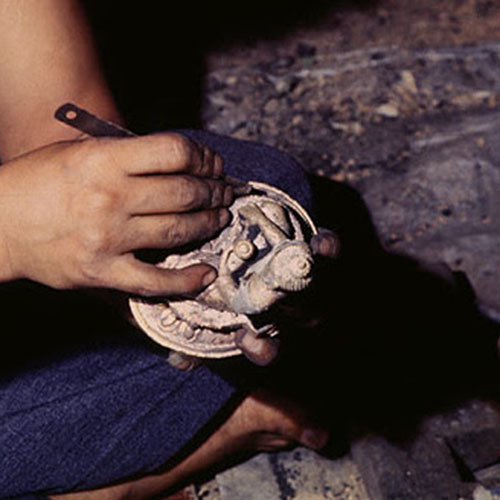
Cleaning the details of the image with a metal tool.
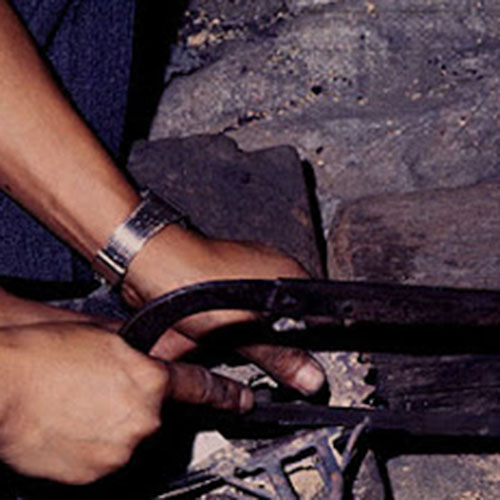
Sawing off the sprues from Aura image. The sprue metal will be reused in future castings.
Two auras that worked perfectly. The one on the right has been cut off of the sprues, while the one on the left still has the sprues attached.
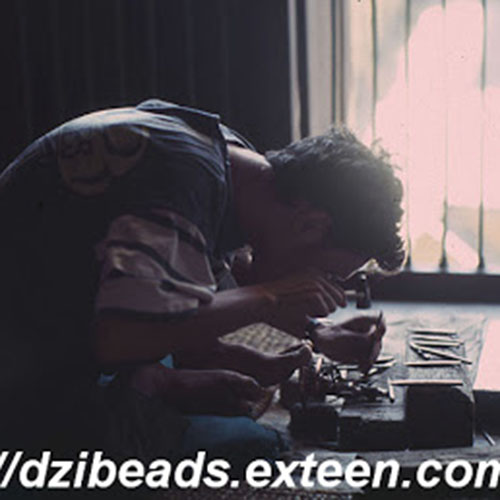
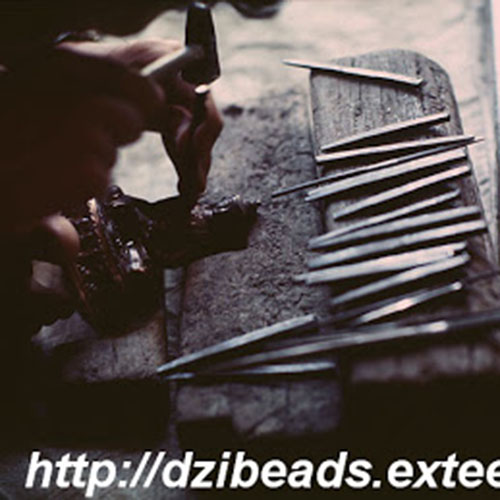
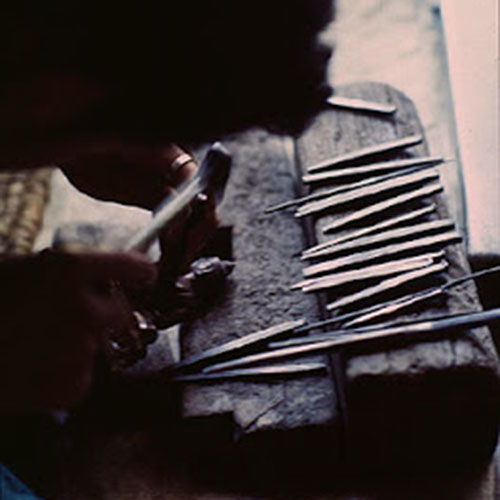
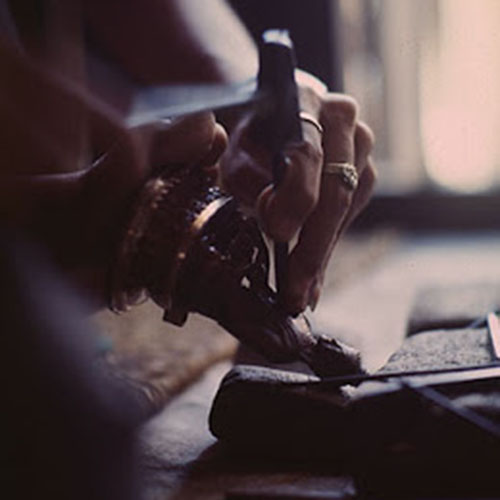
The finishing specialist begins the finishing process with a set of tools, including a small hammer. to give more detail
The entire surface of the image will be gently hammered to a final, almost polished finish.
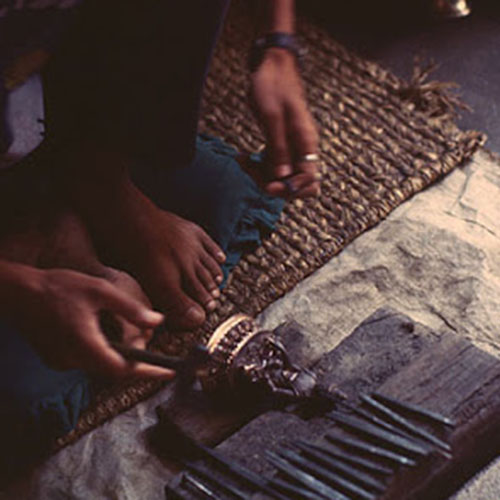
The finisher's tools and the work in progress
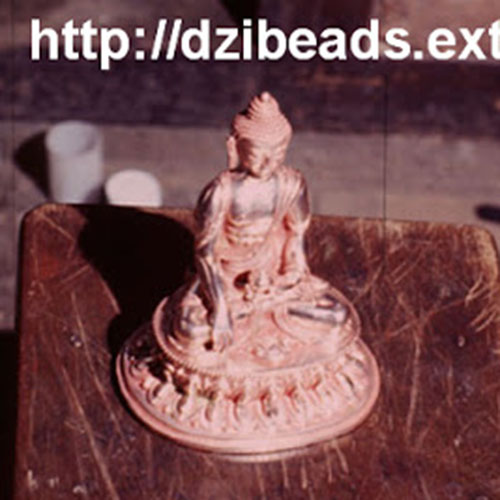
Finishing work on an image of the Buddha.
Hammering the chest of an image that is being held against the work block
A Buddha image hammered and chased to the final, detailed finish.
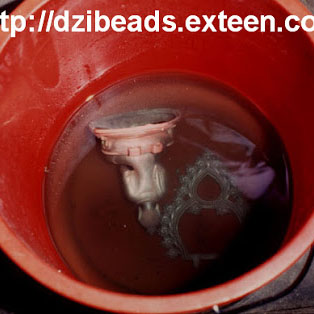
Cleaning in a very mild acid bath. The image and prabhamandala are placed in a final acidic bath to make sure the surface is absolutely clean.
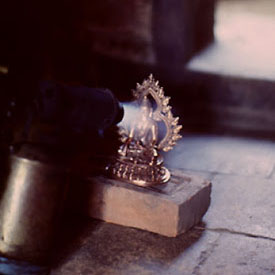
Drying the image with a blow torch.
Read More . . .
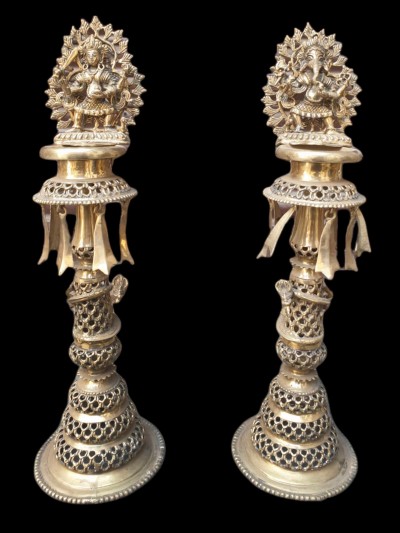
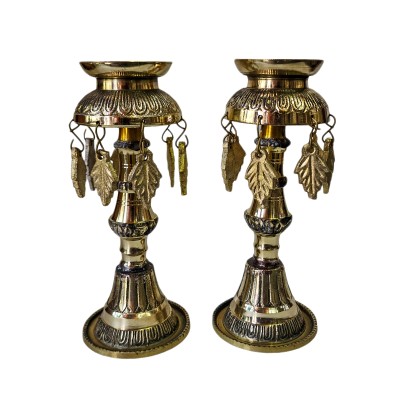
Panas is a traditional brass oil lamp that has been handcrafted and hand-carved by some of the finest artisans in Nepal. This lamp has been used in the Newar community for centuries for various purposes such as lighting homes, temples, and for positive and successful endeavors during new business openings, events, or functions. Additionally, it is also used in ritual ceremonies in Nepal.
The brass oil lamp has an attractive design with intricate details that add elegance and charm to any Puja room or worship space. Panas can also be used as a decorative piece in hotels and other places. To use Panas, fill the lamp with oil and light the wick. Cleaning the lamp is simple, wipe the brass with a soft cloth regularly to keep it shining and if necessary, wash it with mild soap and water.
In conclusion, Panas is a unique piece of Nepalese metal craft that symbolizes the rich cultural heritage and artistry of the Nepalese people. This handcrafted brass oil lamp is not only functional but also adds a touch of beauty to any space.
You may also want to read the related articles :
At Handicraft Seller, we believe in providing a seamless and user-friendly experience to our valued customers. While our website is not an online shopping platform, we have incorporated a shopping cart system to simplify the process of sending us your inquiries. Please follow the steps below to place your order:
Step 1: Browsing the Selection Explore our website to discover a delightful array of authentic Nepali handicraft products. Click on the products you are interested in to view detailed descriptions and images.
Step 2: Adding Items to Your Inquiry Cart To express your interest in a particular product, click the "Add to Inquiry Cart" button associated with that item. The shopping cart will accumulate your selected products, providing a convenient way to organize your choices.
Step 3: Reviewing Your Inquiry Cart Once you have finished selecting the items you wish to inquire about, review your "Inquiry Cart" to ensure accuracy.
Step 4: Sending Your Inquiries Proceed to submit your inquiries by clicking the "Submit Inquiry" button. A form will prompt you to provide your contact details, the selected products, and any specific queries you may have.
Step 5: Communicating through Email As we do not have an automated payment system, we will conduct the business process through email. Our team will review your inquiries and respond via email, offering further assistance and guidance.
Step 6: Clarifying Details and Finalizing Your Order Engage in direct communication with our team to clarify any additional information or customization requests. Once you are satisfied with the details, we will provide you with payment instructions and confirm the order.
Step 7: Completing the Transaction Make the payment through the designated method as provided in the email. After receiving the payment, we will process your order and prepare it for shipment.
Step 8: Shipping and Delivery We offer worldwide shipping for all our products. Once your order is dispatched, we will provide you with shipping details and tracking information.
Step 9: Receiving and Enjoying Your Handicrafts Wait for your exquisite handicrafts to arrive at your doorstep. Unpack and revel in the beauty and craftsmanship of your chosen Nepali treasures.
Contacting Us If you encounter any complications while submitting your inquiries or need further assistance, please feel free to contact us. Preferably, reach out to us through WhatsApp or email for prompt responses and support.
We hope this straightforward ordering process ensures a delightful and satisfying experience with Handicraft Seller. Thank you for choosing us to connect you with the rich heritage of Nepali handicrafts.
Return Policy
We have a 7 days money back policy but buyer have to pay the return shipping charges.
Shipping
Shipping cost is calculated, based on the shipping weight of the products ordered. THe normal Shipping cost is US$25 for upto 0.5 kgs weight
We ship Worldwide, Except Russia and India.
The deliver duration varies for international Shipping location. We normally dispatch the product in 2 -3 business days. Else Buyer will be infromed Personally about the shipping.
This is not a direct shopping website. So no payments are needed for placing an order. Please feel free to send us an order for the product you are interested in, mentioning the approximate quantity. Based on which we will send you a wholesale price quotation.
Related Products
29cm Unique, Statue Of Panas, Oil Lamp, Sukunda With Ganesh, Panas, Brass Finishing
![[unique], Statue Of Panas, Oil Lamp, Sukunda With Bhadrakali, Ganesh And Laksmi Or Laxmi, Panas, [antique Finishing]](https://www.handmadeexpo.com/pics/product/29136.jpg)

![[unique], Statue Of Panas, Oil Lamp, Sukunda With Bhadrakali, Ganesh And Laksmi Or Laxmi, Panas, [antique Finishing]](https://www.handmadeexpo.com/pics/product/thumb/29136.jpg)
![[unique], Statue Of Panas, Oil Lamp, Sukunda With Bhadrakali, Ganesh And Laksmi Or Laxmi, Panas, [antique Finishing]](https://www.handmadeexpo.com/pics/product/thumb/29136_0.jpg)
![[unique], Statue Of Panas, Oil Lamp, Sukunda With Bhadrakali, Ganesh And Laksmi Or Laxmi, Panas, [antique Finishing]](https://www.handmadeexpo.com/pics/product/thumb/29136_1.jpg)
![[unique], Statue Of Panas, Oil Lamp, Sukunda With Bhadrakali, Ganesh And Laksmi Or Laxmi, Panas, [antique Finishing]](https://www.handmadeexpo.com/pics/product/thumb/29136_2.jpg)
![[unique], Statue Of Panas, Oil Lamp, Sukunda With Bhadrakali, Ganesh And Laksmi Or Laxmi, Panas, [antique Finishing]](https://www.handmadeexpo.com/pics/product/thumb/29136_3.jpg)