Product Categories
Metal Statues
Thangka & Wall Decor
Sound & Spirituality
Buddhist Ritual Object
![Vajradhara With Refuge Tree Thangka, [master Quality], Buddhist Traditional Painting, Tibetan Style, [real Gold]](https://www.handmadeexpo.com/pics/product/29553.jpg)

![Vajradhara With Refuge Tree Thangka, [master Quality], Buddhist Traditional Painting, Tibetan Style, [real Gold]](https://www.handmadeexpo.com/pics/product/thumb/29553.jpg)
![Vajradhara With Refuge Tree Thangka, [master Quality], Buddhist Traditional Painting, Tibetan Style, [real Gold]](https://www.handmadeexpo.com/pics/product/thumb/29553_0.jpg)
![Vajradhara With Refuge Tree Thangka, [master Quality], Buddhist Traditional Painting, Tibetan Style, [real Gold]](https://www.handmadeexpo.com/pics/product/thumb/29553_1.jpg)
![Vajradhara With Refuge Tree Thangka, [master Quality], Buddhist Traditional Painting, Tibetan Style, [real Gold]](https://www.handmadeexpo.com/pics/product/thumb/29553_2.jpg)
![Vajradhara With Refuge Tree Thangka, [master Quality], Buddhist Traditional Painting, Tibetan Style, [real Gold]](https://www.handmadeexpo.com/pics/product/thumb/29553_3.jpg)
![Vajradhara With Refuge Tree Thangka, [master Quality], Buddhist Traditional Painting, Tibetan Style, [real Gold]](https://www.handmadeexpo.com/pics/product/thumb/29553_4.jpg)
![Vajradhara With Refuge Tree Thangka, [master Quality], Buddhist Traditional Painting, Tibetan Style, [real Gold]](https://www.handmadeexpo.com/pics/product/thumb/29553_5.jpg)
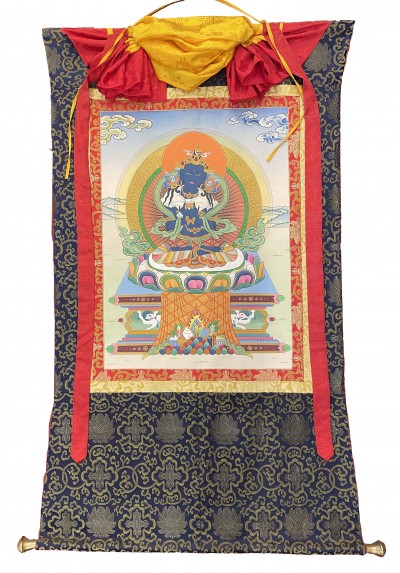
Vajradhara with Refuge Tree Thangka, Master Quality, Buddhist Traditional Painting, Tibetan Style, Real Gold
Shakyamuni Buddha himself was, it is said, in the form of Vajradhara while he was teaching tantric path to his gifted disciples.
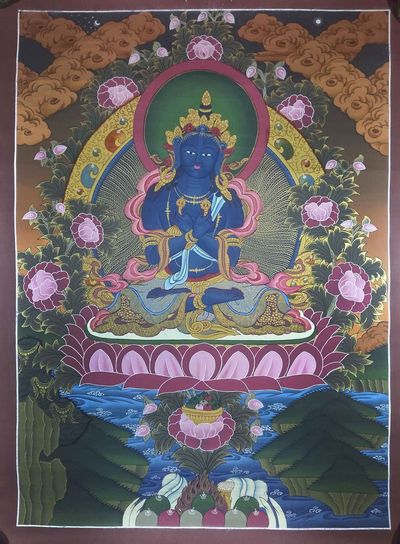
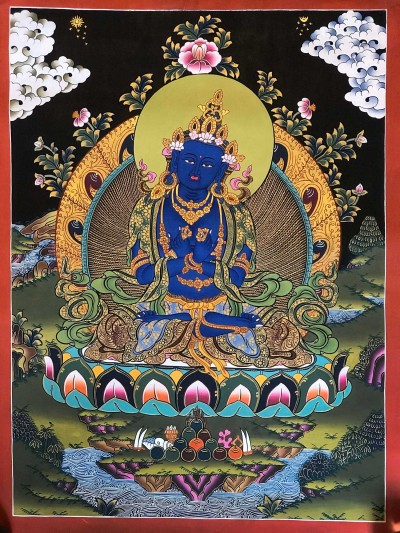
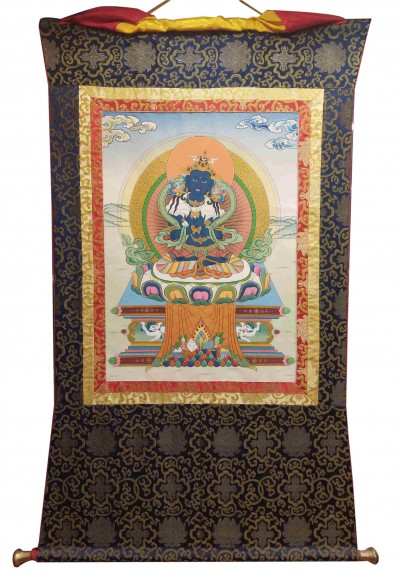
Vajradhara is depicted holding a Vajra and a bell in his left hand and his arms are kept crossed in front of him expressing complete integration of Prajna and Upaya. He is usually depicted in blue colour in vajraparyanka posture. He has a crown, an Urna and an Ushnisha as a Sambhogakaya Buddha. Vajradhara is also depicted in father-mother (Anju-Aji in Newari) aspect. en he holds his usual symbols while his arms are crossed at the back of his consort. the consort is none other than Prajnaparamita in deified form.
The Kargyudpa lineage of Tibetan Buddhism begins with the Buddha Vajradhara. The individual in this tradition is allowed to visualize his root Guru as Buddha Vajradhara. Guru Tilopa is said to have received Mahamudra instruction directly from Buddha Vajradhara through visions and other extraordinary means.
In Nispannayogavali, Vajradhara is the main deity in Vajrasattvamandala. He is three faced, six-armed and reddish white in color. His right arm holds a vajra, a sword and a kapala and his left hand holds a bell, an ankush and a noose. He stands in the Ardhaparyanka posture and dances in Tandava style.
Shakyamuni Buddha himself was, it is said, in the form of Vajradhara while he was teaching tantric path to his gifted disciples.
Vajradhara is depicted holding a Vajra and a bell in his left hand and his arms are kept crossed in front of him expressing complete integration of Prajna and Upaya. He is usually depicted in blue colour in vajraparyanka posture. He has a crown, an Urna and an Ushnisha as a Sambhogakaya Buddha. Vajradhara is also depicted in father-mother (Anju-Aji in Newari) aspect. en he holds his usual symbols while his arms are crossed at the back of his consort. the consort is none other than Prajnaparamita in deified form.
The Kargyudpa lineage of Tibetan Buddhism begins with the Buddha Vajradhara. The individual in this tradition is allowed to visualize his root Guru as Buddha Vajradhara. Guru Tilopa is said to have received Mahamudra instruction directly from Buddha Vajradhara through visions and other extraordinary means.
In Nispannayogavali, Vajradhara is the main deity in Vajrasattvamandala. He is three faced, six-armed and reddish white in color. His right arm holds a vajra, a sword and a kapala and his left hand holds a bell, an ankush and a noose. He stands in the Ardhaparyanka posture and dances in Tandava style.
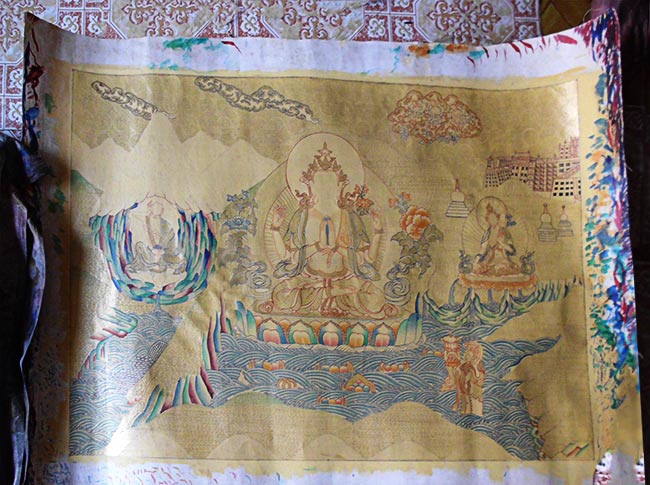
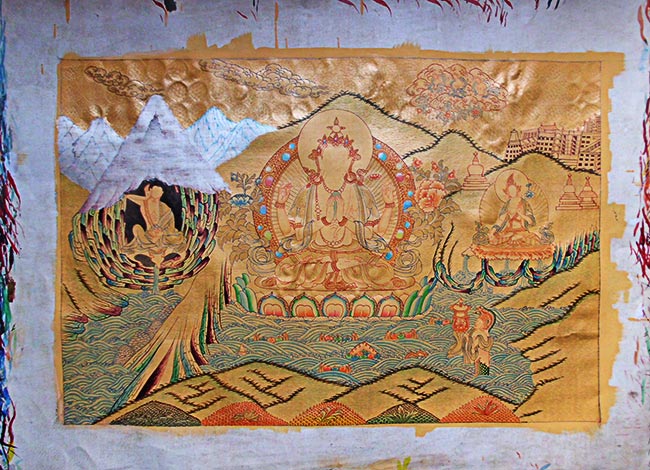
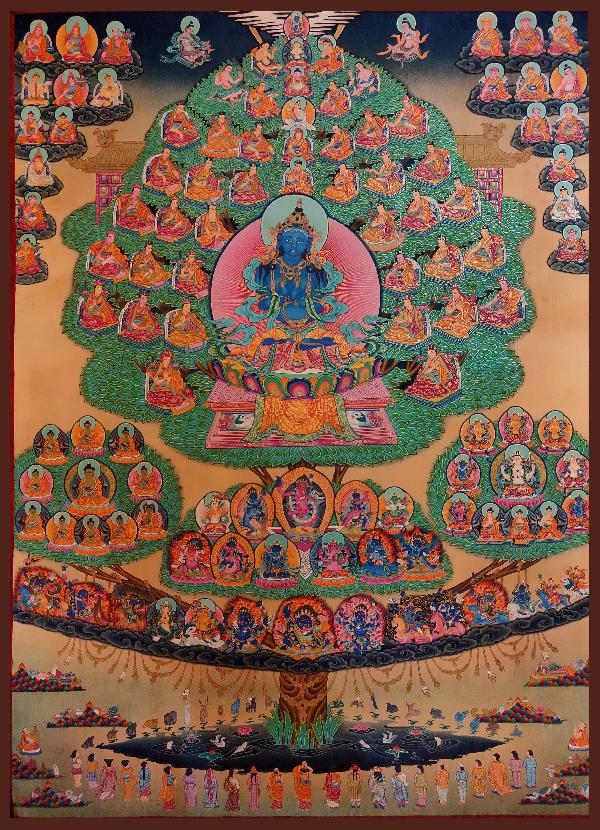
A Vajradhara Refuge Tree is a Tibetan thangka that depicts the lineage of teachers and lineages of refuge within the Vajrayana tradition of Tibetan Buddhism. The tree is rooted in a deep blue sea, which represents the ocean of samsara, or cyclic existence. The trunk of the tree represents the path to enlightenment, and the branches and leaves represent the different lineages of teachers and teachings that lead to enlightenment.
The central figure in the thangka is Vajradhara, the primordial Buddha, who is depicted as a peaceful and wrathful deity seated in the vajrasana posture. Vajradhara is surrounded by a host of other figures, including bodhisattvas, meditation deities, and protectors. The figures on the left side of the thangka represent the lineage of teachers who transmitted the sutra teachings, while the figures on the right side of the thangka represent the lineage of teachers who transmitted the tantric teachings. Read More . . .
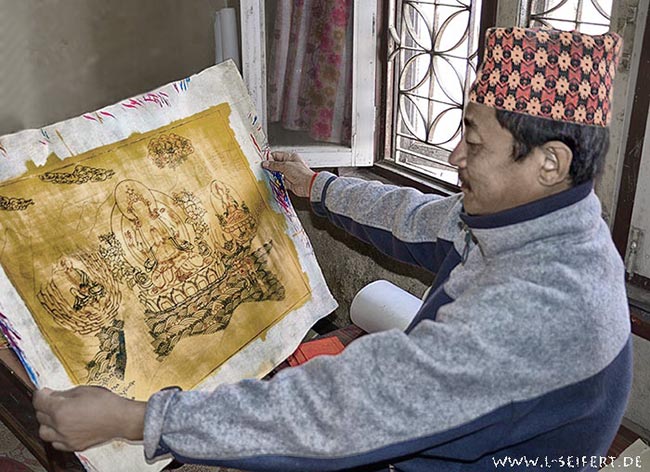
The attribute of "master quality" distinguishes the Vajradhara as an embodiment of extraordinary craftsmanship and artistic excellence. This exceptional piece is directly handcrafted by an artist or craftsman of the highest categorization, reflecting their unparalleled skill and expertise. The uniqueness of Vajradhara lies in its exclusivity to the artist, making it a rare find with nearly impossible chances of finding an identical piece in the same category. While copies may exist, they can never truly replicate the essence of the original, as an artist or craftsman capable of creating such exceptional artistry would prefer to showcase their own creative vision rather than reproduce another's work. Read More . . .
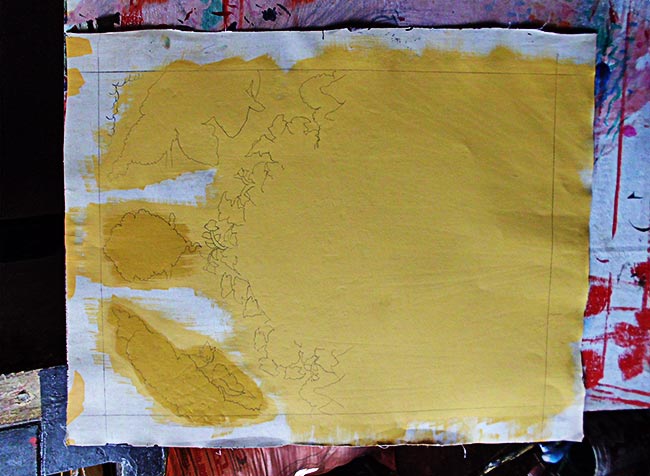
This thangka of Vajradhara has real gold painted on its surface along with other paints. This is an ancient process of decorating the thangka in Tibetan Buddhism, Here gold is ground into gold dust, which is then mixed with other undisclosed material to make it paintable on the canvas. this mixture is then mixed with transparent glue and painted on the thangka. Read More . . .
A thangka, also known as tangka, thanka, or tanka, is a vibrant and intricate Tibetan Buddhist painting that serves as a visual representation of spiritual teachings. Crafted with meticulous detail on cotton or silk appliqu?, thangkas depict a wide range of subjects including Buddhist deities, sacred scenes, mandalas, and narrative stories. These sacred artworks are traditionally kept unframed and rolled up for storage, resembling ancient scrolls. To protect their delicate nature, thangkas are mounted on textile backings and often adorned with a silk cover on the front. Proper preservation in dry environments is crucial to maintain the integrity and longevity of the silk. Read More . . .
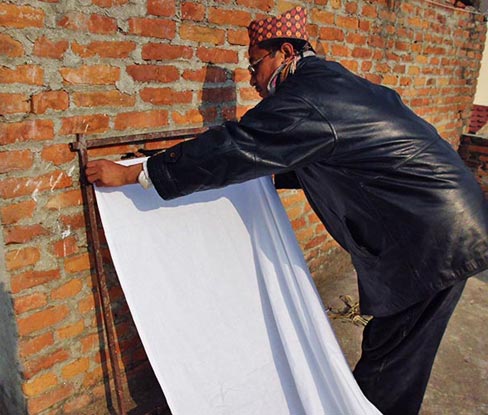
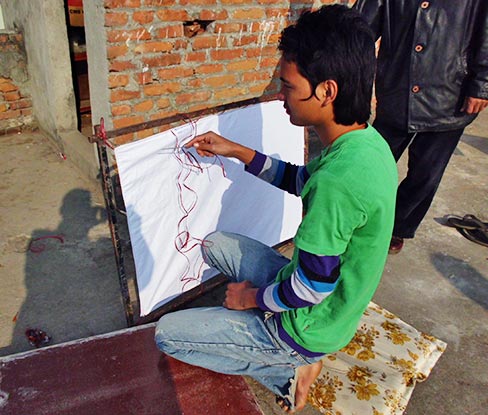
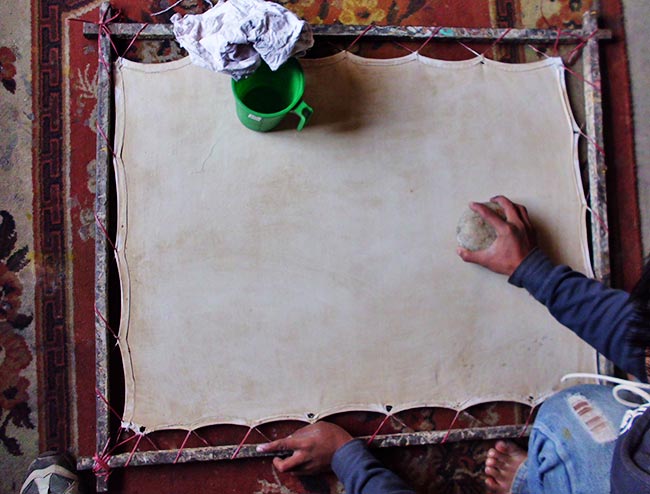
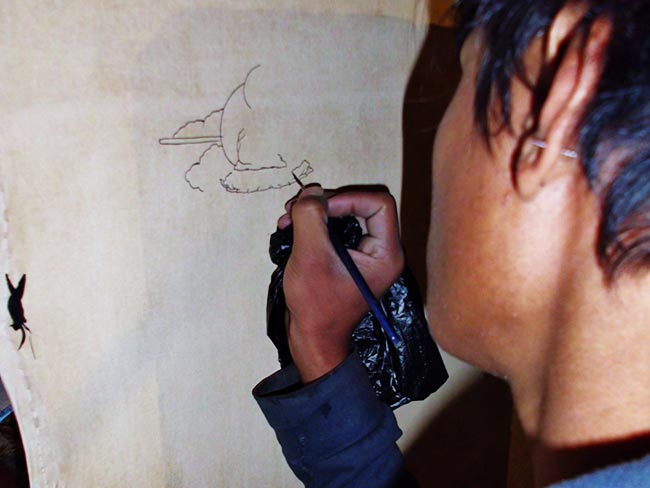
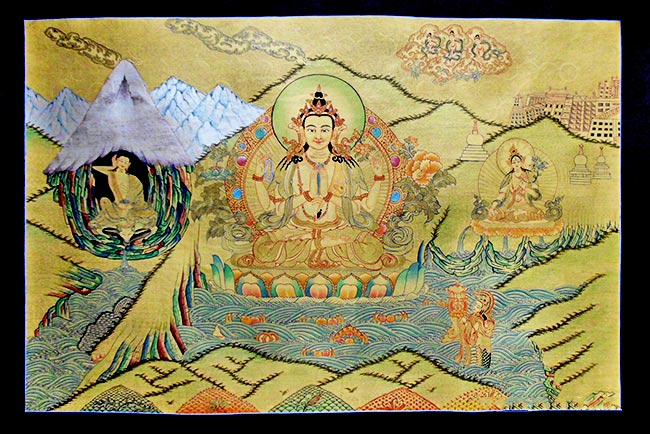
Dharmakaya is often taken to mean the 'truth body' & is one of the three Forms of or realms of understanding [Skt. Trikaya]. The Principle of Non-Duality i.e. the 'union of two' is represented in the Bell [Skt. Ghanta] & the Lightning sceptre [Skt. Vajra]. The bell embodies female wisdom & the Diamond Sceptre being compassion or method. The truth body of Vajradhara and Vajrayana tools will empower your journey in all places. This involves unlocking the mysteries or obscuration's of the material & inner world through methods of tantric practice & understanding. In fact Vajradhara represents latent power of transformation using tantric through wisdom to allow us to uncover Great Bliss. Vajradhara the realised way of method. Since Vajradhara personifies the essence of non dualitic union the figure represents a mastery of the symbols portrayed in other tantric deities & having understood their meaning does not need to bear them.
Dharmakaya represents the inconceivable [Skt. Acintya] aspect of a Buddha out of which Buddhas and indeed all phenomena [Skt. Dharmas] arise and to which they return after their dissolution. The principle of Dharmakaya helps us free ourselves from material bondage & dependency on the material world to take us towards Individual & Universal Bliss which is the union of Great Love and great Freedom. The Five Transcendent Buddhas [Skt. Dhyani Buddhas] arose from the Vajradhara, Adi Buddha,& Samantabhadra. As we detach ourselves we are able to create the Sambhogakaya state of Great Bliss. Some Vajrayana sutras refer to a fourth kaya dimension called Svabhavikiakaya [Skt.] meaning the self created body in the sense of self arising and self perpetuating essence embodying the three other kaya's. This alludes to the self arising self emanating and self perpetuating Thousand Petalled Lotus of Great Bliss.
You may also want to read the related articles :
What is a Thangka | Making Process Of Tibetan Thangka | Videos of Thangka Making Process | Thangka Brocading OptionAt Handicraft Seller, we believe in providing a seamless and user-friendly experience to our valued customers. While our website is not an online shopping platform, we have incorporated a shopping cart system to simplify the process of sending us your inquiries. Please follow the steps below to place your order:
Step 1: Browsing the Selection
Explore our website to discover a delightful array of authentic Nepali handicraft products.
Click on the products you are interested in to view detailed descriptions and images.
Step 2: Adding Items to Your Inquiry Cart
To express your interest in a particular product, click the "Add to Inquiry Cart" button associated with that item.
The shopping cart will accumulate your selected products, providing a convenient way to organize your choices.
Step 3: Reviewing Your Inquiry Cart
Once you have finished selecting the items you wish to inquire about, review your "Inquiry Cart" to ensure accuracy.
Step 4: Sending Your Inquiries
Proceed to submit your inquiries by clicking the "Submit Inquiry" button.
A form will prompt you to provide your contact details, the selected products, and any specific queries you may have.
Step 5: Communicating through Email
As we do not have an automated payment system, we will conduct the business process through email.
Our team will review your inquiries and respond via email, offering further assistance and guidance.
Step 6: Clarifying Details and Finalizing Your Order
Engage in direct communication with our team to clarify any additional information or customization requests.
Once you are satisfied with the details, we will provide you with payment instructions and confirm the order.
Step 7: Completing the Transaction
Make the payment through the designated method as provided in the email.
After receiving the payment, we will process your order and prepare it for shipment.
Step 8: Shipping and Delivery
We offer worldwide shipping for all our products.
Once your order is dispatched, we will provide you with shipping details and tracking information.
Step 9: Receiving and Enjoying Your Handicrafts
Wait for your exquisite handicrafts to arrive at your doorstep.
Unpack and revel in the beauty and craftsmanship of your chosen Nepali treasures.
Contacting Us
If you encounter any complications while submitting your inquiries or need further assistance, please feel free to contact us.
Preferably, reach out to us through WhatsApp or email for prompt responses and support.
We hope this straightforward ordering process ensures a delightful and satisfying experience with Handicraft Seller. Thank you for choosing us to connect you with the rich heritage of Nepali handicrafts.
Return Policy
We have a 7 days money back policy but buyer have to pay the return shipping charges.
Shipping
- Shipping cost is calculated, based on the shipping weight of the products ordered. THe normal Shipping cost is US$25 for upto 0.5 kgs weight
- We ship Worldwide, Except Russia and India.
- The deliver duration varies for international Shipping location. We normally dispatch the product in 2 -3 business days. Else Buyer will be infromed Personally about the shipping.
Related Products
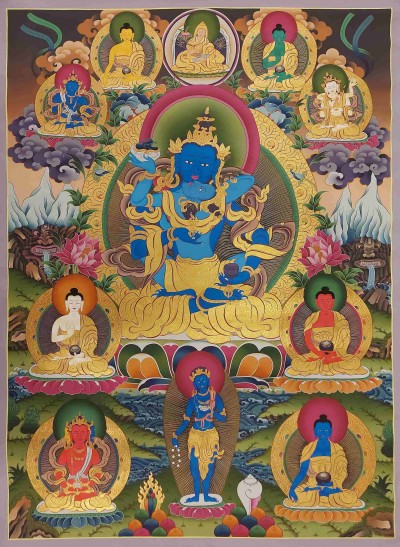
120cm Buddhist Handmade Thangka Of Vajradhara With Consort Shakti Yab-yum Real Gold Hand Painted Real Gold
Weight : 0.1kg | [26267]
USD 465
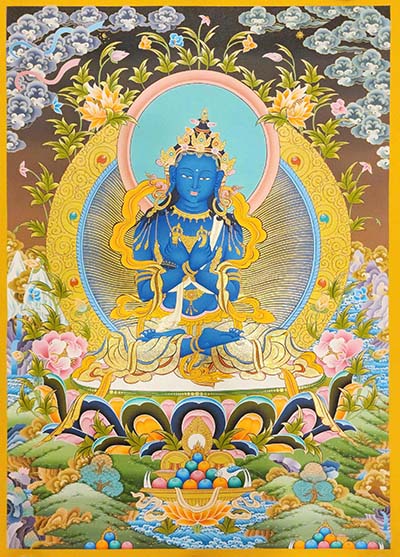
76cm Vajradhara Thangka Master Quality Buddhist Traditional Painting Tibetan Style Real Gold
Weight : 0.2kg | [29560]
USD 1120
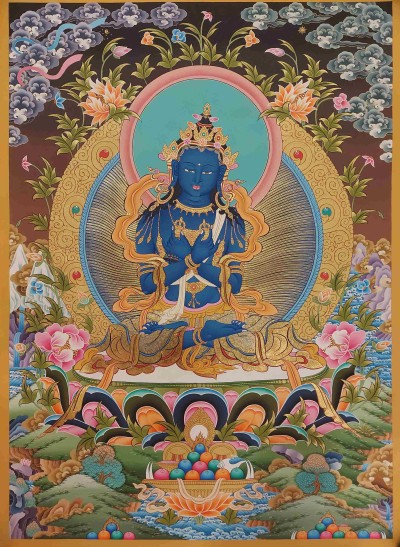
75cm Buddhist Handmade Thangka Of Vajradhara Real Gold Hand Painted
Weight : 0.1kg | [26388]
USD 975
98cm Vajradhara Thangka Tibetan Buddhist Art Hand Painted Real Gold Refuge Tree Vajradhara Thangka Smoked Rare Find
Weight : 0.3kg | [30601]
USD 750
135cm Buddhist Hand Painting Thangka Of Vajradhara With Brocade Hand Painted
Weight : 0.5kg | [25974]
USD 1288
135cm Buddhist Thangka Of Vajradhara Thangka With Brocade Lama`s Art
Weight : 0.6kg | [24189]
USD 540