Product Categories
Metal Statues
Thangka & Wall Decor
Sound & Spirituality
Buddhist Ritual Object
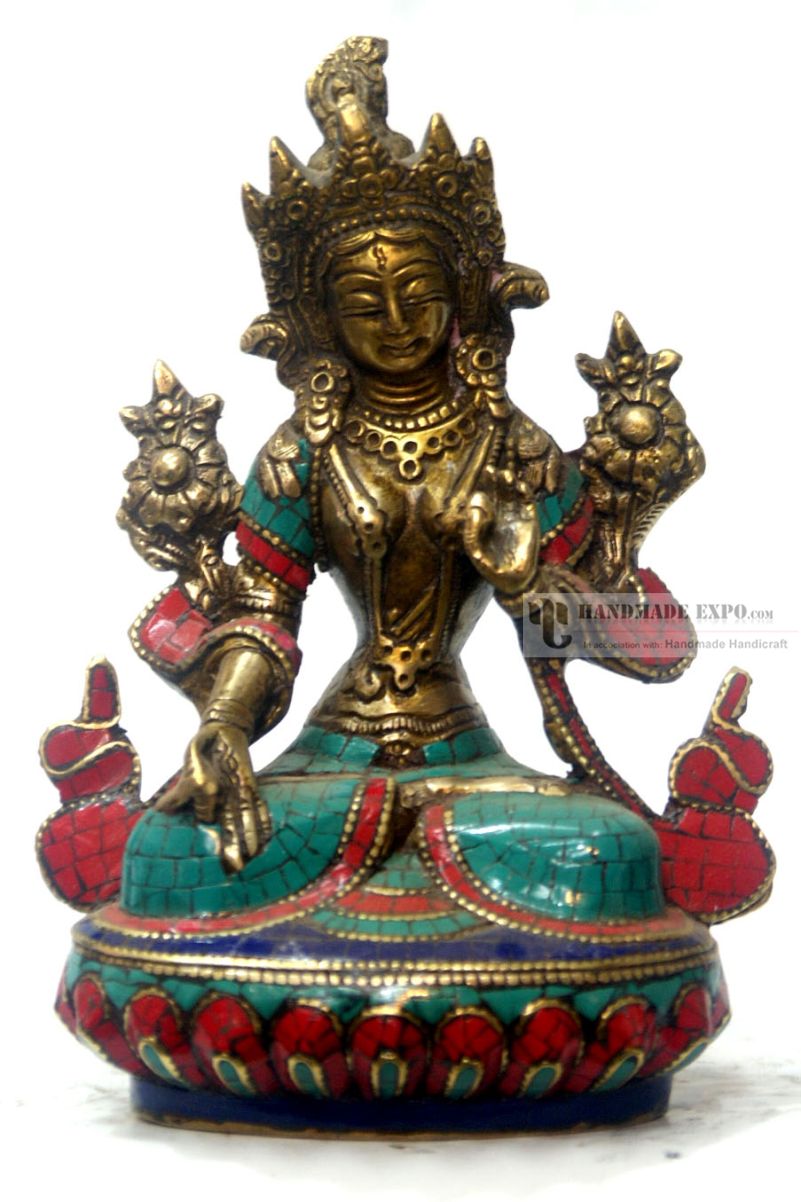

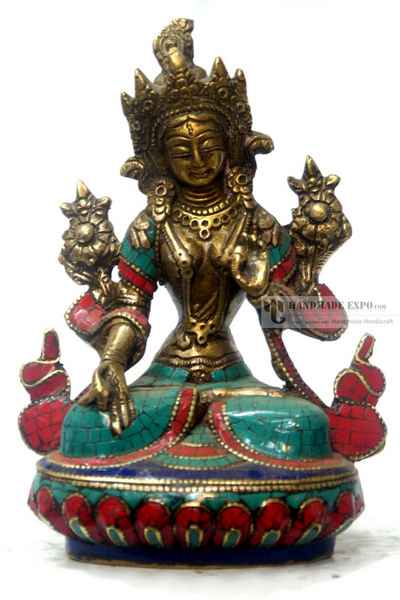
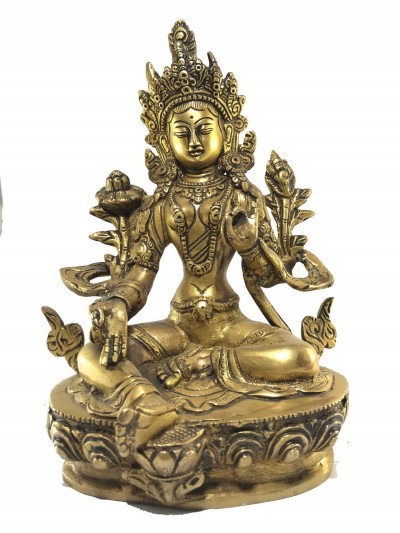
White Tara Statue with Turquoise and Coral Stone Setting
The White Tara is adorned with an exquisite array of semi-precious stones, including turquoise, coral, and lapis lazuli. These stones are carefully selected and meticulously placed on the White Tara's surface, adding a touch of opulence and enhancing its overall beauty. Each stone is thoughtfully positioned using a high-quality adhesive, ensuring secure and long-lasting attachment. The vibrant colors and unique patterns of the stones create a captivating contrast against the backdrop of the White Tara, elevating its visual appeal and making it truly eye-catching. Read More . . .
This White Tara has been created using the sand casting system, also known as sand molding casting. This widely employed manufacturing process utilizes a sand mold to produce metal products and components in various sizes and shapes. Sand casting holds significant popularity in the industry, accounting for approximately 60% of all metal castings. The sand casting process involves six primary steps. First, a pattern or replica of the desired sculpture, in this case, White Tara, is created using a material like wood or metal. The pattern is then placed in a flask, which is a box-like structure divided into two halves. The next step involves packing the flask tightly with specially formulated molding sand, creating a mold cavity that matches the shape of the pattern. The pattern is subsequently removed, leaving behind a negative impression of the sculpture within the sand mold. Read More . . .
Her left hand is gracefully lowered in an empty open palm boon granting gesture [Skt. Varada Mudra]. White Tara has a blooming pink lotus & an unopened bud on either side of her body. The lotus in the painting is stylised as a peony & a chrysanthemum to provide artistic contrast with her lotus throne. The open blossom represents the present and the bud represents the future situations & Buddhas yet to be born. The future also refers to beneficial changes circumstances that she will help bring about. Her right hand wisdom hand is in the gesture of giving refuge [Skt. Sharanagamana]. The word refuge refers to the teaching of compassionate understanding which she imparts. The third finger touches the thumb to create a circle representing the union of wisdom and compassion, and the three extended fingers symbolise the Three Jewels of Buddhism A. The Buddha State B. The Body of teachings [Skt. Sangha] C. The Principles of the Universal form [Skt. Dharma]. The same hand holds the stem of a blue lotus [Skt. Utpala] representing change. The lower part of the stem below the bend represents the root of the lotus in the mud. The allegory of the Lotus refers to the something that grows from the obscurity of the mud & which eventually bursts open in the light. The lotus journey is one of inner awakening & enlightenment analogous to the human spirit. Buddhism shows us how to grow towards the light with profound teachings which help us to navigate away from burdens and sufferings which we may have by being materially minded, bitter & confused.
There is a lotus on her diadem bearing the Wish Granting Gem [Skt. Chintamani] surrounded by an aureole of fire symbolising auspicious blessings. The extra eye on her forehead, on the palms of her hands & soles of her feet represent her ability to see and understand the sufferings of all beings & her omniscient compassion toward the suffering. Avalokiteshvara [Tib. Chengresi] her progenitor also has a white body & extra eyes. The eyes denote psychic & supernatural power. The rainbow coloured leggings represent a mastery of Boddhi Nature [Skt. Siddhi] & a manifestation of the Sambhogakaya. The dark blue layer of clothing signifies Mantrayana practice. She is upon a white moon disk & has an orange sun aureole to representing her emanation their melting point [Skt. Nada]. There is a branch of an Ashoka Tree in the foreground. The word Ashoka means 'without sorrow' in other words she has no regrets about her behaviour. The tree linked to the Vedic God of love & sexual union Kamadeva which blossoms when a virtuous lady touches it. The triangular diamond rock formation in the foreground represents the Source of Reality [Skt. Dharmadaya] out of which deities arise & which is generated from emptiness by the seed syllable E. In the Indian language is a Triangular shaped letter D & so expressed in the triangular rock formations.
Mantra of White Tara
You may also want to read the related articles :
Service of Filling and blessing in Statue | Altering Finishing in StatueAt Handicraft Seller, we believe in providing a seamless and user-friendly experience to our valued customers. While our website is not an online shopping platform, we have incorporated a shopping cart system to simplify the process of sending us your inquiries. Please follow the steps below to place your order:
Step 1: Browsing the Selection
Explore our website to discover a delightful array of authentic Nepali handicraft products.
Click on the products you are interested in to view detailed descriptions and images.
Step 2: Adding Items to Your Inquiry Cart
To express your interest in a particular product, click the "Add to Inquiry Cart" button associated with that item.
The shopping cart will accumulate your selected products, providing a convenient way to organize your choices.
Step 3: Reviewing Your Inquiry Cart
Once you have finished selecting the items you wish to inquire about, review your "Inquiry Cart" to ensure accuracy.
Step 4: Sending Your Inquiries
Proceed to submit your inquiries by clicking the "Submit Inquiry" button.
A form will prompt you to provide your contact details, the selected products, and any specific queries you may have.
Step 5: Communicating through Email
As we do not have an automated payment system, we will conduct the business process through email.
Our team will review your inquiries and respond via email, offering further assistance and guidance.
Step 6: Clarifying Details and Finalizing Your Order
Engage in direct communication with our team to clarify any additional information or customization requests.
Once you are satisfied with the details, we will provide you with payment instructions and confirm the order.
Step 7: Completing the Transaction
Make the payment through the designated method as provided in the email.
After receiving the payment, we will process your order and prepare it for shipment.
Step 8: Shipping and Delivery
We offer worldwide shipping for all our products.
Once your order is dispatched, we will provide you with shipping details and tracking information.
Step 9: Receiving and Enjoying Your Handicrafts
Wait for your exquisite handicrafts to arrive at your doorstep.
Unpack and revel in the beauty and craftsmanship of your chosen Nepali treasures.
Contacting Us
If you encounter any complications while submitting your inquiries or need further assistance, please feel free to contact us.
Preferably, reach out to us through WhatsApp or email for prompt responses and support.
We hope this straightforward ordering process ensures a delightful and satisfying experience with Handicraft Seller. Thank you for choosing us to connect you with the rich heritage of Nepali handicrafts.
Return Policy
We have a 7 days money back policy but buyer have to pay the return shipping charges.
Shipping
- Shipping cost is calculated, based on the shipping weight of the products ordered. THe normal Shipping cost is US$25 for upto 0.5 kgs weight
- We ship Worldwide, Except Russia and India.
- The deliver duration varies for international Shipping location. We normally dispatch the product in 2 -3 business days. Else Buyer will be infromed Personally about the shipping.
Related Products
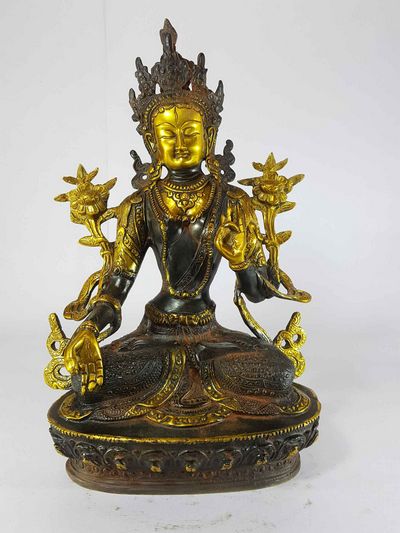
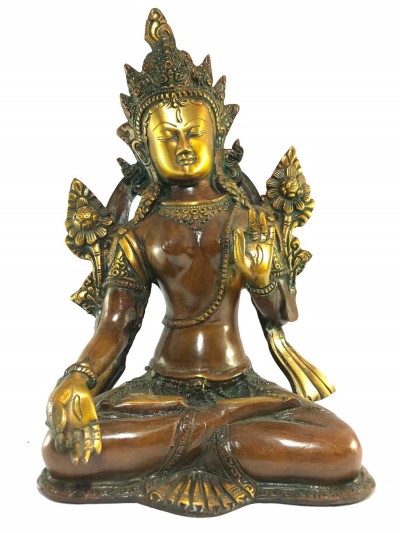
32cm Tibetan Whitetara Statue Sand Casting Chocolate Antique Finishing
Weight : 4kg | [15608]
USD 96
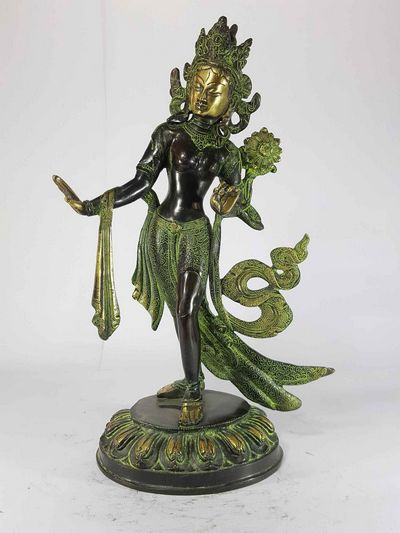
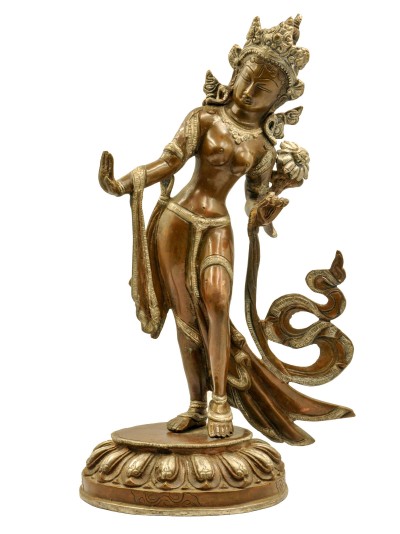
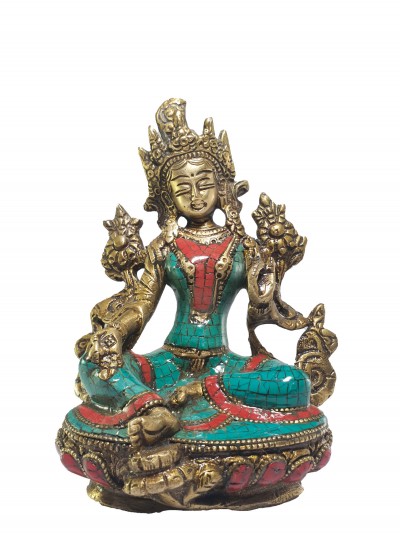
37cm Buddhist Statue Of Standing Green Tara Sand Casting Chocolate Oxidized
Weight : 4kg | [28578]
USD 169
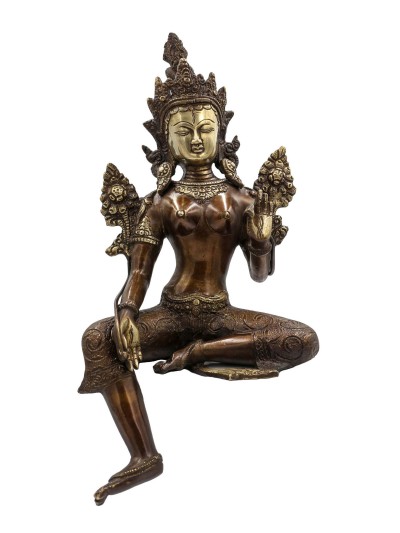
37cm Buddhist Statue Of White Tara Sand Casting Chocolate Oxidized
Weight : 3.22kg | [27819]
USD 104
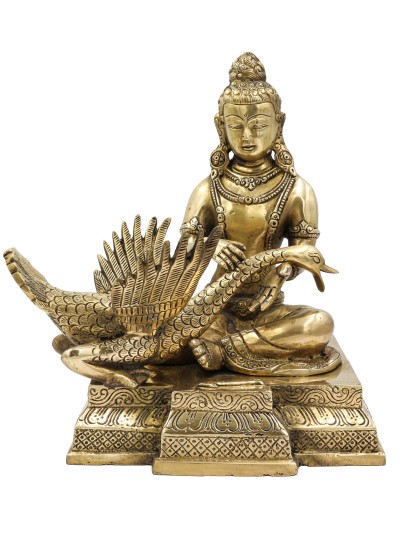
26cm Buddhist Statue Of Buddha With Swan Sand Casting Glossy Finishing
Weight : 5.13kg | [28634]
USD 174