Product Categories
Metal Statues
Thangka & Wall Decor
Sound & Spirituality
Buddhist Ritual Object
![Yellow Jambhala Thangka, [high Quality], Buddhist Traditional Painting, Lhyape Style, [real Gold], With Pancha Buddha](https://www.handmadeexpo.com/pics/product/29541.jpg)

![Yellow Jambhala Thangka, [high Quality], Buddhist Traditional Painting, Lhyape Style, [real Gold], With Pancha Buddha](https://www.handmadeexpo.com/pics/product/thumb/29541.jpg)
![Yellow Jambhala Thangka, [high Quality], Buddhist Traditional Painting, Lhyape Style, [real Gold], With Pancha Buddha](https://www.handmadeexpo.com/pics/product/thumb/29541_0.jpg)
![Yellow Jambhala Thangka, [high Quality], Buddhist Traditional Painting, Lhyape Style, [real Gold], With Pancha Buddha](https://www.handmadeexpo.com/pics/product/thumb/29541_1.jpg)
![Yellow Jambhala Thangka, [high Quality], Buddhist Traditional Painting, Lhyape Style, [real Gold], With Pancha Buddha](https://www.handmadeexpo.com/pics/product/thumb/29541_2.jpg)
![Yellow Jambhala Thangka, [high Quality], Buddhist Traditional Painting, Lhyape Style, [real Gold], With Pancha Buddha](https://www.handmadeexpo.com/pics/product/thumb/29541_3.jpg)
![Yellow Jambhala Thangka, [high Quality], Buddhist Traditional Painting, Lhyape Style, [real Gold], With Pancha Buddha](https://www.handmadeexpo.com/pics/product/thumb/29541_4.jpg)
![Yellow Jambhala Thangka, [high Quality], Buddhist Traditional Painting, Lhyape Style, [real Gold], With Pancha Buddha](https://www.handmadeexpo.com/pics/product/thumb/29541_5.jpg)
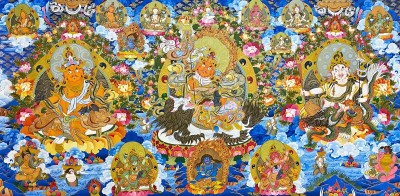
Yellow Jambhala Thangka, High Quality, Buddhist Traditional Painting, Lhyape Style, Real Gold, with Pancha Buddha
Gyalten Sogdzin Rinpoche said that Jambhala is the protector of all Lineages and of all sentient beings from all sickness and difficulties. Jambhala is a Bodhisattva of material and spiritual wealth as well as many other things, especially of granting financial stability.
Because in this world, there are all kinds of wrathful and negative emotions or bad spirits, and sometimes they will harm you and other sentient beings, Dzambhala must take on such a wrathful and powerful form to protect us from these harmful spirits and negative karma. Especially, Dzambhala helps us minimize or decrease all misfortunes and obstacles and helps us increase all good fortune and happiness.
Five Dhyani Buddhas, popularly known as Pancha Buddha are five representatives of five different qualities of Shakyamuni Buddha. Pancha Buddhas are also known as the Five Wisdom Tathagatas and are widely respected in Vajrayana Buddhism. In Sanskrit, they are known as the Five Conquerors, or Victor, and are a common subject in Vajrayana Buddhist tradition. As you may have noticed in many Thangkas or collections of five Buddha statues in Buddhist people's residences, these collections of Buddha statues are quite popular for their great five different qualities. These Pancha Buddhas are Vairochana, Akshobhaya, Amitabha, Ratnasambhava, and Amoghasiddhi.
These Five Buddhas represent five paradises in five different directions i.e. Central, East, West, North, and South. In both Nepali Buddhism as well as Tibetan Buddhism, these Pancha Buddhas are represented in different Buddha statues, Buddha images, paintings as well as Thangkas, etc. The collection of Nepali Buddha statues must consist of a set of five Pancha Buddhas or it is considered incomplete. This state how much important the Pancha Buddhas are especially in Nepalese and Tibetan Buddhism. Read More . . .
Yellow Jambhala, an enchanting Lhyape Thangka masterpiece, emanates an aura of celestial splendor. The golden-yellow background bathes the entire composition in a luminous glow, symbolizing purity and enlightenment. Intricately painted with 24-carat gold, Yellow Jambhala's divine form and surrounding elements glisten with a mesmerizing metallic shine. Read More . . .
The attribute of "master quality" distinguishes the Yellow Jambhala as an embodiment of extraordinary craftsmanship and artistic excellence. This exceptional piece is directly handcrafted by an artist or craftsman of the highest categorization, reflecting their unparalleled skill and expertise. The uniqueness of Yellow Jambhala lies in its exclusivity to the artist, making it a rare find with nearly impossible chances of finding an identical piece in the same category. While copies may exist, they can never truly replicate the essence of the original, as an artist or craftsman capable of creating such exceptional artistry would prefer to showcase their own creative vision rather than reproduce another's work. Read More . . .
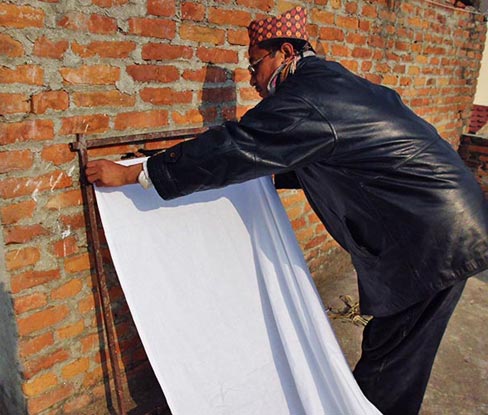
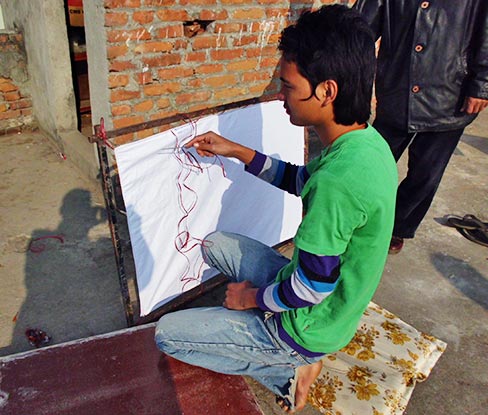
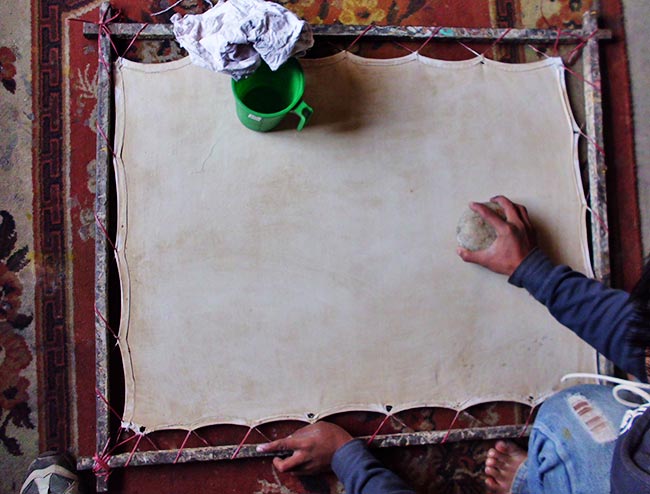
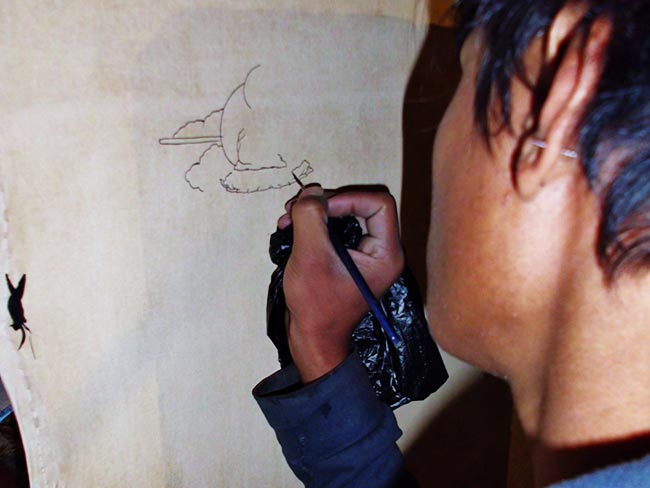
This thangka of Yellow Jambhala has real gold painted on its surface along with other paints. This is an ancient process of decorating the thangka in Tibetan Buddhism, Here gold is ground into gold dust, which is then mixed with other undisclosed material to make it paintable on the canvas. this mixture is then mixed with transparent glue and painted on the thangka. Read More . . .
A thangka, also known as tangka, thanka, or tanka, is a vibrant and intricate Tibetan Buddhist painting that serves as a visual representation of spiritual teachings. Crafted with meticulous detail on cotton or silk appliqué, thangkas depict a wide range of subjects including Buddhist deities, sacred scenes, mandalas, and narrative stories. These sacred artworks are traditionally kept unframed and rolled up for storage, resembling ancient scrolls. To protect their delicate nature, thangkas are mounted on textile backings and often adorned with a silk cover on the front. Proper preservation in dry environments is crucial to maintain the integrity and longevity of the silk. Read More . . .
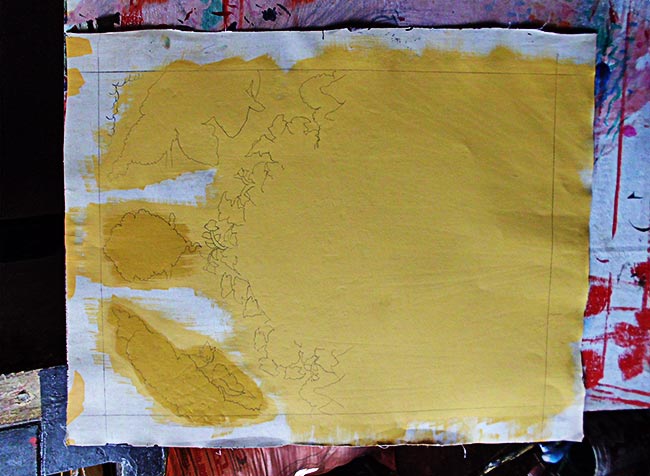
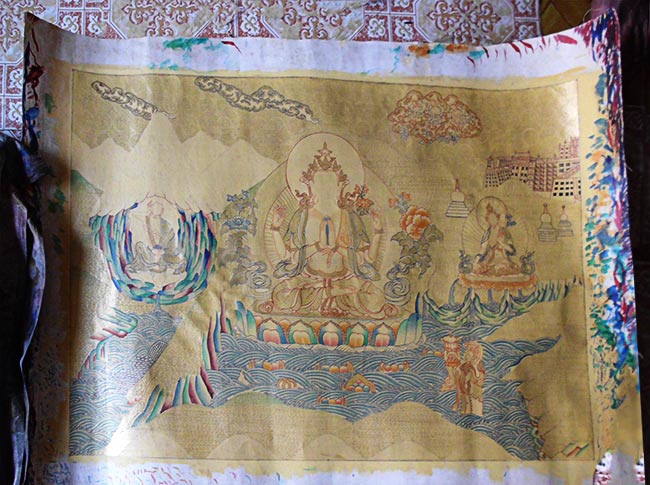
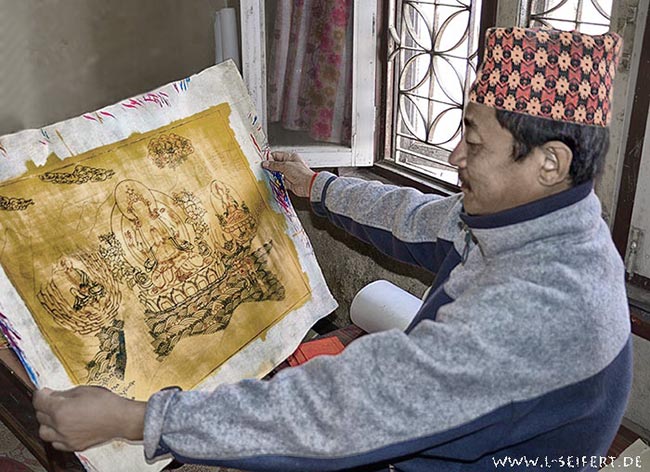
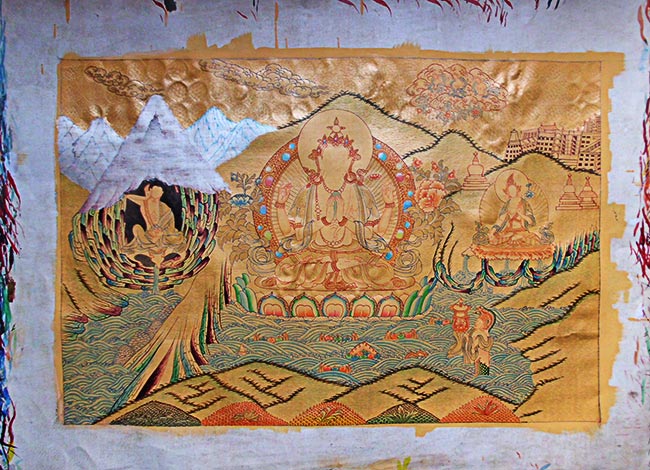
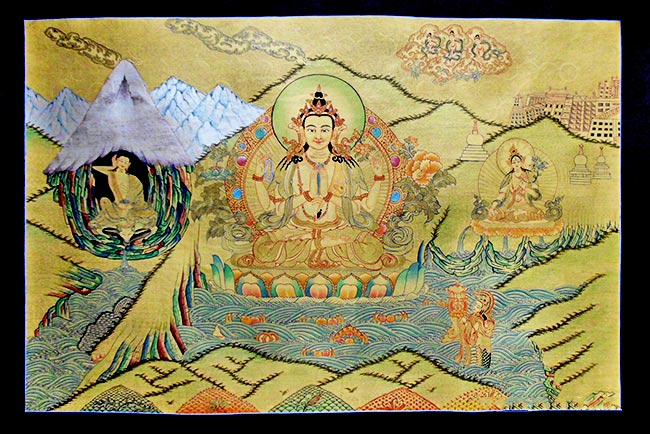
He is also said to be an emanation of Vaisravana, one of the "Four Great World-protecting Heavenly Kings". He is the guardian of light in Buddhism, a great charitable deity who grants fortune and protection. Lord Vaisravana lives in the northern region under the Four Heavens, at the northern crystal palace on the fourth level of Mount Sumeru. His servants are either yaksas or bhaisajya-yaksas. According to the commentary on Lotus Sutra, this heavenly king is extremely knowledgeable as his perpetual protection of the Buddhas has enabled him to receive many teachings.
Yellow Jambhala has a yellow-colored body, he sits in the vajra position with his right leg in the panhandle, his right foot is above a snail and lotus flower, and his left leg is kinked. He has one face and two arms. His left hand holds a mongoose named Nehulay which spews forth precious jewels from its mouth, while his right-hand holds gems-shaped fruit and leaf of a lotus. An ordinary image of Lord Vaisravana holds a precious pagoda in the left, which pours out various treasures. In Tibetan Tantric images, the precious pagoda is replaced by the treasure-emitting mongoose. Yellow Jambhala sits on a lotus, sun disk, and moon disk. His mantra is:
Om Jambhala Jalendraye Svaha
Mandra of Yellow Jambala
You may also want to read the related articles :
Videos of Thangka Making Process | Making Process Of Tibetan Thangka | What is a Thangka | Thangka Brocading OptionAt Handicraft Seller, we believe in providing a seamless and user-friendly experience to our valued customers. While our website is not an online shopping platform, we have incorporated a shopping cart system to simplify the process of sending us your inquiries. Please follow the steps below to place your order:
Step 1: Browsing the Selection
Explore our website to discover a delightful array of authentic Nepali handicraft products.
Click on the products you are interested in to view detailed descriptions and images.
Step 2: Adding Items to Your Inquiry Cart
To express your interest in a particular product, click the "Add to Inquiry Cart" button associated with that item.
The shopping cart will accumulate your selected products, providing a convenient way to organize your choices.
Step 3: Reviewing Your Inquiry Cart
Once you have finished selecting the items you wish to inquire about, review your "Inquiry Cart" to ensure accuracy.
Step 4: Sending Your Inquiries
Proceed to submit your inquiries by clicking the "Submit Inquiry" button.
A form will prompt you to provide your contact details, the selected products, and any specific queries you may have.
Step 5: Communicating through Email
As we do not have an automated payment system, we will conduct the business process through email.
Our team will review your inquiries and respond via email, offering further assistance and guidance.
Step 6: Clarifying Details and Finalizing Your Order
Engage in direct communication with our team to clarify any additional information or customization requests.
Once you are satisfied with the details, we will provide you with payment instructions and confirm the order.
Step 7: Completing the Transaction
Make the payment through the designated method as provided in the email.
After receiving the payment, we will process your order and prepare it for shipment.
Step 8: Shipping and Delivery
We offer worldwide shipping for all our products.
Once your order is dispatched, we will provide you with shipping details and tracking information.
Step 9: Receiving and Enjoying Your Handicrafts
Wait for your exquisite handicrafts to arrive at your doorstep.
Unpack and revel in the beauty and craftsmanship of your chosen Nepali treasures.
Contacting Us
If you encounter any complications while submitting your inquiries or need further assistance, please feel free to contact us.
Preferably, reach out to us through WhatsApp or email for prompt responses and support.
We hope this straightforward ordering process ensures a delightful and satisfying experience with Handicraft Seller. Thank you for choosing us to connect you with the rich heritage of Nepali handicrafts.
Return Policy
We have a 7 days money back policy but buyer have to pay the return shipping charges.
Shipping
- Shipping cost is calculated, based on the shipping weight of the products ordered. THe normal Shipping cost is US$25 for upto 0.5 kgs weight
- We ship Worldwide, Except Russia and India.
- The deliver duration varies for international Shipping location. We normally dispatch the product in 2 -3 business days. Else Buyer will be infromed Personally about the shipping.
Related Products
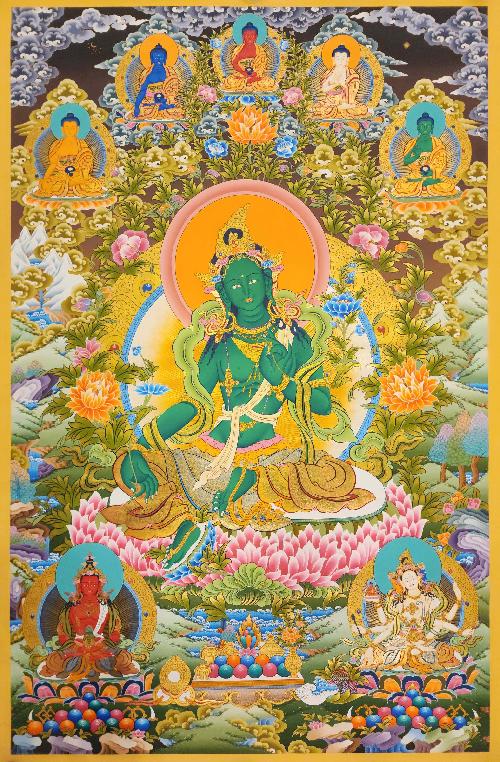
148cm Green Tara, Buddhist Handmade Thangka Painting, Tibetan Style, Real Gold, With Five Dhyani Buddha, And Three Goddess Of Divine Grace
Weight : 0.78kg | [30030]
US$6000
US$4800
You Save
US$1200
(20%)
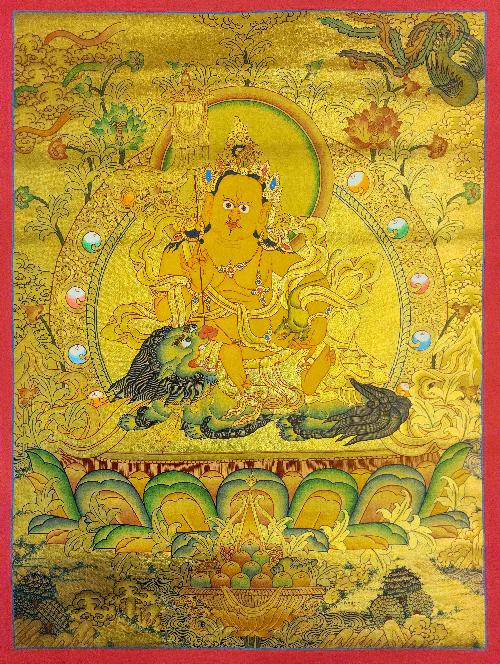
60cm Yellow Jambhala, Buddhist Traditional Painting, Hand Painted, Real Gold
Weight : 0.2kg | [33402]
US$1440
US$1152
You Save
US$288
(20%)
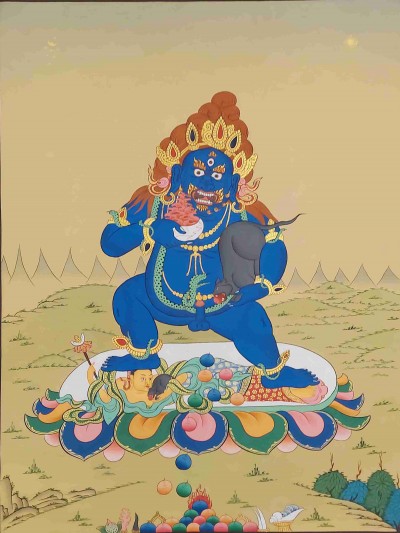
60cm Karma Gadri Art Style, Buddhist Handmade Thangka Of Black Jambhala, Hand Painted, Real Gold
Weight : 0.1kg | [26298]
US$180
US$144
You Save
US$36
(20%)
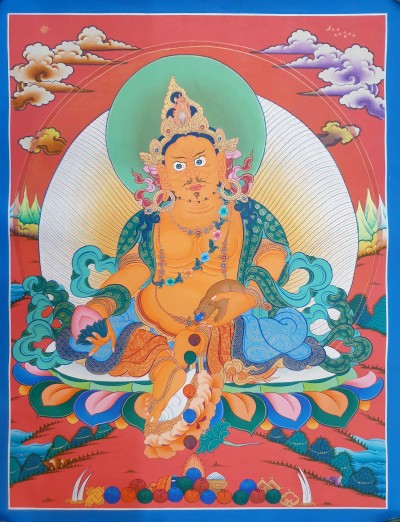
50cm Thangka Painting Of Yellow Jambhala, Real Gold
Weight : 0.1kg | [23509]
US$130
US$104
You Save
US$26
(20%)
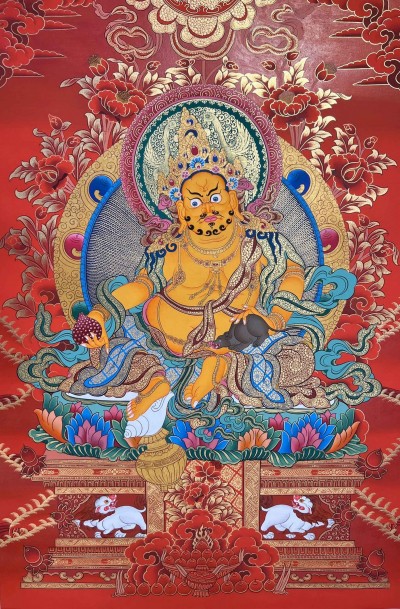
77cm Buddhist Handmade Thangka Of Yellow Jambhala, Hand Painted
Weight : 0.1kg | [25340]
US$320
US$256
You Save
US$64
(20%)
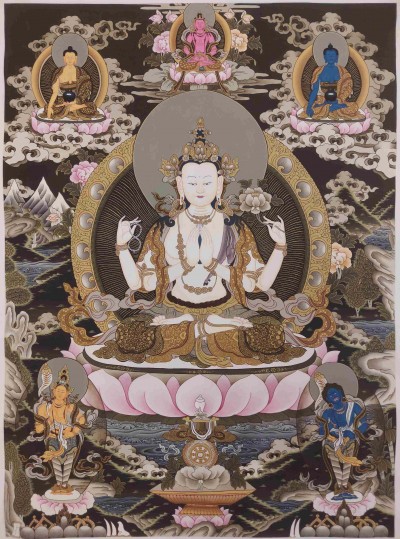
62cm Buddhist Hand Painting Thangka Of Chenrezig, With Shakyamuni Buddha, Aparimita And Ratnasambhava Buddha, Hand Painted, Real Gold, Lamas Art
Weight : 0.1kg | [26029]
US$1000
US$800
You Save
US$200
(20%)
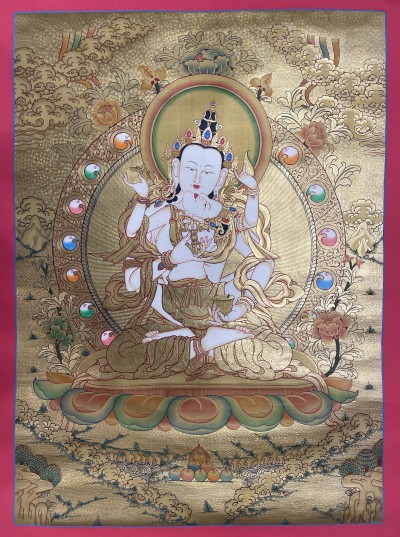
60cm Buddhist Hand Painted Thangka Of Vajrasattva With Consort, Shakti, Yab-yum, Real Gold, Lamas Art
Weight : 0.1kg | [23897]
US$360.75
US$288.6
You Save
US$72.15
(20%)
75cm Tibetan Buddhist Thangka Of Namtose Jambhala, Real 24k Gold, Hand Painted
Weight : 0.1kg | [25284]
US$2560
US$2048
You Save
US$512
(20%)